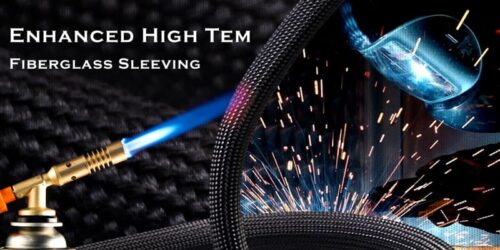
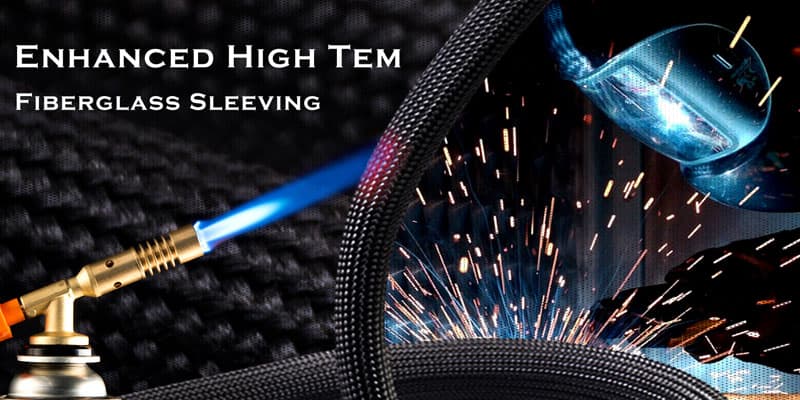
Looking for the right fiberglass sleeving selection guide? Choosing the correct thermal protection is critical for demanding industrial applications. Our E-FLEX® 600°C Resin-Saturated Sleeving offers superior advantages over silicone-coated or uncoated options for high-performance sectors like aerospace and automotive. Use this comparison guide to select the best thermal solution for your engineering needs.
| Feature | Uncoated Fiberglass | Silicone Coated | Resin-Saturated (E-FLEX®) |
| Max Temp (Continuous) | 550°C | 260°C | 600°C |
| Mechanical Strength | Moderate | High | Excellent |
| Flexibility | High | High | Moderate/High |
| Fray Resistance | Low (Frays easily) | Low | Excellent (Non-Fray) |
| Primary Use | Basic Heat Barrier | Fluid/Chemical Splash | High-Temp Structural Protection |
Key Selection Criteria
- For High-Heat Structural Stability: If you need to protect wiring harnesses in aerospace or automotive exhaust systems, our Resin-Saturated 600°C Sleeving provides the best thermal-to-mechanical balance.
- For High Vibration/Abrasion: The resin impregnation ensures the sleeving retains its structural integrity without fraying during long-term vibration.
- Why Industry Leaders Choose E-FLEX®: Unlike standard options, our proprietary resin treatment makes installation cleaner and safer. Read more in our article: Why 600°C Resin-Saturated Fiberglass Sleeving is the Top Choice.
We hope this fiberglass sleeving selection guide has helped clarify the differences between common insulation materials. When your project demands extreme thermal protection and structural reliability, our E-FLEX® resin-saturated sleeving is the professional choice.