
leave a message
If you are interested in our products and want to know more details,please leave a message here,we will reply you as soon as we can.


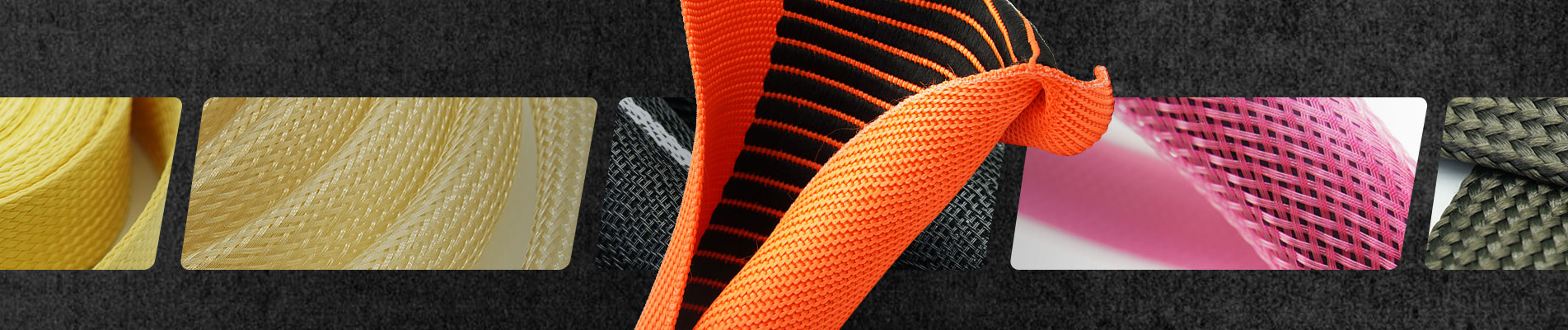
Cable Protection Material Library
Selecting the right material is one of the most important steps in developing a reliable cable protection system. Material choice affects abrasion resistance, operating temperature, flexibility, flame performance, chemical resistance, electrical insulation, EMI shielding, installation efficiency and product life.
The MJ FLEX Material Library provides practical information about the engineering materials used in cable sleeving, wire management, hose protection, thermal insulation and electromagnetic shielding products.
Designed for engineers, product developers, quality teams and industrial buyers, this resource explains the performance advantages, limitations, typical applications and selection considerations of each material.
Why Material Selection Matters
Cable protection products are exposed to very different operating conditions. A sleeve used inside an electrical cabinet may require flexibility and basic abrasion protection, while a product installed near an automotive engine, industrial furnace or hydraulic system may need resistance to heat, flame, chemicals, vibration or mechanical damage.
No single material is suitable for every application.
The correct selection depends on several factors:
• Continuous and peak operating temperature
• Abrasion, cut, impact and vibration exposure
• Cable or hose diameter and required flexibility
• Oils, fuels, chemicals and moisture
• UV and outdoor weather exposure
• Flame, smoke and toxicity requirements
• Electrical-insulation requirements
• EMI shielding and grounding performance
• Installation method and available space
• Applicable industry standards and customer specifications
Material properties provide the starting point, but the performance of a finished cable sleeve also depends on filament or wire diameter, braid density, wall thickness, coating, additives, overlap, expansion ratio and product construction.
Thermoplastic Materials
Thermoplastics are widely used in cable management because they provide a practical combination of flexibility, processability, abrasion resistance and cost efficiency.
PET
PET is one of the most widely used materials for expandable braided sleeving, split sleeving and wire-harness protection. It provides lightweight, flexible and cost-effective protection for general industrial, automotive, electrical and communication applications.
Different PET formulations and constructions can be developed for flame resistance, UV exposure, clean cutting, noise reduction and increased abrasion protection.
PA66
PA66, also known as nylon 66, is valued for toughness, wear resistance and mechanical durability. It may be selected for cable assemblies exposed to repeated contact, vibration or demanding mechanical conditions.
Moisture absorption and conditioning should be considered when evaluating PA66 products.
PE
Polyethylene is commonly used in cable insulation, protective tubing, corrugated conduit and wire-management components. It offers low weight, moisture resistance and useful electrical-insulation properties.
The selected PE grade must be evaluated for temperature, flame and outdoor exposure.
PP
Polypropylene provides low weight, chemical resistance and useful fatigue performance. It is commonly used in corrugated conduit, routing components, protective covers and molded cable-management parts.
ABS
ABS is mainly used for molded cable-management components rather than flexible braided sleeving. Typical applications include protective housings, connectors, clips, brackets and cable-routing accessories.
Its impact resistance, rigidity and dimensional stability make it suitable for structural components in electrical and industrial assemblies.
High-Performance Polymers
High-performance polymers are considered when conventional materials cannot provide the required thermal, chemical or mechanical performance.
PPS
PPS offers greater temperature and chemical resistance than many standard thermoplastics. It can be used in high-temperature braided sleeving and protective constructions for automotive, railway, electrical and industrial equipment.
PEEK
PEEK is an advanced engineering polymer for severe thermal, chemical and mechanical environments. It is typically evaluated for aerospace, semiconductor, energy and high-value industrial applications where system reliability justifies the higher material cost.
PFA
PFA is a fluoropolymer offering excellent chemical resistance, high-temperature capability, low moisture absorption and useful electrical-insulation properties. It is commonly considered for chemical-processing, semiconductor, aerospace and specialized electrical applications.
High-Performance Fibers
Technical fibers can provide lightweight thermal or mechanical protection for cables, wire harnesses and hydraulic hoses.
Meta-Aramid
Meta-aramid fibers are primarily selected for heat- and flame-resistant textile constructions. They can be used in braided and woven sleeves for transportation, aerospace, railway and industrial equipment installed near heat sources.
Nomex® is a registered trademark and should only be used when the finished product contains documented branded fiber.
Para-Aramid
Para-aramid fibers provide a high strength-to-weight ratio and can support cut, abrasion and mechanical reinforcement requirements. Typical applications include hydraulic hose protection, industrial machinery, robotics and transportation equipment.
Kevlar® is a registered trademark and should only be used for products manufactured with documented branded material.
UHMWPE
UHMWPE fiber provides excellent abrasion resistance, low friction and a high strength-to-weight ratio. It can be used for lightweight cable and hose protection in moving machinery, robotics, hydraulic equipment and heavy-duty applications.
Its operating-temperature capability is lower than that of aramid, PPS or PEEK materials and must be carefully evaluated.
Mineral-Fiber Materials
Mineral fibers are commonly selected for thermal protection and electrical insulation.
Fiberglass
Fiberglass provides a thermally stable base for braided insulation sleeves, silicone-coated fiberglass sleeving, fire sleeves and heat-reflective protection products.
The coating and finished construction can significantly affect dielectric strength, abrasion resistance, flexibility and environmental performance.
Basalt Fiber
Basalt fiber can be evaluated for selected thermal and mechanical protection applications. Because yarn quality, construction and commercial availability may vary, engineers should review actual product data and samples before specifying basalt fiber for production.
Conductive and Metallic Materials
Metallic braids can provide mechanical protection, electrical continuity, grounding and electromagnetic shielding.
Copper
Bare, tinned or nickel-plated copper braid is widely used for EMI shielding, grounding and bonding. Shielding effectiveness depends on braid coverage, wire construction, frequency range, connector design and termination method.
Copper braid should therefore be evaluated as part of the complete cable assembly rather than as an independent material.
Stainless Steel
Stainless-steel braid provides strong mechanical protection, corrosion resistance and high-temperature capability. It may be used for cables and hoses exposed to severe abrasion, external damage or harsh industrial environments.
Compared with copper, stainless steel generally offers lower electrical conductivity but greater mechanical durability.
How to Select the Right Material
A suitable cable protection solution must balance performance, installation, compliance, availability and total cost.
Before selecting a material, define:
• Cable, wire-bundle or hose dimensions
• Connector size and installation method
• Continuous and peak temperature
• Abrasion, movement and vibration conditions
• Chemical and environmental exposure
• Flame, electrical or EMI requirements
• Required certification or test standard
• Expected product life
Prototype and annual production quantities
Comparisons should be made using finished products with equivalent dimensions, conditioning and test methods. Generic material properties should not be treated as guaranteed product ratings.
Engineering and Material Support from MJ FLEX
MJ FLEX supports cable protection projects from initial material selection through product design, prototyping, testing and mass production.
Our engineering and manufacturing capabilities include:
• Material and product selection
• Performance and alternative-material comparison
• Product structure and braid optimization
• Custom sizes, colors and constructions
• Flame-retardant, heat-resistant and abrasion-resistant solutions
• EMI shielding and grounding constructions
• Prototype and sample development
• Product testing and validation support
• Cost-optimization and alternative-product development
• OEM and ODM manufacturing
For replacement projects, customers can provide an existing sample, drawing, specification or target product. For new development projects, our team can evaluate the operating conditions and recommend a suitable material and product structure for testing.
Frequently Asked Questions
What is the most common material for braided cable sleeving?
PET is widely used for general-purpose expandable braided sleeving because it provides a practical balance of flexibility, abrasion resistance, expandability and cost. Applications involving higher heat, stronger chemicals or severe mechanical exposure may require PA66, PPS, PEEK, PFA, aramid, fiberglass or metallic constructions.
Which materials are suitable for high-temperature cable protection?
PPS, PEEK, PFA, meta-aramid, fiberglass, basalt fiber and metallic braids may be considered for elevated-temperature applications. The correct choice depends on the temperature profile, exposure duration, insulation requirements, flexibility and surrounding environment.
Which materials are used for abrasion and cut protection?
PET and PA66 are commonly used for general abrasion protection. Para-aramid and UHMWPE can support more demanding abrasion or cut requirements, while stainless-steel braid may be considered for severe external mechanical exposure.
Which material is suitable for EMI shielding?
Copper braid is commonly used where high electrical conductivity, grounding or EMI shielding is required. Stainless-steel and hybrid metal-textile constructions may be suitable when shielding must be combined with mechanical, corrosion or temperature performance. Final shielding effectiveness must be validated in the complete cable system.
Can MJ FLEX develop custom materials or product constructions?
Yes. MJ FLEX supports material comparison, custom sizing, product structure development, prototyping and testing for application-specific cable protection requirements. Commercial feasibility depends on the required performance, quantity, raw-material availability and validation standard.



 English