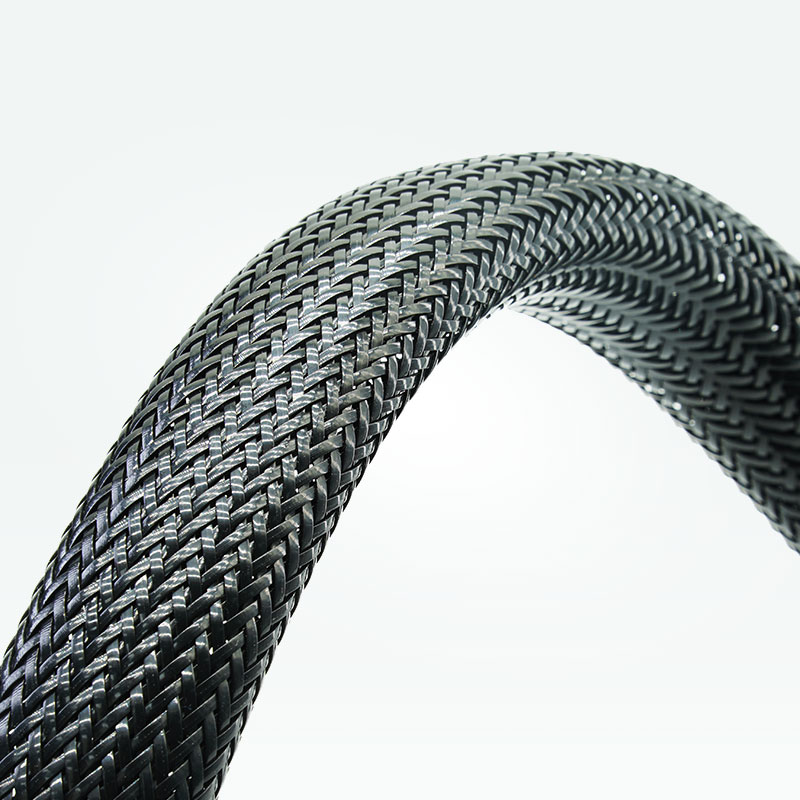
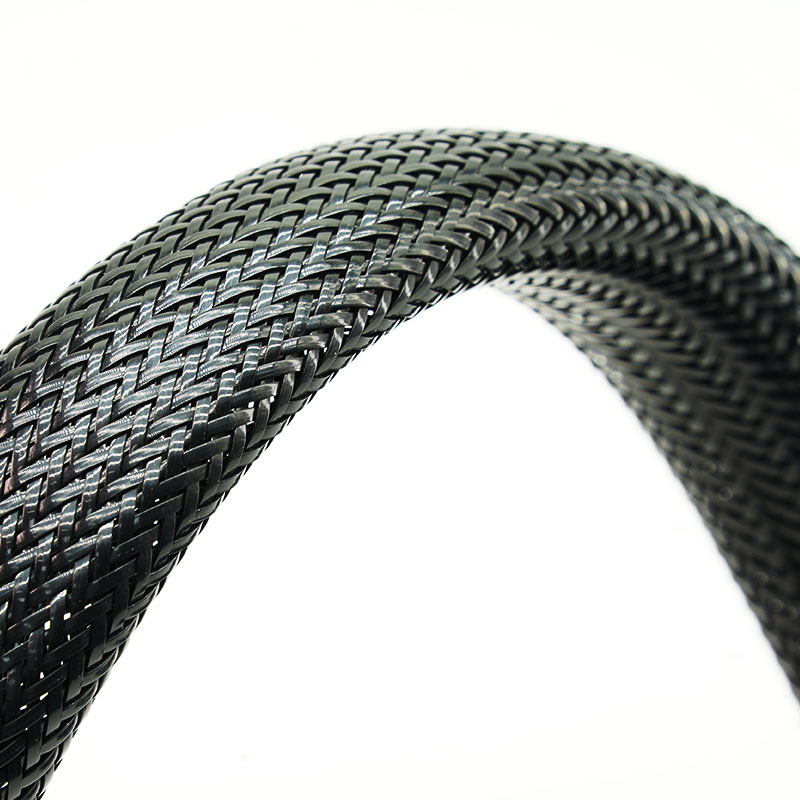
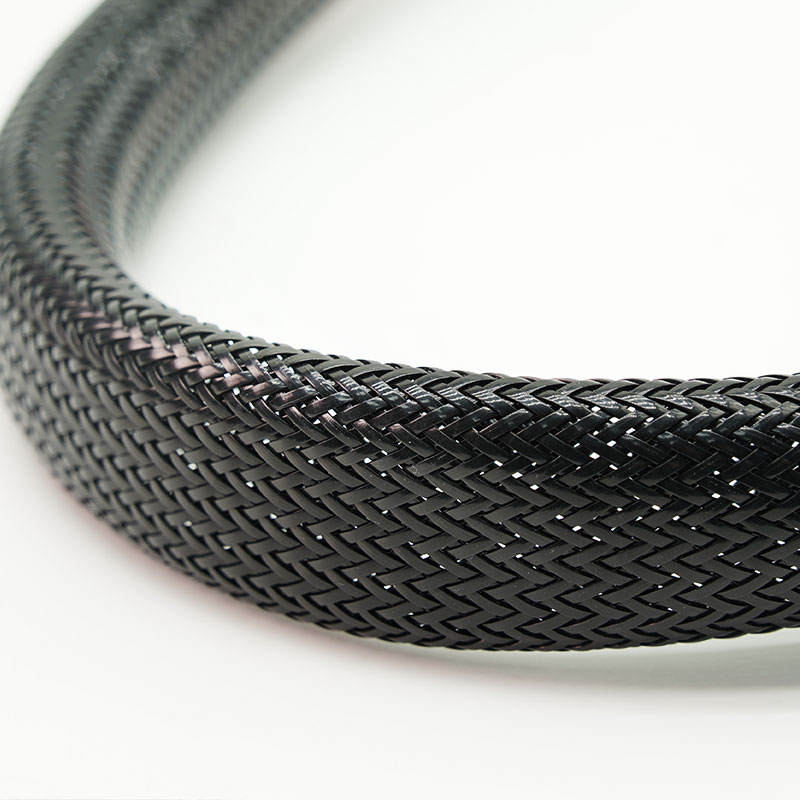
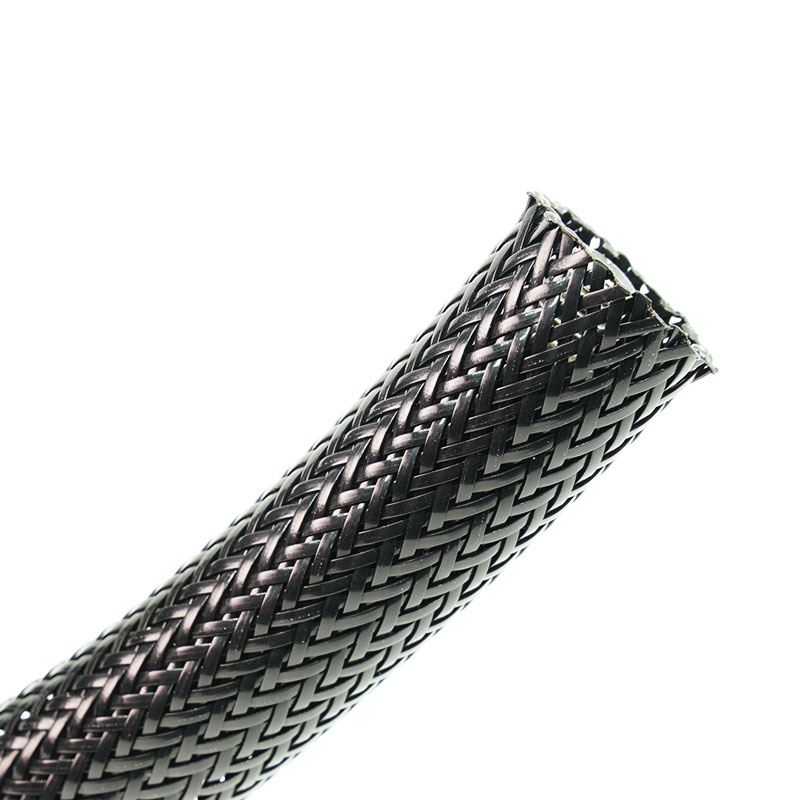
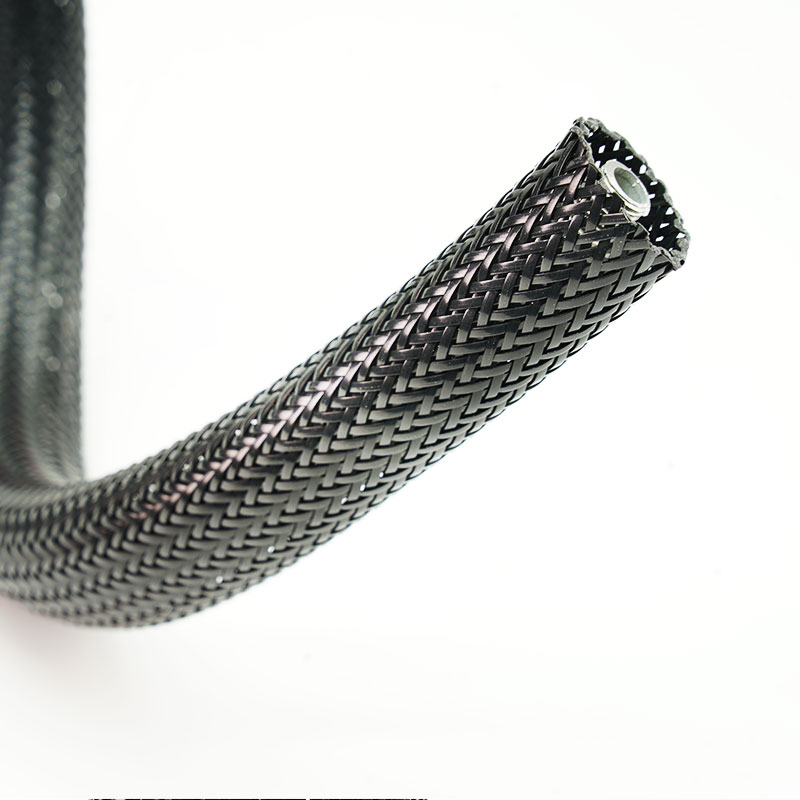
Why Choose BRS-PAFF Flat-Filament Abrasion Guard?
• Reduce snagging on rough equipment
The broad, smoother filament profile is less likely to catch than an open round-filament construction.
• Increase surface coverage
Flat yarn creates a dense protective layer around the cable or hose bundle.
• Protect high-wear routes
Tough nylon supports applications exposed to dragging, rubbing and repeated handling.
• Maintain a low-profile installation
The braid adds durable coverage without the bulk of rigid tubing or heavy hose guards.
1. Flat nylon filament construction
Creates broad surface contact and dense protective coverage.
2. Smooth snag-resistant profile
Helps the sleeved assembly move across rough surfaces with less catching.
3. High abrasion durability
Designed for cable and hose routes exposed to repeated rubbing.
4. Low-profile protection
Adds a tough outer layer without excessive bulk.
5. Flexible braided structure
Follows equipment routing and moderate movement.
6. Expandable fit
Accommodates varying bundle diameters and installation over fittings where sizing permits.
7. Project-specific supply
Available with customized diameter, length, color and packaging subject to review.
| Material |
Flat nylon filament |
| Construction |
Dense expandable braid |
| Working Temperature |
-60°C to +160°C |
| Melting Point |
256±10°C |
| Flammability |
UL 94 V2 |
| Abrasion Resistance |
Extremely High |
| Standard Color |
Black |
| RoHS Compliant |
Yes |
| Reach Compliant |
Yes |
| Halogen Free |
Yes |
| Cutting Tool |
Hot knife |
Specifications
|
Part No
|
Flat Width(W)
|
Expanded Range(mm)
|
Packing
Length
(m/spool)
|
|
Inch
|
mm
|
Min.(I)
|
Max.(O)
|
|
BRS-PAFF-008-BK
|
5/16”
|
8±2 |
6 |
12 |
100 |
|
BRS-PAFF-012-BK
|
1/2”
|
12 |
10 |
16 |
100 |
|
BRS-PAFF-019-BK
|
3/4”
|
19 |
16 |
25 |
100 |
|
|
1-1/4”
|
32 |
28 |
38 |
50 |
|
|
1-3/4”
|
45 |
38 |
59 |
50 |
|
|
2”
|
50 |
44 |
62 |
25 |
|
|
2-1/2”
|
63 |
45 |
25 |
100 |
● Note: Expanded range describes geometric capability, not the preferred continuous operating point. Selecting near maximum expansion increases braid openings, reduces surface coverage and shortens installed length.
Typical Applications
Forklifts and material-handling equipment
Protects cable and hose routes that rub against frames and move through tight equipment spaces.
Welding machines
Reduces mechanical wear on leads dragged across floors or fabrication areas; spark and heat exposure require separate assessment.
Construction and mining equipment
Adds durable surface protection for harnesses exposed to dirt, vibration and rough contact.
Hydraulic-adjacent cable routes
Separates and protects electrical cables routed beside hoses and moving equipment components.
Marine and industrial machinery
Controls snagging and abrasion where bundles pass through congested or rough structures.
Measure the cable or hose bundle across its complete operating range and identify fittings that must pass through the sleeve. Specify whether the assembly will drag, flex, contact hydraulic fluid or encounter welding spatter. This product protects surfaces but should not be presented as a certified hydraulic burst-containment sleeve.
Customization Options
• Flat-yarn construction - Filament width and braid density can be reviewed to balance surface coverage and flexibility.
• Installed diameter - The nominal size is selected using the actual cable or hose bundle and any fittings.
• Cut length and end finish - Project-specific pieces can be supplied after confirming the suitable cutting method.
• Color and marking - Standard and special colors, labels and lot identification are available subject to review.
• Industrial packaging - Roll size, spool format and carton quantity can be adapted to equipment assembly or field use.
Flat-filament nylon sleeving is primarily a mechanical abrasion and snag-control product. RoHS, REACH and halogen-free documents may be provided for applicable materials. It must not be represented as a hydraulic burst-containment sleeve, welding-spatter barrier or certified flame product unless a separate tested construction is specified.
• Flat-filament verification - Yarn profile, material and incoming condition are checked before production.
• Coverage and edge control - The braid is monitored for gaps, curled filaments and irregular edges.
• Abrasion-oriented visual review - Surfaces are checked for defects that could catch on equipment or damage the protected assembly.
• Dimensional and fit checks - Nominal diameter, expansion and installed coverage are verified with representative samples.
• Order-specific release - Length, packaging, labels and documentation are checked before shipment.
Frequently Asked Questions
01. Why use flat filament instead of round monofilament?
Flat filament provides broader surface coverage and a smoother, lower-profile outer surface, which can improve snag and abrasion behavior.
02. Can it protect hydraulic hoses?
It can provide external abrasion protection, but it is not automatically a hydraulic burst-containment sleeve. Use a purpose-designed burst sleeve when containment is required.
03.Is it suitable for welding cables?
It is useful for mechanical abrasion protection, but direct spark, spatter and high-temperature exposure must be evaluated separately.
04.Does expansion reduce coverage?
Yes. As braided sleeving expands, coverage and wall density change. Select the size using the actual installed diameter.
Request a Sample or Quote
Share the bundle diameter, connector size, environment, required standard and quantity.




 English