
leave a message
If you are interested in our products and want to know more details,please leave a message here,we will reply you as soon as we can.


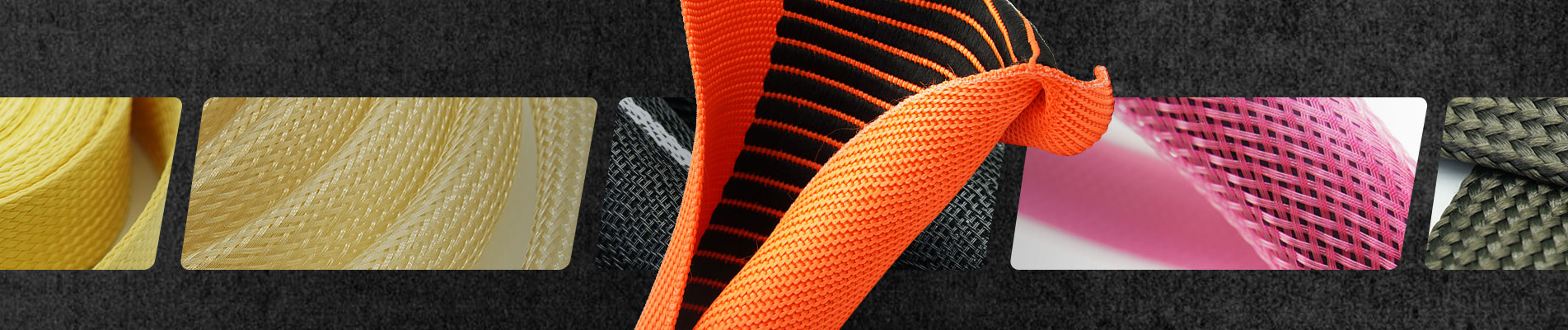
Choosing the correct cable sleeving is essential for protecting wires, cable assemblies, hoses and wiring harnesses from abrasion, heat, chemicals, electromagnetic interference and environmental damage. The right solution should match both the operating conditions and the installation requirements of your application.
This guide explains the main factors to consider when selecting cable protection products. If you are unsure which product is suitable, share your application details with the MJ FLEX team for product recommendations, samples and customized solutions.
| 01 |
Identify the Protection Requirements |
Begin by identifying the main risks the cable or hose will face during its service life.
| Protection Requirement | What to consider | Recommended product types |
|---|---|---|
| Abrasion protection | Friction, repeated movement, sharp edges and contact with surrounding components | High-density braided sleeving, woven cable wrap, hydraulic hose sleeve |
| Heat protection | Continuous operating temperature, peak temperature and exposure to radiant heat or flame | Fiberglass sleeving, silicone-coated fiberglass sleeving, heat-resistant sleeving, Nomex or PEEK sleeving |
| Flame retardancy | Required flame standard and application industry | VW-1, UL 94 V-0 or EN 45545 compliant sleeving |
| EMI shielding | Required shielding effectiveness, frequency range, grounding method and flexibility | Tinned-copper braid, EMI shielding sleeve or self-closing shielding wrap |
| Chemical resistance | Exposure to oils, fuels, solvents, acids, alkalis or cleaning agents | PPS, PEEK, PTFE, PVDF or other chemically resistant sleeving |
| Noise reduction | Contact noise, vibration and rattling inside vehicles or equipment | Noise-reduction self-closing woven sleeve |
| UV and weather resistance | Outdoor exposure, sunlight, moisture and temperature cycling | UV-resistant braided or self-closing sleeving |
| Rodent resistance | Risk of damage from rodents in vehicles, equipment or infrastructure | Rodent-resistant braided sleeving or split cable sleeve |
| Hose burst protection | Hydraulic pressure, pinhole leaks and operator protection | Nylon or polyester hydraulic hose protective sleeve |
When several risks are present, prioritize any mandatory safety or industry requirements before comparing secondary properties such as appearance, installation speed or cost.
| 02 |
Select the Appropriate Sleeve Structure |
Expandable braided sleeving expands radially to fit over connectors and irregular cable bundles. It is lightweight, flexible and suitable for general cable organization and abrasion protection.
Best suited for: new cable assemblies, wire harnesses, electronics, automotive components, machinery and control cabinets.
Check before selection: bundle diameter, expansion ratio, coverage, abrasion level, cut method and whether the cable ends are accessible during installation.
Self-closing sleeving has an open, wrap-around construction that allows installation without disconnecting cables or removing connectors. The overlapping edges retain the cable bundle while allowing easy access for inspection, maintenance or branch-outs.
Best suited for: pre-assembled harnesses, retrofit work, automotive wiring, railway systems, robotics, machinery and applications requiring frequent maintenance.
Check before selection: nominal bundle diameter, overlap ratio, bend radius, opening force and required flame-retardant or noise-reduction performance.
Woven wrap provides increased coverage and abrasion protection. A hook-and-loop closure makes the sleeve reusable and allows rapid installation around large or irregular bundles.
Best suited for: heavy-duty cable bundles, industrial machinery, data centers, temporary installations and systems requiring repeated access.
Shielding sleeves reduce electromagnetic and radio-frequency interference around sensitive cables. Available structures include metal braid, textile-and-metal composite sleeves and wrap-around shielding solutions.
Best suited for: industrial electronics, medical equipment, aerospace systems, communication equipment, electric vehicles and automation systems.
Check before selection: shielding effectiveness, frequency range, metal type, coverage, termination method, grounding requirements, flexibility and corrosion resistance.
Fiberglass sleeving provides electrical insulation and thermal protection. Coatings such as silicone can improve dielectric strength, flexibility and resistance to heat, oils and moisture. Specialized fibers such as Nomex, PPS and PEEK are available for demanding environments.
Best suited for: motors, transformers, heating equipment, furnaces, electrical appliances, battery systems and high-temperature wire harnesses.
Heat-shrink tubing creates a close-fitting protective layer around wires, joints and terminations. Material and wall construction determine its electrical, environmental and mechanical performance.
Best suited for: electrical insulation, strain relief, cable repair, sealing, identification and connector protection.
Check before selection: supplied diameter, recovered diameter, shrink ratio, recovered wall thickness, operating temperature, adhesive requirement and installation temperature.
Hydraulic hose sleeves protect hoses against abrasion and help contain high-pressure fluid spray if a hose fails. Nylon and polyester constructions are available for different performance and installation needs.
Best suited for: construction equipment, agricultural machinery, mining equipment, material-handling systems and industrial hydraulic systems.
| 03 |
Choose the Right Material |
| Material | Main characteristics | Typical applications |
|---|---|---|
| PET polyester | Lightweight, flexible, economical and abrasion resistant | General wiring, automotive harnesses, electronics and industrial equipment |
| PA6 / PA66 nylon | High toughness and abrasion resistance | Machinery, automotive systems and demanding cable or hose protection |
| PPS | High-temperature, flame and chemical resistance with low moisture absorption | Automotive, aerospace, electrical and industrial applications |
| PEEK | Excellent thermal, chemical and mechanical performance | Aerospace, medical, semiconductor and other extreme environments |
| Nomex aramid | Inherently flame resistant and suitable for elevated temperatures | Aerospace, railway, electrical and heat-protection applications |
| Kevlar aramid | High tensile strength with excellent cut and abrasion resistance | Heavy-duty protection, aerospace, defense and industrial applications |
| Fiberglass | Electrical insulation and high-temperature resistance | Motors, transformers, heaters and electrical equipment |
| PTFE / PFA | Excellent chemical resistance, low friction and high-temperature capability | Chemical processing, aerospace, medical and high-purity applications |
| Tinned copper | Conductive and effective for EMI shielding | Electronics, communication systems and grounding applications |
Material performance can vary according to yarn type, coating, braid construction and product design. Final selection should therefore be based on the complete product specification rather than material name alone.
| 04 |
Determine the Correct Size |
Measure the maximum outside diameter of the complete cable bundle, including connectors, branches or irregular sections that the sleeve must pass over.
Choose a size whose recommended bundle range includes the actual bundle diameter. Although expandable sleeving may fit a larger bundle, excessive expansion can:
Allow additional length because braided sleeving becomes shorter as it expands. The exact longitudinal shrinkage depends on the sleeve construction and bundle diameter.
Choose a nominal size close to the cable bundle diameter while maintaining the specified edge overlap. A sleeve that is too small may open during bending, while an oversized sleeve may fit loosely and reduce installation stability.
The expanded inside diameter must fit over the largest component, and the recovered inside diameter must be small enough to secure the smallest section. Avoid selecting tubing that must operate at the extreme limit of its shrink ratio.
| 05 |
Confirm Temperature Requirements |
Consider all relevant temperatures rather than only the normal ambient temperature:
For applications close to the stated material limit, allow an appropriate safety margin and test the sleeve under actual operating conditions.
| 06 |
Verify Flame-Retardant and Industry Requirements |
Terms such as flame retardant, VW-1, UL 94 V-0 and EN 45545 are not interchangeable. Each standard uses different test methods, specimen configurations and acceptance criteria.
Before requesting a product, confirm:
Common application requirements may include UL flammability ratings, railway fire behavior, automotive burn resistance, RoHS, REACH and halogen-free compliance. Availability should be confirmed for the exact selected product and specification.
| 07 |
Consider Installation and Maintenance |
The best-performing material may not be the most practical choice if it cannot be installed efficiently. Review the assembly process before finalizing the product.
Expandable sleeving is usually suitable for accessible cable ends, while self-closing, split, zipper or hook-and-loop designs are more convenient for installed harnesses and maintenance work.
| 08 |
Check the Operating Environment |
Review the complete environment in which the sleeve will operate:
Testing a sample on the actual cable assembly is recommended when environmental conditions are complex or when several protective functions are required.
| Application need | Suggested MJ FLEX solution |
|---|---|
| General cable organization and abrasion protection | PET expandable braided sleeving |
| Installation over existing cable assemblies | Self-closing braided sleeving or split woven wrap |
| Frequent cable access | Hook-and-loop or zipper cable wrap |
| Higher abrasion protection | High-density braided sleeving or heavy-duty woven wrap |
| Outdoor cable protection | UV-resistant braided sleeving or self-closing sleeve |
| Railway wiring | EN 45545 compliant cable sleeving |
| High-temperature insulation | Fiberglass, silicone-coated fiberglass, PPS, Nomex or PEEK sleeving |
| Electromagnetic interference control | EMI shielding braid or self-closing shielding wrap |
| Hydraulic hose protection | Nylon or polyester hydraulic hose sleeve |
| Electrical insulation and sealing | Heat-shrink tubing |
| Protection against rodent damage | Rodent-resistant braided or self-closing sleeving |
| Reduced wire-harness noise | Noise-reduction self-closing woven sleeve |
To help us recommend the correct solution, please provide as much of the following information as possible:
1. Application and industry
2. Cable, wire bundle or hose outside diameter
3. Connector maximum diameter
4. Required sleeve length and quantity
5. Continuous and peak operating temperatures
6. Required abrasion, heat, flame, chemical, UV or EMI performance
7. Applicable standards or certifications
8. Preferred material and color
9. Installation method and end-finishing requirements
10. Drawings, photographs or samples, if available
Every cable protection application has different mechanical, thermal, electrical and installation requirements. MJ FLEX provides a broad range of braided sleeving, split cable sleeves, shielding sleeves, fiberglass sleeving, heat-shrink tubing and hydraulic hose protection products for industrial applications.
Send us your cable dimensions, operating environment and performance requirements. Our team will help you compare suitable materials and structures, recommend the correct size, and provide samples or customized product options for evaluation.Contact MJ FLEX to discuss your cable protection requirements.



 English