• How Does UV-Resistant PET Braided Sleeving Perform in Outdoor Environments?
    Nov 24, 2026
    How Does UV-Resistant PET Braided Sleeving Perform in Outdoor Environments?

    UV-resistant PET braided sleeving is engineered with a UV stabilization system. This construction lets the material withstand outdoor environments. MJ FLEX's product passes rigorous standardized testing, including ISO 4892-2.   Readers care about three things: durability, longevity, and cable protection. UV radiation, temperature fluctuations, and moisture all test these qualities. UV resistant braided sleeving must hold up against each factor over time.   This post presents concrete evidence rather than marketing claims. It covers test standards, exposure conditions, and measured results for uv resistant pet braided sleeving. Key Takeaways UV-resistant PET braided sleeving uses special additives to block sunlight damage. ISO 4892-2 testing proves the sleeving keeps its strength after outdoor exposure. The braid stays strong and flexible without cracking or fraying after UV exposure. This sleeving protects cables in cars, solar panels, boats, and other outdoor gear. Choose UV-stabilized PET for sunny spots and nylon for heavy rubbing.   Why UV Resistance Matters for Braided Sleeving unlight, rain, and temperature swings attack every protective sleeve outdoors. UV radiation is the most destructive factor. It breaks polymer chains at the molecular level. The damage builds slowly and stays invisible until a cable fails. UV-resistant PET braided sleeving solves this problem through material engineering, not surface coating. The sections below explain both.   The ISO 4892-2 Standard Explained ISO 4892-2 defines a laboratory method for accelerated weathering. The test uses xenon-arc lamps to simulate full-spectrum sunlight, including the ultraviolet band. Samples sit in a chamber that cycles through light, darkness, heat, and moisture. This xenon arc accelerated weathering test compresses months of outdoor service into weeks of lab time. Engineers use it because natural sunlight testing takes years and varies by location.   The standard matters for one reason: repeatability. A xenon-arc chamber controls irradiance, temperature, and humidity within defined limits. Two labs running ISO 4892-2 on the same braided sleeving should reach comparable results. Buyers can therefore compare data sheets across suppliers. A claim of uv exposure resistance means little without a named standard behind it. ISO 4892-2 gives that claim a measurable basis.   How UV Radiation Degrades Standard PET Ultraviolet light carries enough energy to break carbon-hydrogen and carbon-carbon bonds in polymer chains. Standard PET offers moderate protection on its own. Polyester outperforms many jacket materials in sunlight. Direct uv exposure still degrades it over 12 to 24 months. The first sign is color fade. Next comes surface chalking and micro-cracking. The braid then loses tensile strength and turns brittle. A sleeve that once flexed freely can snap at a bend.   UV-stabilized PET changes this outcome. Manufacturers add hindered amine light stabilizers and UV absorbers during compounding. These additives absorb or dissipate the radiation before it reaches the polymer backbone. A uv resistant pet braided sleeving product carries these additives through the full wall thickness. The result is prolonged uv exposure resistance without a coating that can wear off. Weather resistance becomes a property of the material itself. That distinction matters for pet braided sleeving installed on rooftops, poles, and vehicle exteriors, where re-coating is impractical.   Test Conditions and Results MJ FLEX runs its uv-resistant pet braided sleeving through the iso 4892-2 1000-hour xenon arc accelerated weathering test. The chamber uses a xenon-arc lamp bank to reproduce the full solar spectrum. Irradiance stays controlled at a defined setpoint throughout the run. The cycle alternates between light exposure and dark periods. Chamber temperature and relative humidity follow the standard's prescribed limits during each phase. Moisture reaches the samples through humidity control and periodic condensation. This setup mirrors real outdoor service, where sunlight, heat, and water act together rather than alone.   Tensile Strength Retention Samples come out of the chamber at defined intervals for tensile testing. MJ FLEX compares each exposed specimen against an unexposed control from the same production lot. The test measures mechanical strength retention as a percentage of the original breaking load. Results show that uv-resistant pet braided sleeving keeps a substantial share of its initial strength after the full exposure period. The stabilized grade holds far more strength than unstabilized PET under identical conditions. Exact retention percentages appear in the MJ FLEX test report for each product size. Buyers should request that report and match the figures to their own service life targets.   Structural Integrity Observations Visual inspection after accelerated xenon arc weathering reveals no cracking on the braid surface. No fraying appears at cut ends. The braid structure stays intact, with the interlaced yarn pattern unchanged. Color remains stable, and the sleeve shows no chalking. Testers also check flexibility after aging. Exposed samples still bend and route around tight radii without snapping. These observations confirm that uv exposure does not embrittle the stabilized material.   The pet expandable braided sleeving grade also keeps its low moisture absorption after exposure. Water pickup stays minimal, so the sleeve does not swell or soften. Chemical resistance holds as well. The material resists common oils, fuels, and mild solvents at the same level as virgin stock. For any braided sleeving headed outdoors, these retained properties matter as much as strength. MJ FLEX, an expandable PET braided cable sleeve manufacturer in China, documents all of these results in its test files.   Outdoor Applications for PET Braided Sleeving Engineers specify this material wherever cables face sunlight, water, and mechanical wear. The sections below cover the main outdoor applications and the material properties behind each choice.   Automotive, Solar, and EV Charging Automotive harnesses run along chassis rails, engine bays, and exterior panels. These runs see direct sun, road spray, and vibration. A pet braided cable sleeve protects the wires and resists abrasion against metal edges. UV-resistant PET braided sleeving keeps its strength on these exposed runs, so the harness holds together through years of service.   Solar installations expose cables to constant sunlight on rooftops and ground mounts. Standard jacketing can chalk and crack under that load. Stabilized pet sleeving resists this breakdown. EV charging cables add another case. They sit outdoors, flex daily, and face weather from every direction. The halogen-free composition matters here. If a fire occurs, the sleeve releases no corrosive halogen gases. Low moisture absorption also keeps insulation resistance stable in wet conditions.   Marine and Industrial Environments Marine wiring faces salt spray, humidity, and sun at the same time. Moisture absorption decides whether a sleeve swells or keeps its fit. A pet expandable braided sleeving grade with low water pickup holds its dimensions on deck and in bilges. The braid also drains freely, so water does not pool inside the sleeve.   Industrial equipment outdoors includes pump skids, conveyors, and control cabinets. These sites combine sun exposure with oil, dust, and repeated movement. Braided sleeving made from stabilized PET keeps its chemical resistance after weathering, as the ISO 4892-2 results show. Abrasion resistance protects cables that rub against frames and guards. Together, these properties support long-term durability in uv-exposed environments. The same profile fits outdoor wire harnesses on trailers, cranes, and temporary power runs. Each case shares one demand: the sleeve must survive sun and water without losing structure.   Benefits of UV-Resistant PET Braided Sleeving The evidence chain is short and clear. Standardized testing under ISO 4892-2 confirms measurable tensile strength retention. Inspections show an intact braid structure with no cracking or fraying. These results translate into long-term durability for cables that face the elements.   PET vs Nylon Braided Sleeving The pet vs nylon braided sleeving question has no single winner. Each material fits a different job. Nylon offers higher abrasion resistance in some uses, which suits routing through sharp metal frames or high-vibration equipment. UV-stabilized PET fits prolonged sun exposure, where its stabilization system slows polymer breakdown. A buyer comparing pet vs nylon braided sleeving should match the material to the dominant threat. Sunlight favors PET. Heavy rubbing favors nylon.   Both materials serve outdoor applications well when specified correctly. Nylon remains a sound choice for protected runs with mechanical wear. Stabilized PET covers exposed runs on rooftops, poles, and vehicle exteriors. Many suppliers, MJ FLEX included, stock both options. The right pick depends on the site, not on a universal ranking.   Long-Term Protection With MJ FLEX MJ FLEX builds its UV stabilization system into the compound, not onto the surface. Hindered amine light stabilizers and UV absorbers spread through the full wall thickness. This design supports long-term uv resistance that does not wear away with handling or rain. The braided sleeving keeps its uv stability through years of service.   Reduced maintenance follows directly. Installers do not need to re-coat, wrap, or replace sleeves on a short cycle. The material holds its superior weathering performance and weather resistance across seasons. For long-term reliability on outdoor installations, MJ FLEX documents every claim with ISO 4892-2 test data. That record lets engineers plan service life with confidence.   The evidence chain holds together. MJ FLEX engineers UV stabilization into the compound, ISO 4892-2 testing confirms measurable tensile strength retention, and inspections show no structural failure. Proven outdoor applications in automotive, solar, EV charging, marine, and industrial settings complete the picture. UV-resistant PET braided sleeving performs reliably outdoors when standardized testing backs the claim.   Buyers should verify performance against their own service conditions. MJ FLEX invites readers to request samples or full test reports for uv resistant pet braided sleeving, pet braided sleeving, and other braided sleeving options. These documents let engineers confirm ISO 4892-2 results and plan long-term outdoor installations with confidence.   FAQ What does ISO 4892-2 testing actually prove? ISO 4892-2 uses xenon-arc lamps to simulate full-spectrum sunlight in a controlled chamber. The test compresses months of outdoor exposure into weeks. A passing result shows that a braided sleeving product resists UV degradation under repeatable, comparable conditions rather than anecdotal field claims. How long does standard PET last in direct sunlight? Standard PET degrades over 12 to 24 months of direct sunlight. Color fades first, then surface chalking and micro-cracking appear. Tensile strength drops and the material turns brittle. UV-stabilized grades slow this process because the additives sit throughout the wall thickness. Does UV exposure affect moisture absorption or chemical resistance? No. Testing shows that pet braided sleeving keeps low moisture absorption after accelerated weathering. Water pickup stays minimal, so the sleeve does not swell or soften. Chemical resistance to common oils, fuels, and mild solvents also holds at the same level as unexposed stock. When should a buyer choose nylon instead of PET? Nylon offers higher abrasion resistance in some uses, such as routing through sharp metal frames. UV-stabilized PET fits prolonged sun exposure. Buyers should match the material to the dominant threat at the site. Many suppliers stock both, so the choice depends on the application. How can engineers verify performance for their own project? Engineers can request samples and full test reports from the supplier. MJ FLEX, an expandable PET braided cable sleeve manufacturer in China, documents ISO 4892-2 results for each product size. Buyers should compare the reported tensile strength retention against their own service life targets before specifying uv resistant pet braided sleeving.

    Read More
  • How to Install PET Braided Sleeving on Cables with Large Connectors
    Nov 24, 2026
    How to Install PET Braided Sleeving on Cables with Large Connectors

    You have your cable sleeving cut to length, and then you hit a wall. The connector on the end of the cable is wider than the sleeve opening. The sleeving simply will not slide on.   You do not need a different product. You need a technique. You can expand the sleeving with a tool or temporarily reduce the connector profile, and either approach works well. MJ FLEX PET braided sleeving stretches to handle this job with the right method.   This guide gives you clear, step-by-step instructions to install PET braided sleeving cleanly. Follow each step, and your cable sleeving will fit over the largest connectors without damage. Key Takeaways Size the sleeving for the largest connector, not the cable bundle. Gather tools like fish tape, compressed air, and heat shrink tubing before you start. Choose an installation method that fits your connector size and cable length. Seal cut ends with a hot knife and secure them with heat shrink tubing. Stop pulling immediately if the sleeving snags, and smooth the bundle before you retry.   Understanding PET Sleeving and Large Connectors Why Connectors Outsize the Sleeving A large connector already attached to a cable creates an instant sizing conflict. The plug housing is wider than the sleeve opening. You cannot slide the sleeving over it without help.   This problem appears often with thick bundles with large plugs, such as power cords, monitor cables, and multi-pin harnesses. The oversized ends simply will not pass through a relaxed sleeve.   You have two paths forward. You can stretch the sleeving, or you can reduce the connector profile. A depinning tool lets you remove the pins, feed the individual wires through, and restore the correct pinout order afterward. That approach means no disassembly required for the sleeve itself, but it does demand careful rework.   Most installers prefer stretching. PET braided sleeving is expandable by design, and it contracts around the bundle after installation. That behavior makes cable sleeving forgiving of a large connector already crimped onto the line.   How Much PET Expandable Sleeving Stretches The sizing rule is simple. Choose the nominal sleeve size based on the largest connector that must pass through. Do not size against the cable bundle's resting diameter alone.   Expandable PET braid typically stretches 30 to 50 percent beyond its nominal size. Use that guideline to confirm fit over connectors. A sleeve that measures slightly under your plug width will still work within that range.   After the connector passes, check the relaxed diameter on the smallest cable branch. You need an appropriate relaxed diameter for full coverage. If the expandable pet braided sleeving sits loose on a thin branch, step down one size.   This balance defines good cable sleeving selection. The expandable pet braid must clear the connector housings and still hug the bundle. Test a short offcut first. Slide it over the plug, then release it. Watch how the pet expandable sleeving recovers. A quality braided cable sleeving, like MJ FLEX expandable braided cable sleeving, recovers predictably. That predictability separates reliable cable sleeving from generic braided sleeving.   Tools and Materials to Install PET Braided Sleeving A good tool kit turns a frustrating job into a quick one. Gather everything before you start, and you will not stop midway to hunt for supplies.   Essential Tools A fish tape is the workhorse for most jobs. This stiff, flexible reel of wire threads through the sleeve and pulls the connector behind it. Pick a tape long enough to span your longest run. Feed the tape through the relaxed sleeve first, then hook the connector and pull. A smooth, steady pull keeps the braid from bunching.   Compressed air offers a second path. A can of air or a small compressor pushes a plastic bag through the braid, and the bag carries the connector along. Tie the bag shut around the connector first. A short burst of air then carries the bag to the far end.   Electrical tape does double duty. You wrap the connector to smooth sharp edges, and you wrap the finished ends to lock the braid in place. Wrap the plug housing in a smooth spiral, and overlap each turn so no adhesive edge catches the braid.   A heat-cut tool or hot knife seals the cut ends. A sealed edge resists fraying far better than a scissor cut. Press the hot blade down and let it melt through. Do not saw at the braid.   Heat shrink tubing finishes each end. Size it slightly larger than the sleeved bundle. Slide the tubing on before you pull the connector through, or you will have to remove it later.   Lubricant cuts friction inside the sleeve. A light, cable-safe lubricant helps the connector glide through a long run. Apply a thin film, not a heavy coat, because excess lubricant attracts dust.   Keep a depinning tool in the drawer as well. This small extractor removes pins from a connector housing. You can then feed bare wires through the sleeve and rebuild the plug afterward. Reach for the depinning tool when a connector resists every stretching method.   Optional Helpers Cable ties hold the bundle together during the pull. They also secure the sleeve while you position heat shrink.   A measuring tape saves material. Measure the run, add slack for the connector, and cut once.   Gloves protect your hands from frayed edges and hot knife work.   Quality supplies matter as much as the tools. MJ FLEX braided cable sleeving expands smoothly and recovers its shape, so your tools do the work instead of fighting the material. The same braided cable sleeving slides over large plugs and then hugs thin branches. For mixed bundles, expandable pet braided sleeving handles tight bends without bunching. A roll of expandable pet braid also covers the small branches that a single size misses. If you want one product for the whole job, expandable braided cable sleeving from MJ FLEX covers connectors and small branches alike. Treat cable sleeving as a system. Good cable sleeving rewards careful preparation, and the right cable sleeving saves rework. Buy cable sleeving that stretches where you need it, and store cable sleeving rolled rather than folded.   Step-by-Step Cable Sleeving Installation Methods Preparation decides the outcome of every cable sleeving job. Align the cables into a neat, flat bundle before you touch the sleeve. Run your fingers along the run and feel for sharp edges, burrs, or zip tie tails. Wrap any rough spot with a layer of tape. A smooth bundle lets the sleeving travel freely and protects the braid from snags.   Method 1: Fish Tape and Lubricant Start with the fish tape. Attach the tape hook to the connector housing, then feed the tape through the expanded sleeving from the far end. Push until the hook emerges. Now pull the connector toward the sleeve opening while a helper works the braid back over the plug. Stretch the sleeve wide at the entry point and guide the housing through. Apply a thin film of cable-safe lubricant to the plug body for long runs. The connector slides through with steady tension, and the braid recovers behind it.   Method 2: Compressed Air and Bag Trick The air method suits plugs with awkward shapes. Place the connector inside a plastic bag and tie the bag closed around the cable just behind the plug. Feed the bag tip through the sleeve opening. Blast a short burst of compressed air into the open end. The bag inflates and glides through the braid, and the connector rides along inside it. Pull the bag out at the far end and release the plug. This trick works well when you install pet braided sleeving on a bundle with several bulky ends.   Method 3: The Long-Run Slide Extremely long cabling defeats both pull methods. Straighten the entire cable loom on the floor and tape one end to a fixed object. Slide the whole length of expandable pet braid onto the loom from the free end, bunching it near the taped end. Work the bunched sleeve toward the middle of the run, then distribute it evenly along the cables. This approach avoids dragging the braid over the full length. You can also wrap around the cable mid-run with a split sleeve when a plug cannot pass at all. A depinning tool offers another route: remove the pins, slide the sleeve over the individual wires, and rebuild the connector housings afterward. That method means no disassembly required at the plug body itself, only at the pins.   Choose your method by connector size and run length. The fish tape handles most jobs, air moves odd shapes, and the long-run slide covers distance. Whichever path you take, the goal stays the same: slide it over the connector without stressing the braid. Quality expandable braided cable sleeving makes each method easier, and MJ FLEX PET expandable braided wire sleeving gives you the stretch and recovery these techniques demand.   Securing and Finishing Braided Cable Sleeving Tape and Heat-Cut Ends A loose end undoes good work. Wrap the end of the braided sleeving tightly with electrical tape. Overlap each turn and press the tape flat against the braid. This step locks the weave in place and stops the strands from fraying during handling. Tape also gives you a visual marker for where the cable sleeving should stop.   Color matters more than most installers expect. Match the electrical tape color to the braided cable sleeving. A black sleeve with black tape disappears into the run. A mismatched wrap draws the eye to the cut edge. This small choice separates a tidy job from an obvious repair.   Heat-cut finishing seals the braid itself. Press a hot knife or heat-cut tool against the cut end and let it melt through. The heat fuses the strands together and creates a clean edge. Do not saw at the material. A slow, firm press gives the best seal on braided pet constructions.   Heat Shrink Lockdown Heat shrink tubing completes the finish. Slide a piece of tubing over the end before you pull the connector through. Size the tubing slightly larger than the sleeved bundle. Position it over the taped or heat-cut edge, then apply heat until it shrinks down.   The tubing grips the cable sleeving and holds it against the cable. This lockdown prevents the sleeve from sliding along the run. It also hides the raw edge and adds strain relief at the connector. A finished end looks intentional and protects the braid from pulling loose.   Work one end at a time. Finish the first end, check the coverage along the run, then finish the second. This order lets you adjust the sleeve position before both ends lock down. Good cable sleeving deserves a clean finish, and heat shrink delivers it.   Troubleshooting Common PET Sleeving Problems Snags and Bunches A snag stops the cable sleeving mid-pull. You feel resistance, and the braid bunches at the entry point. Stop pulling at once. Forcing the cable sleeving forward tightens the bunch and stresses the weave.   Inspect the bundle for sharp edges, burrs, or zip tie tails. Wrap each rough spot with a layer of tape. Re-align the cables into a flat, neat bundle before you retry. A smooth path lets the cable sleeving travel freely. PET expandable braided sleeving recovers from a mild bunch once you release the tension and work the braid back by hand. Pull in short, steady strokes rather than one long yank.   Frayed or Loose Ends A frayed end signals a cut that never sealed. Re-seal the edge with heat-cut finishing. Press a hot knife against the strands and let the heat fuse them. Re-wrap the end with electrical tape in a color that matches the braided sleeving. The wrap hides the raw edge and locks the cable sleeving weave.   Loose coverage on a thin branch points to a sizing error. Re-check the relaxed diameter against both ends of the run. Size the cable sleeving for the largest connector, then confirm the sleeve still hugs the smallest branch. If the fit fails at either end, step to a different size. PET expandable braided wire sleeving covers a wide range, yet no single size fits every bundle.   Keep a short offcut of cable sleeving in your tool kit for test fits. Run the offcut over the plug before you commit to a full length. Check the connector housings for burrs that catch the braid. Feed individual wires through a depinned plug when a housing refuses to pass. A split PET braid wraps around a cable mid-run and solves the worst cases. Store your cable sleeving rolled, and inspect each cut end before installation.   You now have a repeatable process. Size the sleeve for the largest connector, prepare a smooth bundle, pick your method, and finish both ends with tape or heat shrink. The right technique protects the cable and the braided sleeving alike. Choose quality MJ FLEX PET braided sleeving for a professional result. Every step of the installation rewards careful work. When you install pet braided sleeving on a mixed bundle, expandable braided cable sleeving gives you the stretch and recovery you need. Reach for MJ FLEX cable sleeving on your next project. Explore the full MJ FLEX cable sleeving lineup today, and keep spare cable sleeving on the shelf for future jobs.   FAQ How Do You Choose the Right Size? Size your cable sleeving for the largest connector, not the resting bundle. PET expandable braided sleeving stretches 30 to 50 percent beyond nominal size. Confirm the relaxed fit on the smallest branch. Step down one size when the cable sleeving sits loose. Test-fit a short offcut of cable sleeving first. What Tools Do You Need? Gather a fish tape, compressed air, a plastic bag, electrical tape, a hot knife, heat shrink tubing, and lubricant. A depinning tool helps with stubborn plugs. These tools let your cable sleeving slide over large connectors. Keep spare cable sleeving and cable sleeving offcuts nearby for test fits. How Do You Stop Fraying? Heat-cut every end of your cable sleeving with a hot knife. The heat fuses the strands and seals the weave. Wrap the finished edge with color-matched electrical tape. This step locks the cable sleeving in place. A sealed cable sleeving edge resists fraying during handling. What About Very Long Runs? Straighten the loom and tape one end. Slide the full cable sleeving length on from the free end, bunch it, then distribute it along the run. This method spares your cable sleeving a long drag. PET expandable braided wire sleeving handles this slide well. Inspect the cable sleeving after. Does the Sleeve Stay in Place? Heat shrink tubing locks each end of the cable sleeving against the cable. The tubing grips the braid and adds strain relief. Finish one end, check coverage, then finish the other. This lockdown keeps your cable sleeving from sliding. A secure cable sleeving run looks intentional and lasts longer.

    Read More
  • How PET Braided Sleeving Protects Cables from Abrasion and Damage
    Nov 18, 2026
    How PET Braided Sleeving Protects Cables from Abrasion and Damage

    PET braided sleeving protects cables with a woven polyester layer. This mesh absorbs rubbing contact, spreads mechanical stress across the bundle, and lowers friction against nearby surfaces. The result is less abrasion on the cable jacket and less damage over time.   You will see how braided cable sleeves deliver that defense, plus added protection against UV light, chemicals, moisture, and rodents. Braided cable sleeves also carry compliance ratings and cost factors that shape your choice. MJ FLEX appears as a practical manufacturing example. Match the sleeving to your cable environment, and cable protection follows.   Key Takeaways PET braided sleeving uses a woven polyester mesh to absorb rubbing and spread stress, so your cables stay safe from abrasion. The mesh lowers friction and conforms to the cable bundle, reducing wear and extending cable life. Braided sleeving adds protection against moisture, UV light, chemicals, and rodents when you choose the right variant. Check flammability, temperature, and compliance ratings to ensure the sleeving meets safety standards. Size the sleeving correctly to save on installation labor and match the protection level to your cable's environment.   PET Braided Sleeving Abrasion Mechanism Woven Buffer Layer The woven polyester mesh works as a sacrificial buffer. You let the braid take the rubbing contact, so the cable jacket underneath stays intact. Every time a cable drags across a sharp panel edge or vibrates against a metal frame, the braid absorbs that energy first. The jacket never meets the abrasive surface directly. This is the core of abrasion protection: the braided cable sleeves wear out slowly in place of the cable.   Load distribution happens at the braid intersections. Each strand crosses over and under its neighbors, and those crossing points spread mechanical stress across the whole mesh instead of concentrating it on one spot. A single point of contact becomes hundreds of tiny contact points. That spreading action lowers the pressure on any one area of the jacket. The result is fewer cuts and abrasions on the cable surface over time.   PET expandable braided sleeving adds a second advantage here. The mesh expands and contracts to conform to the bundle shape. You push a connector through, and the braid opens. It then closes around the cable bundle and holds a snug fit. This conformity keeps the buffer layer in constant contact with the jacket. Loose sleeving slides and bunches, and that movement creates its own abrasion. A conforming braid stays put. MJ FLEX manufactures PET braided sleeving built around this mechanism, with mesh constructions that balance coverage and flexibility.   Friction Reduction Friction is the quiet cause of cable damage. A cable rubs against a surface, and the repeated motion grinds away the jacket material. Polyester braided cable sleeving lowers that friction. The smooth filament surface of the polyester strands slides against nearby surfaces more easily than a bare rubber or PVC jacket does. Less friction means less wear on the cable.   The braid also changes where contact happens. A bare cable presses its full round surface against an edge. A braided cable sleeve presents a textured, slightly raised surface instead. The high points of the weave meet the edge first. Those high points are the sacrificial strands. You get abrasion resistance without adding a heavy solid conduit.   This friction reduction matters most in dynamic installations. Cables in cable carriers, robotic arms, or moving machinery experience constant rubbing. Braided sleeving gives those cables a replaceable wear layer. When the braid finally shows wear, you swap the sleeving instead of the cable. That is the practical value of a wire protection sleeve built from woven polyester. The braided cable sleeves handle the friction, and your cables keep their jackets intact.   Braided Cable Sleeves: Added Protection Moisture and Breathability Abrasion defense is the headline benefit. Braided cable sleeves also add secondary protection that industry sources confirm. Polyester resists UV light far better than many jacket materials, so sunlight degrades the braid slowly. Chemical resistance follows the same pattern. Most oils, solvents, and mild acids do not attack polyester strands. You gain a shield against environmental damage without a sealed conduit.   The open weave keeps air moving. Moisture drains through the mesh instead of pooling against the jacket. Trapped water causes corrosion and jacket breakdown, and airflow prevents that trap. This breathability also supports cable bundling and organization. You route several cables through one braided cable sleeve, and the mesh holds them in a neat bundle. The open structure lets you inspect the cables without removing the sleeving. Installers value this feature in cabinets and harnesses where space is tight.   Rodent Resistant Braided Sleeving Standard PET sleeving handles abrasion well. Gnawing is a different threat, and rodent resistant braided sleeving addresses it as an option. These products add a deterrent to the weave, so rodents meet resistance before their teeth reach the cable. You choose this variant where chewing is a known concern, such as agricultural buildings, warehouses, or outdoor runs. Standard PET remains the right pick for clean indoor routes.   Rodent resistant pet constructions vary by maker. Some use a treated filament, and others use a tighter weave that resists chewing. Rodent resistant pet braided sleeving suits exposed runs in pest-prone sites. Rodent resistant cable sleeving also protects bundles in storage areas. The goal is simple: stop rodent damage before it starts. Chewing on a bare jacket exposes conductors fast. Chewing on a tough braid takes far longer, and the delay often sends the animal elsewhere. Rodent resistant braided sleeving gives you that delay. A rodent resistant sleeve also simplifies repairs, because you replace the braid instead of the cable. Chewing damage on one section stays local. Chewing rarely ends at one bite, so a deterrent layer pays off across the whole run. Rodent resistant braided sleeving fits retrofit work too. You slide it over existing cables without disconnecting them. Chewing risk drops once the braid covers the jacket. Rodent resistant pet options cost more than standard braid, and that premium buys peace of mind in high-risk sites. Chewing losses often exceed the price gap. Rodent resistant braided sleeving earns its place wherever rodents roam. Chewing resistance is the deciding factor, and you should confirm it with the supplier before you buy. Rodent resistant braided sleeving closes the gap that standard braided sleeving leaves open.   Compliance and Ratings Flammability and Temperature Flammability ratings tell you how braided cable sleeves behave near heat sources and electrical faults. Polyester is a thermoplastic, so it melts rather than chars. Suppliers often test PET expandable braided sleeving against recognized flame standards such as UL 94 and VW-1. Ask for the test report before you route sleeving through a control panel or near a power supply. The rating on the datasheet tells you whether the braid self-extinguishes or spreads flame.   Temperature ratings set the safe operating window. Standard PET braided sleeving handles continuous heat well below its melting point, and it stays flexible across typical indoor ranges. Check the manufacturer's maximum continuous temperature and the short-term peak. Route braided cable sleeves away from exhaust manifolds, heater cores, and soldering irons. Heat softens the weave, and a soft weave loses abrasion resistance. You protect the cable best when the braid stays inside its rated window.   Braided Sleeving Conformity RoHS and REACH conformity matter for any product sold into regulated markets. RoHS restricts hazardous substances in electrical and electronic equipment. REACH governs chemical registration and safe use across the European Union. A compliant supplier provides a declaration of conformity and material data for the braided sleeving. Keep those documents with your build records. Auditors and customers ask for them, and a missing declaration stalls a shipment.   Conformity claims deserve verification. Request the actual certificate rather than a marketing badge. Confirm the standard number, the issuing lab, and the date. Reputable makers publish this information openly. MJ FLEX supplies PET braided sleeving with documentation available on request. Treat conformity as a specification, not a slogan. You then compare braided cable sleeves on equal terms, and your compliance file stays complete. Cost and Sizing Factors Braided Cable Sleeve Sizing Diameter drives the first decision. Measure your cable bundle at its widest point, then pick a size whose expandable range covers that measurement with room to spare. An undersized braided cable sleeve fights every connector and slows the pull. An oversized one bunches and slides, and a loose fit invites its own abrasion. Coverage matters too. Full coverage guards the whole run, while partial coverage saves material on short exposed sections. The expandable range sets how far the mesh opens during installation. A wide range lets one size serve several bundle diameters, and that flexibility trims the number of part numbers you stock.   Installation labor follows sizing directly. A correctly sized braided cable sleeve slides over connectors and cables without tools, and the job finishes fast. A poor fit adds time to every termination, and labor often outweighs the material price. Installers who size braided cable sleeves well finish faster on every run. MJ FLEX offers PET braided sleeving across these specification ranges, so you can match diameter and expandable range to the cable route.   Protection vs. Budget Protection and budget pull in opposite directions, and the right balance depends on the environment. Standard PET expandable braided sleeving covers indoor routes at a modest cost. Rodent-resistant or specialty variants cost more, and you reserve them for high-risk sites. Buyers often compare braided cable sleeves on price alone, and that shortcut hides the real cost. A failed cable jacket forces a replacement inside a finished cabinet, and that repair costs far more than the braid ever did.   Match the specification to the threat. A clean office cable run needs basic coverage. A moving machine needs a tight, conforming fit. An outdoor run needs UV and moisture consideration. Compare braided cable sleeves by environment first, then by price. Buyers who size braided cable sleeves to the actual environment avoid both overspending and under-protection. Protection is a specification, not an upgrade. MJ FLEX supplies these ranges, and you choose the grade that fits.   PET braided sleeving protects cables with a woven buffer. That mesh absorbs abrasion, spreads mechanical load, and lowers friction on cables. Options extend protection to UV, chemicals, moisture, and rodent chewing. Braided cable sleeves also carry compliance ratings. Confirm flammability, temperature, RoHS, and REACH documents.   Diameter, coverage, and expandable range drive installation labor and total spend. MJ FLEX supplies PET braided sleeving across these ranges. Braided cable sleeves perform best when you match the spec to the environment. Weigh abrasion, chewing risk, heat, sunlight, and motion. Rodent chewing rarely stops at one bite. A braided cable sleeve sized to the real threat limits damage. Braided cable sleeves fitted well prevent damage and deliver lasting cable protection.   FAQ How do I size braided cable sleeves? Measure the cable bundle at its widest point. Pick braided cable sleeves whose expandable range covers that number with spare room. Undersized braided cable sleeves fight every connector. Oversized braided cable sleeves bunch and slide. A wide range lets one size serve several cables. Do braided cable sleeves resist sunlight and chemicals? Polyester resists UV light and most oils and solvents. The open weave drains moisture away from the cable jacket. Confirm the rating for long outdoor runs. Braided cable sleeves handle sun and chemical splash well when the spec matches the cable route for your cables. When do I need rodent resistant sleeving? Choose rodent resistant braided cable sleeves where gnawing is a known risk, such as warehouses or farm buildings. Standard PET expandable braided sleeving suits clean indoor routes. Both protect cables. The threat decides the grade for your cables. Which documents should I request? Ask for the UL 94 or VW-1 test report and the maximum continuous temperature. Request RoHS and REACH declarations. Keep these records with your build file. A PET expandable braided cable sleeve with verified paperwork clears audits faster for any cable run. Does a bigger braided cable sleeve cost more? Material price rises with diameter, yet labor often outweighs it. A well-fitted braided cable sleeve slides over connectors fast. A poor fit adds time to every termination. Size the cable route first, then compare braided cable sleeves on total cost for your cables.

    Read More
  • What Is PET Braided Sleeving? A Complete Definition
    Nov 18, 2026
    What Is PET Braided Sleeving? A Complete Definition

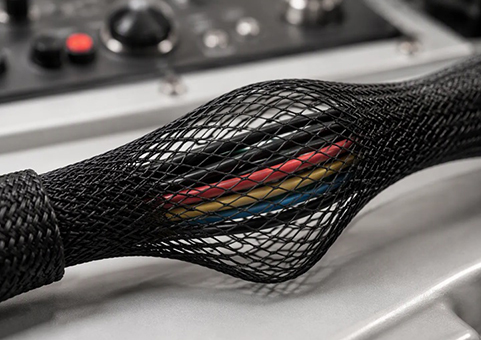
    PET braided sleeving is a flexible, expandable tubular mesh made from polyester fibers. It wraps around wires, cables, and hoses to shield them from abrasion, chemicals, and UV light. This article explains what PET stands for, how the braided construction works, and what function the sleeving serves. A PET expandable braided cable sleeve protects and organizes runs of cable while staying flexible enough to route around tight bends and connectors.   Key Takeaways PET braided sleeving is a stretchy polyester tube that wraps around cables and hoses to protect them. The mesh resists abrasion, chemicals, and UV light, and it lets air flow to keep cables cool. Installers slide the sleeve over connectors without cutting cables, which saves time and effort. You can use PET sleeving in electronics, cars, and industrial machines to organize and hide wires. Choose the sleeve size based on the whole bundle and check the manufacturer's data sheet for heat limits.   PET Braided Sleeving Defined What PET Stands For PET stands for polyethylene terephthalate. This long chemical name describes a specific type of polyester, a plastic fiber that manufacturers spin into thread and then weave or braid into finished products. The terephthalate portion of the name refers to the acid building block inside the polymer chain. Ethylene glycol supplies the other half of that chain. These terephthalate-based links give the fiber its strength and its resistance to moisture. A polyester strand holds its shape well, sheds water instead of absorbing it, and tolerates heat better than many softer plastics do. Those traits explain why manufacturers choose this material for pet braided sleeving rather than a weaker fiber. The same chemistry appears in woven polyester fabric and in polyester braided cable sleeving, so the raw material is common and easy to source. Polyester also resists moisture that would soften paper or cotton wraps. A buyer who reads a product label therefore sees a familiar plastic, not an exotic compound. Sunlight breaks down many plastics over time. This fiber keeps its structure outdoors, which suits engine bays and outdoor cabinets.   Braided Construction and Function Manufacturers interlace those PET filaments into a tube. The result is a PET expandable braided sleeving that stretches over large connectors and closes again around the cable. An installer pushes the tube along a long run, and the mesh opens and closes as needed. This open-weave construction lets air circulate, so cables stay cooler under load. The mesh forms a protective outer layer against abrasion, chemicals, and UV light. Abrasion protection matters most where cables rub against frames, panels, or other cables. The sleeve also organizes and conceals multiple cables inside one neat bundle. Buyers choose from a range of colors to code circuits or match equipment. One braided cable sleeve can tidy a whole harness. Matching braided cable sleeves keep a control panel readable. Many teams specify braided cable sleeves for both protection and appearance. A PET expandable braided cable sleeve slips over a plug without cutting or splicing, which saves assembly time. Installers trust braided cable sleeves because the mesh flexes around bends without cracking. Heat and air still reach the cable through the open mesh, so trapped water never becomes a problem. A roll of pet braided sleeving also cuts easily with hot-knife tools, and the cut ends stay clean. The braid spreads a load across many filaments, so a sharp edge dents one strand instead of cutting the cable beneath. Hoses benefit from the same treatment. A sleeve over a hydraulic or pneumatic line guards the rubber against rubbing and sunlight. Long cable runs in a cabinet or a vehicle benefit too, because one sleeve replaces several loose ties. The mesh holds the bundle together while leaving each cable free to move slightly. That slight movement reduces strain at connectors. Color-coded braided cable sleeves help technicians trace a circuit during service. The tube compresses for storage and expands again on site. Installers often finish the ends with shrink tubing or tape. For a clean, durable finish, braided cable sleeves remain a practical default.   Key Properties of Polyester Sleeving Abrasion and Chemical Resistance Polyester earns its place in cable protection because the fiber stands up to rough handling. The mesh guards insulation against abrasion, scratching, and crushing. Abrasion resistance matters most where cables rub against frames, panels, or other cables. A sharp metal edge dents one strand instead of cutting the cable beneath. Abrasion protection also extends to hoses that drag across shop floors and loading docks. Repeated contact wears soft rubber quickly, and the mesh absorbs that wear instead. Abrasion resistance improves further when the braid sits tight against the cable. Loose mesh shifts and rubs, so installers pull the sleeve snug before trimming. Chemical resistance keeps the sleeve intact near oils, solvents, and cleaning agents. A spill that would soften tape or cloth wrap leaves the mesh unchanged. Hydraulic fluid, coolant, and battery acid all contact sleeving in service, and the fiber resists each one better than cotton or paper wrap does. The protective outer layer blocks UV light that would otherwise crack lesser plastics. Outdoor cabinets and engine bays expose wiring to sunlight every day, and the mesh holds its structure through those cycles. Sunlight and chemical exposure combine in outdoor equipment, and the mesh handles both at once. Moisture resistance adds another benefit. Polyester sheds moisture instead of absorbing it, so damp cabinets and washdown areas stay safe. That trait keeps the mesh from swelling or softening over time. Trapped moisture causes more cable failures than most crews expect, and an open mesh drains and dries quickly.   Flexibility, Airflow, and Temperature Range A flexible braid bends around tight corners without kinking. The open-weave construction lets air circulate, so cables stay cooler under load. That airflow also lets moisture escape instead of trapping it against insulation. The mesh cushions cables against impact and vibration, which reduces strain at connectors. Braided cable sleeves handle a broad temperature range. They tolerate heat from engine bays and industrial equipment, and they stay pliable in cold conditions. Exact limits vary by product, so buyers should check the manufacturer's data sheet. Heat does not soften the mesh enough to sag, and cold does not make it brittle. These traits make braided cable sleeves a practical default for demanding routes. A PET expandable braided cable sleeve combines this flexibility with easy installation. Braided cable sleeves also resist fraying at cut ends when technicians use hot-knife tools. Installers choose braided cable sleeves for cabinets, vehicles, and machinery alike. Many crews stock braided cable sleeves in several colors. The sleeving holds a bundle together while each cable moves slightly. That slight movement relieves strain at terminations. A PET expandable braided sleeving product also conceals wiring for a cleaner look. Teams specify the sleeving for both protection and appearance. Polyester keeps its strength after repeated flexing, which suits doors, hinges, and robotic arms. The pet mesh tolerates heat cycling without hardening. A sleeve that fits too loosely bunches at bends, and one that fits too tightly limits expansion over connectors. Crews often test a short length on the actual route before ordering a full roll. Buyers who compare options should weigh airflow and flexibility together, because a tight weave blocks air and a loose weave cushions less.   How Expandable Braided Sleeving Is Made The Braiding Process Manufacturers begin with spools of fine polyester filament. A braiding machine carries these spools around a circular track. The spools travel in opposing directions and cross each other at regular intervals. Each pass interlocks the filaments into a tubular mesh. The crossing pattern creates the diamond-shaped openings visible on any braided cable sleeve. That same pattern lets the tube expand and contract. Workers adjust the angle of the crossing to control how much the mesh opens. A steeper angle gives more expansion over connectors. A flatter angle produces a tighter, denser wall. The machine pulls the finished tube away at a steady rate, and the mesh holds its shape without glue or stitching. Operators inspect the mesh for gaps and broken filaments before the roll leaves the line.   Sizing and Finishing Options Suppliers offer expandable braided sleeving in a wide spread of sizes. Common diameters include 1/4 inch and other fractional sizes, and buyers match the sleeve to the bundle rather than to a single cable. Rolls often come in 100-foot lengths, and shorter cuts suit small jobs. Color variety helps teams code circuits and match equipment. Finishing options extend the service life of the mesh. A hot-knife cut seals the ends and stops fraying. Shrink tubing over the cut end gives a clean termination at a connector. Some buyers request a slit version for wrapping existing runs without disconnecting cables. Others choose a flame-retardant grade for cabinets with strict rules. A polyester braid also resists moisture pickup, so damp storage does not damage a roll before installation. Crews should confirm the expansion range against the largest connector on the route. A sleeve that cannot open far enough forces a splice, and a splice weakens the protection. Buyers who plan the size and finish up front get braided cable sleeves that install quickly and last. Proper sizing also keeps heat moving through the open mesh instead of trapping it against insulation.   Common Uses for Braided Cable Sleeves Electronics, Automotive, and Industrial Applications Electronics assemblers, automotive technicians, and plant engineers all reach for braided cable sleeves. A control cabinet full of loose wiring becomes a tidy harness once braided cable sleeves go on. Automotive teams route braided cable sleeves along frames and through firewalls, where heat and vibration test every connection. Industrial crews fit braided cable sleeves on machine tools, conveyors, and robot arms. Marine and outdoor installs use braided cable sleeves for the same reason. MJ FLEX supplies PET braided sleeving for these settings, and the material suits each one. Cable protection starts with the mesh wall, which shields wires from sharp edges and repeated rubbing.   Hoses need the same care. A braided cable sleeve over a hydraulic line adds abrasion protection against dragging and scraping. Braided cable sleeves also guard pneumatic tubing in a busy shop. Braided cable sleeves stay put on a vibrating line. Cable protection matters on hoses too. The protective outer layer blocks sunlight and moisture that crack rubber over time. A snug fit keeps the mesh from shifting.   Cable Bundling and Concealment Long cable runs respond well to expandable braided sleeving. One length of pet braided cable sleeves gathers a dozen loose cables into a single bundle. The mesh acts as a cable organizer and hides color clashes behind a uniform finish. A wire protection sleeve also keeps a run readable during service, because technicians trace one bundle instead of many strands. General-purpose sleeving covers most of these jobs, and protective sleeving adds a clean look to visible routes. Pet sleeves resist moisture and heat, so damp floors and warm cabinets pose no problem. A braided cable sleeve slips over a connector without cutting, and a second sleeve can code a separate circuit. Braided cable sleeves keep that bundle flexible at every bend. Many crews buy braided cable sleeves by the roll. Buyers match the sleeve diameter to the bundle, not to one cable. Three rolls of sleeving often finish a small panel, and the same roll trims easily on site.   PET vs. Other Braided Cable Sleeve Options Performance, Fit, and Compliance Each cable protection material comparison starts with the same question: what does the route demand? Nylon braided sleeving offers strong abrasion resistance and a smooth feel, and it suits rugged handheld tools and outdoor gear. Fiberglass sleeving shines where heat runs high, such as near engines or furnaces, and it holds up where polyester would soften. PET sits between these options. It delivers solid abrasion protection, good moisture resistance, and reliable performance across a broad temperature range. Buyers weighing braided sleeving in nylon or PET often pick polyester for general wiring because it balances toughness with a soft hand and low moisture pickup. Braided sleeving in nylon or PET both resist chemicals well, and either choice covers most cabinet and vehicle routes.   Fit and compliance decide many projects. A PET expandable braided cable sleeve expands over connectors and contracts for a snug hold, and that range matters on routes with bulky plugs. Fiberglass sleeves often come in fixed sizes, and nylon stretches less than polyester mesh. Teams working under flame-retardant rules should confirm the grade before ordering, because not every braided cable sleeve meets those standards. Braided cable sleeves in a flame-retardant grade exist for strict cabinets. A PET expandable braided sleeving product also passes common electrical insulation expectations when the wall thickness suits the voltage. Buyers should check data sheets for compliance claims rather than assume them.   Cost and Best-Fit Scenarios Cost tracks material and volume. Polyester is a common, widely produced fiber, so braided cable sleeves in PET usually land in the middle of the market. Nylon often costs more because the fiber is tougher to process. Fiberglass carries its own premium for high-heat capability. None of these options is universally cheaper, and a low unit cost means little if the sleeve fails early. Crews should weigh total service life against the purchase price.   Best-fit scenarios follow directly. General-purpose sleeving in polyester covers electronics, automotive harnesses, and industrial panels. Nylon fits high-wear handheld and outdoor equipment. Fiberglass fits hot zones near exhausts and heaters. Braided cable sleeves in any material protect cables, and the right pick depends on heat, abrasion, and moisture exposure. Braided cable sleeves chosen for the actual route last longest. A roll of sleeving sized to the bundle beats a bargain roll that fits poorly. Braided cable sleeves reward careful planning.   PET braided sleeving is an expandable polyester mesh tube that shields wires, cables, and hoses from abrasion, chemicals, and UV light. This definition covers the material, the braided construction, and the protective role.   The polyester fiber resists moisture and heat, and the open braid stays flexible while letting air flow. Braiding machines form the mesh, and suppliers finish it in many sizes and colors. Electronics, automotive, and industrial crews rely on braided cable sleeves for bundling and concealment. Compared with nylon and fiberglass, braided cable sleeves in PET suit general-purpose routes well. Readers can use this definition to match sleeving to each route, and MJ FLEX offers braided cable sleeves as a resource.   FAQ What does PET stand for in braided sleeving? PET stands for polyethylene terephthalate, a polyester plastic fiber. Manufacturers spin this material into filament and braid it into an expandable mesh tube. The fiber resists moisture and holds its shape well, which makes it a common choice for cable protection. How do I choose the right size? Match the sleeve to the whole bundle, not to a single cable. The mesh must open wide enough to pass over the largest connector. A loose fit bunches at bends, and a tight fit limits expansion. Crews often test a short length on the actual route first. Can PET expandable braided sleeving stay outdoors? Yes. The mesh blocks UV light that cracks lesser plastics, and polyester sheds moisture instead of absorbing it. Outdoor cabinets, marine installs, and engine bays all suit this material. Braided cable sleeves keep their structure through sun and damp conditions alike. How does PET compare with nylon for general wiring? Both materials resist chemicals and abrasion well. Nylon offers a tougher feel for handheld tools and outdoor gear. Polyester balances toughness with low moisture pickup and easy expansion. Most cabinet, vehicle, and panel routes work well with either braided cable sleeves option.

    Read More
  • Is Expandable Braided Sleeving Resistant to Chemicals and Oils?
    Nov 10, 2026
    Is Expandable Braided Sleeving Resistant to Chemicals and Oils?

    Expandable braided sleeving is widely used in automotive, electrical and industrial equipment applications, where cables and wire harnesses may come into contact with lubricating oils, hydraulic fluids, greases and other chemicals.   Yes. PET expandable braided sleeving offers good resistance to many common oils, lubricants and industrial chemicals. The properties of polyester make it suitable for a wide range of cable protection applications where oil resistance and basic chemical resistance are required.   However, different chemicals can affect materials in different ways. Understanding the properties of PET helps manufacturers select suitable cable protection sleeving for their operating environments.   1. How Resistant Is PET Braided Sleeving to Oils? PET (Polyethylene Terephthalate) is a polyester material that offers good resistance to many petroleum-based substances and common industrial fluids. Its typical resistance characteristics include: · Engine Oils and Lubricating Oils: Good resistance to many common automotive and industrial lubricating oils. · Hydraulic Fluids: Suitable for many applications involving hydraulic fluid exposure, depending on the specific fluid formulation. · Diesel and Petroleum-Based Products: Generally offers good resistance to various petroleum-based products. · Greases: Suitable for applications involving contact with common industrial and automotive greases. These properties make PET expandable braided sleeving a practical choice for external protection of wire harnesses and cable assemblies in machinery, automotive systems and industrial equipment.   2. Which Chemicals Can PET Expandable Braided Sleeving Resist? PET polyester fibers offer good resistance to many commonly encountered chemicals. However, actual compatibility depends on the chemical composition and exposure conditions. Chemical / Substance General PET Resistance Lubricating Oils Good Hydraulic Oils Good Diesel Fuel Generally Good Common Greases Good Alcohols Generally Good Weak Acids Generally Good Strong Acids Limited Strong Alkalis Poor Common Cleaning Agents Depends on Formulation Organic Solvents Depends on Solvent Type PET is particularly suitable for applications involving routine contact with common oils and selected industrial fluids. Strong alkaline chemicals and certain aggressive solvents, however, are less compatible with polyester materials. 3. Why Does Chemical Resistance Matter for Cable Protection? In industrial environments, braided sleeving is often installed near mechanical components, fluid systems and equipment surfaces, where contact with oils and chemicals may be part of normal operating conditions. Selecting the right material offers several practical benefits: · Material Stability: Helps maintain the structural integrity of the sleeving when exposed to compatible oils and chemicals. · Reliable Cable Protection: Maintains an external protective layer against mechanical contact and abrasion. · Reduced Maintenance: Helps reduce the risk of premature sleeving deterioration caused by incompatible fluids. · Consistent Service Performance: Supports reliable cable protection in suitable operating environments. For OEMs and wire harness manufacturers, material compatibility is an important consideration when designing protection for complete cable assemblies.   4. Differences Between PET and Other Braided Sleeving Materials Different fiber materials offer different chemical and mechanical properties. The following comparison helps identify suitable materials for different operating environments. Material Main Characteristics Typical Selection Focus PET Good resistance to many oils and common chemicals General cable protection PA6 / PA66 Nylon Good mechanical strength and abrasion resistance Mechanical wear and demanding contact conditions PPS High thermal stability and strong chemical resistance Applications requiring higher temperature and chemical resistance PET is suitable for a wide range of general industrial and automotive cable protection applications. For applications requiring enhanced chemical or thermal performance, PPS and other specialized materials may also be considered.   5. Where Is Oil-Resistant PET Braided Sleeving Used? PET expandable braided sleeving is suitable for many cable protection applications involving routine contact with compatible oils and industrial fluids. Typical applications include: · Automotive Wire Harnesses: Used for cable protection in engine compartments, chassis systems and other areas where contact with automotive lubricants may occur. · Industrial Machinery: Protects electrical wiring near lubricated mechanical components and hydraulic equipment. · Agricultural Equipment: Used for wire harness protection in machinery exposed to oils, greases and outdoor operating conditions. · Hydraulic Equipment: Provides external protection for cables and hose assemblies in industrial fluid systems. · Electrical Equipment: Used for cable organization and protection in machinery and control systems. 6. Frequently Asked Questions Q1: Is PET expandable braided sleeving oil-resistant? Yes. PET expandable braided sleeving offers good resistance to many common lubricating oils, hydraulic oils and petroleum-based substances, making it suitable for numerous automotive and industrial applications. Q2: Can PET braided sleeving be used in engine compartments? Yes. It can be used for external wire harness protection in engine compartments, provided its temperature rating and fluid compatibility meet the application requirements. Q3: Is PET braided sleeving resistant to gasoline and diesel? PET generally offers good resistance to many petroleum-based products. However, gasoline and diesel formulations may vary. For direct or prolonged exposure, compatibility should be evaluated under the actual operating conditions. Q4: Is PET braided sleeving more chemically resistant than nylon? Neither material is universally superior. PET offers good resistance to many oils and selected chemicals, while nylon has different mechanical and chemical properties. The appropriate choice depends on the specific fluid and operating conditions. Q5: Is oil-resistant braided sleeving waterproof? No. PET expandable braided sleeving features an open-weave structure. Although the material can resist many oils, the braided construction does not prevent liquids from passing through its openings.   7. How to Select the Right Braided Sleeving for Your Application For most general automotive and industrial cable protection applications, PET expandable braided sleeving offers a practical combination of oil resistance, mechanical protection and material stability. When selecting a product, consider the actual fluid type, operating temperature and service environment rather than evaluating the material based solely on its general chemical resistance.

    Read More
  • Can Expandable Braided Sleeving Be Used to Protect Fiber Optic Cables?
    Nov 10, 2026
    Can Expandable Braided Sleeving Be Used to Protect Fiber Optic Cables?

    Fiber optic cables are widely used in telecommunications, data centers, industrial networks and various communication systems. Although optical cables are designed for data transmission, their outer jackets may still be exposed to friction, abrasion, bending and contact with surrounding mechanical components during installation and operation.   Yes. PET expandable braided sleeving can be used as an additional external protective layer for fiber optic cables. Its flexible, open-weave construction accommodates different cable diameters while providing external abrasion protection and helping organize multiple fiber optic cables.   What Protection Does Expandable Braided Sleeving Provide for Fiber Optic Cables? PET expandable braided sleeving mainly provides the following types of external protection: · Abrasion Protection: Helps reduce surface wear caused by contact with equipment, cable trays and surrounding components. · Mechanical Contact Protection: Provides an additional external protective layer, reducing the effects of everyday friction and incidental contact. · Cable Organization: Groups multiple fiber optic cables together for a cleaner and more organized installation. · Flexible Coverage: Accommodates different cable bundle diameters and routing configurations to meet various installation requirements. Braided sleeving is particularly suitable for fiber optic cable assemblies that require additional external protection without the use of a rigid protective structure. Will PET Braided Sleeving Affect Fiber Optic Signal Transmission? No. PET braided sleeving is a non-conductive external cable protection material and does not interfere with optical signal transmission when properly installed. However, installation should not create excessive compression, sharp bends or localized pressure on the fiber optic cable. Always follow the minimum bend radius specified by the fiber optic cable manufacturer to avoid excessive bending, which may reduce optical performance or cause signal loss.   Can Expandable Braided Sleeving Prevent Bending and Tensile Damage to Fiber Optic Cables? Expandable braided sleeving is flexible and can follow curved cable routing paths. However, it cannot replace proper bend-radius control or the tensile-strength structure of the cable itself. For fiber optic cable applications, consider the following: · Follow the minimum bend radius specified by the cable manufacturer. · Avoid applying excessive pulling force during installation. · Avoid overly tight cable ties or localized compression points. · Ensure the braided sleeving does not restrict the cable's natural routing. For applications involving frequent movement, the complete cable assembly should be evaluated under actual operating conditions.   Is PET Expandable Braided Sleeving Suitable for Indoor and Outdoor Fiber Optic Cables? Yes. Depending on the product specifications and environmental requirements, PET braided sleeving can be used for external protection of both indoor and outdoor fiber optic cables. Indoor Applications: · Data centers and server rooms · Telecommunications cabinets · Network equipment · Industrial communication systems · Fiber optic distribution panels Outdoor Applications: · Outdoor communication cable routing · Solar and renewable energy communication systems · Outdoor industrial equipment · Exposed fiber optic cable assemblies For outdoor installations, UV resistance, moisture exposure, temperature variations and environmental aging should also be considered. UV-resistant PET braided sleeving is an option for applications requiring improved resistance to sunlight. Which Type of Braided Sleeving Is Best for Fiber Optic Cable Protection? The appropriate structure depends on the installation method and protection requirements. Braided Sleeving Type Main Advantage Suitable Application Standard PET Expandable Braided Sleeving Flexible coverage and abrasion protection General fiber optic cable protection High-Expansion PET Braided Sleeving Accommodates a wider range of cable diameters Larger connectors and cable bundles of different diameters Dense-Braided PET Sleeving Tighter braided construction Applications requiring enhanced surface protection Self-Wrapping Braided Sleeving Installs without removing cable ends Existing cable installations and maintenance For fiber optic cables with pre-installed connectors, expandable or self-wrapping structures can simplify installation, depending on connector dimensions and available installation space.   How Do You Choose the Correct Braided Sleeving Size? Choosing the correct diameter is important for maintaining effective coverage while avoiding restrictions on the fiber optic cable. The following factors should be considered: · Cable Outside Diameter: Measure the actual outside diameter of a single fiber optic cable or the complete cable bundle. · Connector Dimensions: Check whether the sleeving needs to pass over connectors or end sections. · Expansion Range: Select a size with sufficient expansion capacity that will not compromise coverage through excessive stretching. · Cable Routing: Consider bends, branches and the available installation space. · Protection Requirements: Determine the required braid coverage and abrasion resistance. The selected sleeving should cover the cable assembly without causing excessive compression or unnecessary looseness.   Can PET Braided Sleeving Replace Fiber Optic Protective Ducts or Armored Structures? No. Expandable braided sleeving is primarily designed for external abrasion protection and cable organization. It does not provide the same level of crush resistance, impact protection or structural reinforcement as armored fiber optic cables, rigid conduits or dedicated protective ducts. For installations exposed to significant mechanical loads, additional protective structures should be selected according to the application requirements.   What Information Should Buyers Provide When Sourcing Braided Sleeving for Fiber Optic Cables? To help identify a suitable braided sleeving specification, buyers should provide: · Fiber optic cable type and outside diameter · Connector or end-section dimensions · Required sleeving length · Indoor or outdoor installation environment · Operating temperature and UV exposure conditions · Required abrasion protection level · Estimated annual purchasing quantity This information helps MJ FLEX recommend the appropriate braided construction, diameter and material specifications. Conclusion: Is Expandable Braided Sleeving Suitable for Fiber Optic Cable Protection? For fiber optic cable assemblies that require additional external abrasion protection, flexible coverage and cable organization, PET expandable braided sleeving is a practical option. Its open-weave construction, expansion flexibility and lightweight design make it suitable for various applications in telecommunications, networking equipment and industrial environments. The key is to select the correct diameter and braid construction while meeting the specified bend radius and mechanical protection requirements of the fiber optic cable.

    Read More
  • Cable Protection Sleeving Types Compared: Braided Woven and Tubular Options
    Nov 04, 2026
    Cable Protection Sleeving Types Compared: Braided Woven and Tubular Options

    Braided, woven, and tubular designs each deliver cable protection in a distinct way. The right pick hinges on one question: what matters most for the run? Readers who rank abrasion resistance, coverage density, flexibility, heat resistance, expansion range, or cost gain a clear lens for judging every option. This cable protection sleeving types compared guide weighs all three families on technical performance, application fit, regulatory compliance, and cost. MJ FLEX adds practical guidance for specifying the right sleeving. Which types of sleeving suit a given cable bundle? The answer starts with the priority, not the product. Name that priority first, then read every comparison through it.   Key Takeaways Braided sleeving bends easily and resists wear. It suits tight routes and moving parts. Woven sleeving handles high heat and blocks fine dust. It works well near engines and furnaces. Tubular sleeving covers a cable bundle in one pass. It saves time on long runs. Match the sleeving type to your top priority. This prevents overpaying or under-protecting. Check temperature, chemicals, and UV needs before you buy. The right choice keeps cables safe.   Cable Protection Sleeving Types Compared: The Framework Construction Basics at a Glance An electrical sleeve is a braided, knitted, woven, or extruded tube that slips over conductors in an electric assembly. Each construction method shapes how the sleeve behaves on the job. Braided sleeving uses an open-weave construction. This design lets air circulate while it shields wires and cables from abrasion, chemicals, and UV light. HellermannTyton notes that its physical weave stays flexible and provides enough airflow to avoid trapping moisture or humidity. The same source reports resistance to salts, solvents, de-icing fluids, and petroleum products.   Braided sleeving does not shrink like heat shrink tubing. Heat shrink tubing contracts when heated; braided sleeving keeps its shape, size, and flexibility. It fits over the cable bundle instead. Installers slide it on, then secure the ends with heat shrink tubing, cable ties, or clamps. The sleeve expands when pushed together and grips when pulled lengthwise, so it clears bulky connectors and odd shapes.   Protection goal How the construction delivers it Abrasion Tight braid resists cuts and repetitive wear Chemicals Inertness to fuels, salts, and solvents UV and weather Resilience against sunlight and moisture Flexibility Open weave adjusts to twisting and flexing   Matching Construction to Protection Goals The framework starts with the priority named in the introduction. A team that ranks abrasion resistance first should study braid density and material. A team that ranks coverage density first should look at woven structures. A team that ranks expansion range first should favor expandable braided styles. This lens keeps the cable protection sleeving types compared honest, because no single construction wins on every measure.   Protection goals also set the installation plan. Open-weave sleeving suits routing that needs airflow and moisture release. Tight constructions suit dirty or high-contact zones. Buyers who treat these types of sleeving as interchangeable risk overpaying for one job and under-protecting the next. The sections that follow apply this framework to braided, woven, and tubular options in turn.   Braided Sleeving: Flexible Protection Overview and Key Benefits Braided sleeving earns its place through movement. The open weave bends, twists, and routes around tight corners without cracking or kinking, so installers slide it over a harness quickly and secure the ends with cable ties or heat shrink tubing. Cableties Unlimited lists flexibility, abrasion resistance, and expandability as the core benefits of standard braided constructions. Expandable braided sleeving stretches over bulky connectors and then grips the bundle, which simplifies retrofits on assembled equipment.   The protection profile extends beyond simple wear. Braided designs shield wires and cables from impact, vibration, fuels, solvents, and sunlight, and they resist corrosion in outdoor runs. This combination suits cable management, harness protection, and general abrasion and UV defense across automotive, aerospace, industrial, and renewable energy installations. One limit deserves attention: braided sleeving is flexible and easy to install, but it lacks the high temperature resistance of high temperature woven sleeving. Specifiers who need sustained heat performance should look to the woven family instead. Different Types of Braided Sleeving Material choice drives the performance of every braided sleeve. MJ FLEX groups the common options by characteristic and typical application. Material Main characteristics Typical applications PET polyester Lightweight, flexible, economical, abrasion resistant General wiring, automotive harnesses, electronics PA6 / PA66 nylon High toughness and abrasion resistance Machinery, automotive systems, hose protection PPS High-temperature, flame and chemical resistance, low moisture absorption Automotive, aerospace, electrical Nomex aramid Inherently flame resistant, suited to elevated temperatures Aerospace, railway, heat protection   Nylon braided sleeving offers superior abrasion resistance compared with other braided sleeve materials, which makes it the default for high-friction routing. Polyester expandable styles cover cost-sensitive wire protection, while PPS and Nomex handle heat and flame duty. Hybrid builds such as E-FLEX PET+PA combine both strengths; MJ IST reports ISO 6722-1 Class 6 abrasion resistance and GMW14327 thermal stability compliance. Stainless steel braided sleeving and woven wrap braided sleeving serve specialized mechanical and wrap-style needs. Buyers comparing the different types of braided sleeving should weigh yarn, coating, and braid density together, since material name alone does not fix performance.   Woven Sleeving: Tight Coverage Overview and Key Benefits Woven construction interlocks warp and weft yarns in a crossing pattern. The interlacing yields tighter coverage and stronger structural stability than an open braid. Woven sleeving blocks debris and shields a cable bundle from chafing. Wrap-around woven sleeves complement tubular woven styles. An installer opens the wrap, lays it over an assembled harness, and closes the seam. Woven wrap-around sleeving suits industrial retrofits on control panels and machinery. Many buyers pair it with sealed fittings for protection against heat and moisture. A tight weave also resists fraying at cut ends. Tubular woven sleeves slide over long runs in one pass. Dense coverage keeps fine dust off conductors. Woven sleeves hold their shape under vibration.   High Temperature Woven Sleeving High temperature woven sleeving answers the limits of braided designs. Braided sleeving installs easily and flexes well. It lacks the heat resistance of high temperature woven sleeving. Cableties Unlimited reports that high temperature woven sleeving uses high-performance fibers such as fiberglass or silica. Fiberglass sleeving brings strong abrasion resistance and enhanced safety. The HellermannTyton 170-03162 Nomex high temperature woven sleeving operates from -320°F to +662°F. It self-extinguishes, does not melt, and resists most acids. High-temperature woven sleeving protects cables near engines and furnaces. High temperature woven sleeving also serves foundries and smelting lines. High-temperature woven sleeving holds up where braided sleeving fails. Specifiers pick high temperature woven sleeving for hot-zone routing. High-temperature woven sleeving delivers dependable protection in extreme heat. Plants that standardize on high temperature woven sleeving simplify spares. High-temperature woven sleeving earns its cost in radiant-heat zones. Maintenance crews trust high temperature woven sleeving near exhaust runs. High-temperature woven sleeving suits kiln and oven wiring. Buyers specify high temperature woven sleeving for exhaust manifolds. High-temperature woven sleeving shields sensor leads. High temperature woven sleeving resists slag splash. High-temperature woven sleeving covers burner lines. High-temperature woven sleeving serves rail fleets. High-temperature woven sleeving rounds out the woven family.   Tubular Sleeving: Full-Coverage Simplicity Overview and Key Benefits Tubular sleeving slides over a cable bundle as a continuous, closed tube. The design delivers full coverage in a single pass, with no seam to open and no overlap to manage. AerosUSA describes nylon and polyethylene (PET) as lightweight and flexible, and notes that both materials adapt to individual needs and machine requirements. That adaptability shortens installation time and reduces downtime. Nylon brings durability and abrasion resistance, and expandable nylon styles conform to different shapes while blocking moisture. Polyethylene adds water resistance, corrosion strength, and high impact protection, and it relieves strain on machinery.   The protection profile covers the full range of industrial hazards. TPC Wire lists impact and crushing resistance, chemical resistance, moisture and corrosion defense, and flame-retardant options among the benefits of quality sleeving. Metallic tubular styles also preserve signal integrity where interference threatens performance. Installers secure the ends with heat shrink tubing, cable ties, or clamps, and the tube stays put without shrinking. Buyers who need a fast, uniform wrap around long runs of wires and cables find tubular designs hard to beat.   Tubular type Temperature range Standout benefit Silicone fiberglass -54°C to 260°C Moisture and chemical resistance High-temperature silica -40°C up to 982°C Extreme heat, flame, and spark defense Ceramic fiber Up to 1200°C Flash heat and flame protection Fiberglass Up to 538°C Flash heat, chemical, and mechanical abuse Stainless steel 304 Melts at 1450°C Abrasion and mechanical abuse Best Uses for Tubular Options Tubular sleeving fits jobs that reward containment and speed. ChafePro reports that tubular sleeves protect and contain hose assemblies, ropes, wire harnesses, and chains, and that heavy equipment manufacturers, automotive suppliers, hose repair shops, and rope companies form the core market. A plant that routes a long harness through a machine frame can pull one continuous tube over the run and finish both ends in minutes. Outdoor runs benefit from moisture and UV defense, and high-impact zones benefit from the crush resistance of nylon or polyethylene.   The family also covers extreme heat duty. Silica tubular sleeving expands and contracts by 20% of its nominal size, per TPC Wire, which helps during installation over fittings. Ceramic and stainless steel options handle flash heat and heavy mechanical abuse. ChafePro sells standard tubular stock in 300-foot rolls in black, a format that suits maintenance shops and distributors. Matching the tube material to the dominant hazard keeps protection cost-effective and keeps wiring reliable for the long term.   Braided vs. Woven vs. Tubular Abrasion, Flexibility, and Coverage Abrasion resistance separates the three families first. Nylon braided sleeving offers superior abrasion resistance compared with other braided sleeve materials, so high-friction routing favors the braided family. Woven constructions interlock warp and weft yarns for tighter coverage and stronger structural stability, which blocks fine debris and resists fraying at cut ends. Tubular designs deliver full coverage in a single pass, and nylon or polyethylene tubes add crush and impact defense. Stainless steel braided sleeving extends the abrasion story into mechanical abuse, where metal braid outlasts textile yarns.   Flexibility follows a different order. Braided sleeving bends and twists around tight corners without kinking, and expandable styles stretch over bulky connectors before gripping the bundle. Tubular sleeving holds a fixed diameter, so installers must match tube size to bundle size before routing. Woven wrap-around sleeving bridges the two: an installer opens the wrap over an assembled harness and closes the seam, which suits retrofits that a closed tube cannot reach. Woven wrap braided sleeving serves the same wrap-style need with a braided structure. Coverage density rises from open braid to tight weave to closed tube, and each step trades installation speed for containment.   Temperature, Chemical, and UV Resistance Heat performance draws the sharpest line between the families. Braided sleeving is flexible and easy to install, but it lacks the high temperature resistance of high temperature woven sleeving. High-temperature woven sleeving uses fiberglass, silica, or aramid fibers, and the HellermannTyton 170-03162 Nomex style operates from -320°F to +662°F while it self-extinguishes and resists most acids. High temperature woven sleeving therefore covers engine bays, furnaces, and foundries. High-temperature woven sleeving also handles kiln and oven wiring. Plants that standardize on high temperature woven sleeving simplify spares across hot-zone equipment. High-temperature woven sleeving earns its cost wherever radiant heat shortens the life of other types of sleeving. Buyers who specify high temperature woven sleeving for exhaust runs get predictable service life.   Chemical and UV resistance depend more on material than on construction. Braided PET and nylon resist salts, solvents, de-icing fluids, and petroleum products, and they shrug off sunlight in outdoor runs. Polyethylene tubular stock adds water and corrosion resistance. PPS braided styles bring flame and chemical resistance with low moisture absorption. The table below compares representative temperature ceilings across the tubular family.   Tubular material Temperature limit Resistance highlight Silicone fiberglass -54°C to 260°C Moisture and chemicals Fiberglass Up to 538°C Flash heat and chemical abuse High-temperature silica Up to 982°C Flame and spark defense Ceramic fiber Up to 1200°C Flash heat and flame Stainless steel 304 Melts at 1450°C Abrasion and mechanical abuse This cable protection sleeving types compared view shows one clear pattern. Braided wins on flexibility, woven wins on heat and tight coverage, and tubular wins on full-coverage simplicity. A specifier who weighs cable protection against these limits picks the family that matches the dominant hazard, not the lowest price.   Application Fit Harness, Routing, and Installation Scenarios Installation method often decides the choice before performance does. Expandable braided sleeving stretches over connectors and then contracts to grip the bundle. Technicians thread it from one end, a slow step on pre-terminated wire harnesses. Self-closing styles wrap around the bundle from the side, and the overlap adds coverage redundancy. That side entry saves installation labor on retrofit and field work. Harness situation Good starting point Verify before ordering Connectors fitted after sleeving PET expandable braided sleeving Installed diameter and cut length Large connectors already fitted Self-closing braided or woven sleeving Overlap across the full diameter range Later inspection or cable additions Self-closing braided or woven sleeving Ease of reopening Tight bends and branches Test both self-closing constructions Overlap in the final routing   Matching Each Type to the Job Control panels reward self-closing braided sleeving, because technicians reopen sections during service. Industrial machinery favors closed-wall tubular stock for dust and moisture defense, and split tubing speeds field repair. Automotive harnesses in hot zones call for fiberglass or Nomex constructions, where high temperature woven sleeving outperforms standard braid. Outdoor runs need UV and moisture resistance, so polyethylene tubular sleeves or coated braided sleeving fit best.   Three starting points cover most projects. PET expandable braided sleeving suits open-end installation before connectors go on. Self-closing braided sleeving suits assembled harnesses and retrofits. Self-closing woven sleeving suits buyers who want to compare a woven surface against a braided one where visible finish matters. High-temperature woven sleeving covers engine bays and furnace areas, and high temperature woven sleeving remains the reference point for radiant heat. Each option protects wires and cables well; the routing, not the catalog, sets the match. MJ FLEX treats every type of sleeving as one part of a complete cable and wiring solution.   Regulatory Compliance Compared Standards and Certifications to Check Compliance review starts with the flame rating. Alibaba's fire-resistant cable sleeve guide treats UL 94 V-2 as the baseline, where material drips but extinguishes within 30 seconds, and UL 94 V-0 as preferable for critical paths, with no dripping and extinction within 10 seconds. Smoke density matters in enclosed spaces; ASTM E662 caps specific optical density at 75 at 4 minutes. Halogen-free construction under IEC 61249-2-21 protects confined spaces from toxic HCl gas. Weave tightness of at least 12 picks per inch blocks fine particulate and strengthens the flame barrier.   Flame test standards vary by market and installation. Sunkean explains that VW-1 is common in North America for UL-certified cable, while IEC 60332-1 tests a single cable under vertical flame and suits solar, industrial power, and outdoor runs. IEC 60332-3 applies to bundled installations in trays or conduits, such as data centers and utility-scale plants. Buyers should also verify UV claims against real exposure, particularly where direct sunlight exceeds six months per year. Standard / Certification Requirement or Value UL 94 V-2 baseline; V-0 for critical paths Continuous temperature Fiberglass 550°C; aramid 200–260°C; FR-PET 125°C Smoke density (ASTM E662) Ds ≤ 75 at 4 min Halogen-free (IEC 61249-2-21) Required for confined spaces Weave tightness ≥12 PPI   Compliance by Sleeving Type Each family carries different compliance strengths. Braided PET and nylon styles meet common flame ratings, yet high temperature woven sleeving covers aramid duty in the 200–260°C band. High-temperature woven sleeving with fiberglass reaches 550°C continuous, and fiberglass sleeving self-extinguishes without melting. High temperature woven sleeving therefore satisfies the toughest heat clauses. Tubular constructions add halogen-free and low-smoke options for tunnels and data halls.   Compliance needs vary by application. A rooftop solar run and a data center tray demand different standards, and no single sleeving clears every clause. MJ FLEX confirms the applicable ratings for each project before specification.   Cost Comparison Unit Cost vs. Total Cost of Ownership Unit price tells only part of the story. Buyers should weigh three factors together: durability, replacement frequency, and installation time. Alibaba's comparison of cable sleeving solutions against molded cable products puts sleeving unit cost at $0.05–$0.15 per unit in bulk, with replacement every 1–3 years. Molded parts cost more upfront but last 10–20 years. Sleeving still wins on speed, because off-the-shelf stock ships immediately.   Installation time carries real money. PatSnap reports that multifunction sleeving costs 60–70% less upfront than equivalent cable carrier installations, and its 40–50% installation time advantage cuts deployment expenses directly. PatSnap also places the break-even point at roughly 18–24 months of operation, depending on application parameters and local labor costs. A plant that replaces cheap sleeving every year may spend more than a plant that buys a durable grade once. Cost factor Sleeving profile Unit cost (bulk) $0.05–$0.15 per unit Replacement frequency Every 1–3 years Lead time Immediate, off-the-shelf Hidden costs Downtime, cable damage from poor fit When Higher Cost Pays Off Premium materials earn their price in harsh duty. Davlyn Group recommends silicone-coated fiberglass sleeves for steel mills, welding operations, and engine compartments exposed to flame or molten splash. Basalt sleeves suit continuous high-temperature exposure and rugged abrasion, including engine and exhaust insulation. Both materials carry higher performance thresholds than traditional fiberglass, which prevents premature degradation and unplanned downtime.   Buyers should match the premium to the hazard. Davlyn Group lists silicone as best for molten metal splash, weld spatter, and retrofit work, and basalt as best for continuous heat and uncoated system designs. In high-abrasion or high-heat environments, paying more delivers better value through fewer replacements and less downtime. In light-duty or temporary runs, standard sleeving remains the economical choice.   Best Seller Spotlight Product Profile The MJ FLEX E-FLEX PET+PA hybrid braided sleeving earns its best-seller status through a simple idea: combine two yarns, keep both strengths. Polyester contributes lightweight flexibility and economical coverage. Nylon adds toughness and high abrasion resistance. The hybrid build carries ISO 6722-1 Class 6 abrasion resistance and meets GMW14327 thermal stability requirements, two benchmarks that automotive and industrial buyers recognize immediately.   Installers value the expandable structure. The sleeve stretches over bulky connectors, then grips the bundle once routed. Cut ends stay clean, and the open weave releases heat and moisture instead of trapping them. Buyers who compare it against plain polyester braid see the difference in friction zones, where the nylon content resists repetitive wear far longer. The same construction resists salts, solvents, and UV exposure, so one part number covers indoor panels and outdoor runs alike.   Application Example An automotive Tier 1 supplier faced a recurring failure on an engine-adjacent harness. Standard polyester braid frayed within months at a bracket contact point, and warranty claims climbed. The team switched the affected run to E-FLEX PET+PA and kept the rest of the harness unchanged. Abrasion failures at the bracket stopped, and the Class 6 rating gave the quality team a documented number to defend in customer audits.   The result spread beyond that line. Plant engineers now specify the hybrid braid for door routing, battery cable runs, and chassis sections that see vibration and road spray. Distributors stock it because one SKU replaces two. For buyers weighing stainless steel braided sleeving against textile options, the E-FLEX story shows where a well-chosen polymer blend delivers enough durability at lower weight and cost. That balance explains the order volume.   Selection, Installation, and Maintenance Selection and Installation Tips Selection starts with measurement. Buyers should measure the diameter and length of the cable bundle before ordering, per Gendian Materials, and choose a sleeve that expands enough to cover every cable. Material follows the environment: PET polyester suits durable, affordable duty, nylon brings high flexibility, and fiberglass handles heat. Installers working on cables already in place should consider a split style, which opens along the length and wraps the bundle directly.   Installation rewards a few simple habits. Gendian Materials recommends cutting the sleeving slightly longer than the bundle to leave room for connectors and finishing, and using a hot knife, heat cutter, or electrical tape at the cut line to prevent fraying. The installer then pushes the ends together to open the braid, slides the bundle through, and secures both ends with heat shrink tubing, zip ties, or cable clamps. Buyers Choice notes that expandable sleeving stretches to 150% of its size and forms a tight cover that adjusts to all shapes and contours. A final adjustment keeps coverage even, with the sleeve neither overstretched nor compressed.   Maintenance and Longevity Practices Routine inspection protects the investment. AB Thermal advises checking sleeving periodically for wear, damage, or fraying, and addressing issues early before they grow into larger problems. XM Fire Sleeve adds that crews should inspect end to end for discoloration, tears, or small cracks that may lead to failure.   Cleaning calls for a gentle approach. A mild detergent with a soft brush or cloth removes dirt, and the sleeve should air dry completely before returning to service. Harsh chemicals, abrasive materials, and high-pressure water jets can damage the fibers. Crews should also avoid excessive bending, twisting, or heavy loads on the cables. Any damaged section warrants immediate replacement, since a worn sleeve weakens protection for the whole wiring run. Matching tubing and sleeve stock to the hazard, then maintaining it, keeps service life predictable.   Braided sleeving delivers flexibility and abrasion resistance. Woven constructions provide tight coverage and strong heat resistance. Tubular options offer full-coverage simplicity in a single pass. This cable protection sleeving types compared review shows one rule: match the type to the top priority and the application conditions. No single option wins everywhere. Teams that default to one product often overpay or under-protect. MJ FLEX helps buyers select and specify the right sleeving for each project. Start with the priority, confirm the environment, then choose the type. That sequence turns the comparison into a confident specification.   FAQ Which sleeving type handles the highest temperatures? High temperature woven sleeving leads here. Fiberglass and silica constructions tolerate far more heat than standard braid, and the HellermannTyton 170-03162 Nomex style operates from -320°F to +662°F. Braided sleeving remains flexible and easy to install, yet it lacks that heat ceiling. Specifiers route hot-zone runs to the woven family. Does braided sleeving replace heat shrink tubing? No. Braided sleeving does not shrink when heated. It keeps its shape and slides over the cable bundle instead. Installers secure the ends with heat shrink tubing, cable ties, or clamps. The two products often work together on the same harness. How does a buyer choose between braided and woven constructions? Start with the dominant hazard. Braided sleeving wins on flexibility and abrasion resistance, especially in nylon. Woven construction interlocks warp and weft yarns for tighter coverage and stronger structural stability. This cable protection sleeving types compared framework keeps the decision tied to the application, not to habit. Can tubular sleeving cover a harness that is already installed? Only with difficulty. A closed tube must slide over an end, so pre-terminated harnesses slow the job. Wrap styles solve this problem. Woven wrap-around sleeving opens along its length and closes over the bundle, and woven wrap braided sleeving offers the same side-entry approach with a braided structure. When does a higher-priced sleeving pay for itself? Premium grades earn their cost in harsh duty. PatSnap places the break-even point at roughly 18–24 months of operation, depending on application parameters and local labor costs. High-abrasion and high-heat zones reward durable materials through fewer replacements and less downtime. Light-duty runs favor standard stock.

    Read More

  • How to Choose the Right Expandable Braided Sleeving for Your Project
    Nov 04, 2026
    How to Choose the Right Expandable Braided Sleeving for Your Project

    To choose right expandable braided sleeving, match five things to your project: size, material toughness, stretch capability, split versus non-split design, and color. Think of these as steps in a decision path. Start with where it will be installed and the size of the bundle, then move on to heat and mechanical demands, environmental exposure, and flame requirements. MJ FLEX supplies expandable braided wire sleeve and expandable braided cable sleeving in these setups, so this guide reflects real product options. Compare sizes, stretch, material durability, and design details in order, and you will reach a confident choice without guesswork.   Key Takeaways Measure your cable bundle first. Choose a sleeve size that fits snugly or loosely, based on what you like. Pick a sleeve material that fits the heat, rubbing, and moisture. Look at the spec sheet for temperature ratings. Pick sleeving that can stretch a lot for big connectors. Standard sleeving works fine for simple bundles. Choose a split design for retrofits so you don't have to disconnect cables. Use non-split for new builds. Use color to group cables by system. Put your color plan in the documentation so cables are easy to trace.   Choose Right Expandable Braided Sleeving: The Basics Expandable braided sleeving is a woven tube made of plastic strands. The open weave lets the tube stretch over connectors and odd shapes, and then it grips the bundle once in place. To choose right expandable braided sleeving, you weigh three things: the environment, the protection level, and the installation constraints. A clean office rack and a dusty factory floor need different answers.   Common Applications Cable bundling is the most common job. You slide the sleeve over an existing run without disconnecting anything, so you can manage tiny bundles of fine wires or complex networking and audio-visual cables. Wire harness protection suits assemblies, breakouts, splices, and rerouting work. Abrasion shielding fits wires and hoses that rub against frames, guards, or chains.   General-purpose protection works well in homes, offices, garages, and commercial settings. TechFlex Flexo PET, for example, braids 10 mil PET monofilament yarn that expands up to 150%, per buyheatshrink.com. Military, aerospace, and medical projects often need woven wrap or fire-resistant versions instead. MJ FLEX offers these configurations, so this guide reflects real product options.   Why Expandability Matters The weave is the whole point. Push the ends together and the diameter grows, which lets the sleeve pass over chunky plugs or tight bends. Pull it lengthwise and the diameter shrinks, so the sleeve hugs the bundle. Cabletiesunlimited.com notes this action is purely mechanical, not a heat reaction.   That behavior shapes your cable protection plan. A sleeve with room to expand slides on fast and covers awkward shapes. Too little expandability and you fight the install. Too much and the sleeve may sit loose. Match the stretch range to your bundle, and the expandable braided wire sleeve does the work for you.   How to Determine the Right Cable Sleeve Size Sizing decides whether the install goes smoothly or turns into a fight. You have two paths. The snug-fit rule says pick a sleeve diameter slightly smaller than the bundle, so the braid expands and grips. The loose-fit rule says pick one slightly larger for a relaxed fit. Either way, the minimum sleeve diameter should sit just a little smaller than the cable for a proper fit.   How to Measure Cable Sleeve Size Learning how to measure cable sleeve size takes one tool and a few minutes. Atkins and Pearce lays out a simple sequence: Measure cable diameter with calipers for an accurate reading. Decide on a snug or loose fit. Select a sleeve diameter slightly smaller for snug, slightly larger for loose. Add a few centimeters of length, because braided sleeves contract in length as they expand in diameter. MJ-IST adds two practical checks. Group multiple cables and measure the total diameter of your cable bundle, using a flexible tape for odd shapes. Then confirm the sleeving can stretch over any large connectors before you commit.   Size Guide for PET Braided Cord Sleeves This size guide for pet braided cord sleeves shows where common widths fit best: Product Best For 1/4" x 25ft Small cable bundles, home office wires, USB cables 1/4" x 100ft Multiple projects with small wires 1/2" x 25ft Medium bundles, gaming setups, A/V systems 3/4" x 25ft Power cables, thick computer wires, automotive wiring 1" x 100ft Heavy-duty applications, multiple thick cables 1/4" & 1/2" bundle Mixed cable sizes in one project   XFasten notes the bundle option offers the most flexibility when one project mixes cable sizes. MJ-IST reports that a pet braided sleeve can expand to 1.5 times its resting state, so check the manufacturer's minimum and maximum diameters. That range matters most when choosing a cable sleeve size for bundles with plugs on the ends.   A few MJ FLEX sizing tips round this out. For extremely long cabling, an oversized braid plus a PTFE spray eases the slide. You can cut braided sleeving to length, but manage fraying right after the cut with a hot knife or a clean, tight wrap. Confirm the correct cable sleeve size against the product spec sheet before ordering, and the expandable braided cable sleeving will fit as planned.   Material Durability Factors The material you pick decides how long your sleeve will last. You need to think about three forces: heat, abrasion, and moisture resistance. Each material handles these forces in different ways, so match the material to the conditions you actually have.   Heat, Abrasion, and Moisture Resistance Heat tolerance changes a lot across cable sleeve material options. AerosUSA lists Nylon as a monofilament material with excellent abrasion resistance and flexibility. PET gives heat protection and works well with engine chemicals, fuel, and cleaning solvents. Polyester resists corrosion and heat for electrical and automotive work. PPS resists flames, solvents, and high temperatures, and it stays inert to acids, bases, fuels, and steam. Nomex offers thermal stability with a high melting point. Fiberglass sleeving coated with silicone varnish and rubber can run for long periods at up to 300 degrees Celsius (572 degrees Fahrenheit), per AerosUSA.   Abrasion resistance also sets the options apart. Irwin Industrial notes that general-purpose expandable braided sleeving offers excellent abrasion and cut-through resistance. Heavy-duty braided sleeving uses tightly woven nylon fabric to shield hoses and cables from abrasion and UV damage. Fray-resistant versions add braid density for higher abrasion resistance without losing flexibility.   How a material handles moisture matters just as much. MJ FLEX reports that PET delivers superior moisture resistance and resists gasoline and automotive fluids. Nylon fights off moisture well in wet applications. PPS stays inert to steam, and Nomex resists moisture and chemicals. Keep one limit in mind: open-braid constructions are not waterproof sealing materials or primary electrical insulation.   Matching Material to Environment Where you install the sleeve sets your priority list. MJ FLEX maps common locations to their main demands. Dashboard and interior areas need flame retardancy, flexibility, and noise control. Engine compartments demand temperature resistance, vibration resistance, and fluid compatibility. Doors and moving parts call for repeated bending and abrasion protection. Chassis and exposed areas need abrasion resistance, moisture protection, and weather resistance. Electric vehicle power distribution areas require flame retardancy, heat resistance, and mechanical protection.   A pet braided sleeve fits many of these jobs. PET braided sleeves hold their shape and color under UV exposure, per MJ-IST. They also withstand temperatures from -50°C to 150°C and resist chemical solvents, oils, and fuels. That profile suits solar, marine, and EV charging work. A pet braided cord sleeve brings the same UV stability and chemical resistance to industrial machinery, per Att Insulating Material. These traits make pet braided sleeves a cost-efficient way to protect cables from abrasion, heat, and moisture.   Let the environment lead. Choose a cable sleeve material that matches the heat, chemical, and weather exposure you expect. That one decision drives the durability of your cable protection. An expandable braided wire sleeve or expandable braided cable sleeving only performs as well as its material allows, so check the spec sheet before you order.   Expandability and Split Design Choices Standard vs. High-Expandability Standard expandable sleeving works for most jobs. Its weave stretches enough to slide over connectors and grip the bundle. It also holds a neat shape once installed. Choose standard expandability when your bundle stays close to the sleeve's resting diameter and you want a clean, tight look.   High-expandability sleeving stretches much further. The open weave opens wide to take in large plugs, breakouts, and odd shapes. Then it closes back down around the bundle. Pick it when your cable sleeve must pass over bulky ends or when one run mixes thick and thin sections. A high-expandability expandable braided wire sleeve saves time on complex harnesses. Match the stretch range to your bundle, and either option works well.   When to Choose Split or Non-Split Split and non-split sleeves solve different installation problems. A non-split design slides on from the end of the cable. It gives full coverage with no seam, so it suits new builds where you can feed the sleeve over a free end. A split design opens along its length and wraps around existing runs. Choose it for retrofits, repairs, or any job where disconnecting cables is not practical.   Both designs protect equally well when installed correctly. The choice comes down to your installation limits, not to quality. MJ FLEX offers both setups, so you can match the design to your routing needs. Check the expandability range and the diameter of each option against your bundle before ordering. That last check keeps your expandable braided cable sleeving installation smooth from start to finish.   Color Options for Coding and Aesthetics Color Coding for Identification Color turns a bundle of identical cables into a map you can read. Buyheatshrink.com notes that TechFlex braided cable sleeves come in over 25 colors, patterns, and combinations. Bright, deeply saturated outsides give these sleeves high visibility. That visibility helps you flag critical runs, mark possible hazards, and color-code a whole panel at a glance.   Grouping is the practical payoff. MJ-IST explains that braided nylon sleeving comes in various colors, so you can assign one color per system. Run red for power, blue for data, and yellow for signal lines. Maintenance and troubleshooting get faster, because a technician traces a circuit by sight instead of by tag. The same logic works on expandable braided cable sleeving in a rack, a harness, or a control cabinet. Pick a color scheme before you order, and write it into your documentation.   Aesthetic and Branding Considerations Color also shapes how a finished installation looks. Cord Theory groups the main considerations in the table below. Consideration Guidance General color choice Match your setup; black, white, and gray are popular Black sleeves Suit gaming PCs, RGB builds, and dark desks; hide dirt White sleeves Fit minimalist and light-colored workspaces Gray sleeves Give a balanced look in home offices and corporate setups RGB matching Popular pairings include black with red, blue, green, or purple Bright colors Add personality but draw attention to bundles Material PET offers many colors and a clean look; nylon feels softer and more premium Coordination Match desk, case, and monitor colors for a consistent look Finishing Heat shrink tubing secures ends and prevents fraying Neutral tones usually create the cleanest result, per Cord Theory. Bright shades work better as accents on a single visible run. A branded color on an expandable braided wire sleeve can also reinforce identity in a showroom or demo unit. Weigh appearance against function, and let the setting decide.   Follow one order: application first, then size, material, expandability, split versus non-split design, and color last. Each cable sleeve choice makes the next one easier. Match every factor to your project's setting and routing needs, and you will choose right expandable braided sleeving with confidence.   To choose right expandable braided sleeving, start with size. Pick the cable sleeve size that fits your bundle, make sure the material handles heat and abrasion, then pick the stretch range and design. Color comes last.   Look at MJ FLEX's expandable braided wire sleeve and expandable braided cable sleeving options. Check your cable sleeve size against the spec sheet before you buy, and the sleeving will fit as planned.   FAQ What size sleeve should you pick for a bundle with large connectors? Measure the bundle first. Then check the sleeve's maximum expanded diameter against the plug size. A PET braided sleeve can expand to 1.5 times its resting state, so pick a size whose expanded range clears the connector. Confirm the numbers on the spec sheet before you order. Can you install sleeving without disconnecting the cables? Yes. Choose a split design. It opens along its length and wraps around existing runs, so retrofits and repairs go fast. A non-split expandable braided cable sleeving works better on new builds, where you can slide it over a free cable end. Which material suits an engine bay or a hot enclosure? Pick a material rated for the heat you expect. PET handles -50°C to 150°C. Silicone-coated fiberglass runs up to 300°C for long periods. Match the rating to your measured temperature, and the expandable braided wire sleeve will hold up. Does cutting the sleeve cause fraying? It can. Cut with a hot knife or wrap the cut point tightly right away. Manage the frayed edge before you slide the sleeve on. A clean cut keeps the install neat and protects the braid from unraveling later. Can you use color to organize a panel? Yes. Assign one color per system, such as red for power and blue for data. Technicians then trace circuits by sight. Write the scheme into your documentation, and maintenance gets faster on every future visit.

    Read More
  • PET vs. Nylon Braided Sleeving: Key Differences and Applications
    Oct 28, 2026
    PET vs. Nylon Braided Sleeving: Key Differences and Applications

    PET and nylon dominate the braided sleeving market. Neither material wins everywhere. The right choice depends on the application. This comparison of PET vs. nylon braided sleeving examines five criteria: abrasion resistance, temperature and chemical resistance, flexibility and expansion, environmental performance, and cost. Each factor shapes how a sleeving material performs in real installations. Abrasion resistance determines survival in high-friction routing. Temperature and chemical resistance define suitable environments. Flexibility, abrasion resistance and cost often trade off against each other. Environmental performance covers moisture, UV, and flammability. Cost affects high-volume decisions. Readers comparing PET vs nylon braided sleeving: key differences will find that PET and nylon each serve distinct roles in protecting cables and wires. By the end, buyers can match a material to their specific cable protection requirement and specify braided sleeving with confidence.   Key Takeaways Nylon braided sleeving resists heavy abrasion better than PET. Choose nylon for high-friction routes like robotics or off-road equipment. PET braided sleeving handles chemicals, moisture, and UV light well. It suits outdoor or damp environments and costs less per foot. Nylon tolerates higher heat (up to 150°C) than PET (up to 125°C). Pick nylon near motors or enclosed equipment that traps heat. PET sleeving bends easily around tight corners. Nylon feels stiffer and holds its shape under load, which suits fixed machine routes. Match the sleeving to your route's duty level. Define abrasion, temperature, chemicals, movement, and budget before you buy.   PET vs. Nylon Braided Sleeving: Abrasion Resistance Abrasion resistance often decides the pet vs. nylon braided sleeving question. Nylon wins this category for heavy-duty work. PET trails slightly, yet it still protects most cable bundles well. Both products are woven, expandable sleeves. The sleeving slips over cables without heat, unlike heat shrink tubing. That shared design makes either one a practical braided sleeving choice for field repairs and assembly lines. The difference lies in how much wear each material absorbs before the weave shows damage. Friction comes from vibration, cable movement, and contact with frames or edges. A sleeve that wears through exposes insulation, and exposed insulation invites failure. Wear shows up as fuzzing, thinning, or a broken strand, and each sign points to a material limit. The heavier fiber suits high-friction, heavy-duty routing. The lighter material suits general-purpose cable protection where balance matters. Buyers who weigh both options should study the wear pattern of their route first.   PET Braided Sleeving Performance PET braided sleeving handles routine wear without complaint. The material resists scuffing from vibration, light rubbing, and occasional contact with panels or frames. Installers often choose PET expandable braided sleeving for control cabinets, wire harness protection, and consumer electronics. The weave stays intact under normal handling. PET sleeving also cuts cleanly and holds its shape around connectors. A buyer who needs a dependable sleeving material at a sensible price will find it covers most indoor and light industrial jobs. The material offers solid mechanical protection for stationary runs and mild movement. It also slides over long cable lengths with little drag. Thin-wall constructions favor tight bundles, and heavier walls add bulk but resist more scuffing. Cable ties and clamps press the weave against hard surfaces, and it tolerates that pressure in light-duty runs. The lighter weave gives way sooner than the heavier fiber under constant scraping against sharp edges or rough surfaces. That limit rarely matters in a cabinet, where cables stay fixed. It matters on a machine arm that rubs the same edge all day. Inspect the weave at clamp points during routine service.   Nylon Braided Sleeving Performance Nylon braided sleeving delivers superior abrasion resistance. The fiber withstands repeated rubbing, sharp edge contact, and constant flexing in demanding routes. Shops specify nylon sleeving for robotics, off-road equipment, and moving machine parts. These settings demand maximum abrasion resistance, and the material meets that bar. A braided cable sleeve made from the heavier fiber also resists cutting and fraying during long service. The tighter weave sheds grit that would grind into a softer cover. Maintenance crews inspect these covers less often because the surface holds up under repeated contact. Fasteners that clamp the sleeve against metal test the weave directly, and the weave passes that test in most heavy-duty layouts. Rough terrain and repeated cycling separate this fiber from lighter covers. The trade-off appears in cost and stiffness, not in durability. It feels firmer on the reel, and it asks for a larger bend radius in tight spaces. For high-friction, heavy-duty routing, the heavier option remains the stronger pick. For general-purpose runs, the lighter option balances protection, flexibility, and price. Specify the heavier weave when the route cannot change and the rubbing will not stop. Neither sleeving material fails the task; each fits a different duty level.   Temperature and Chemical Resistance Heat and chemical resistance separate these two materials in demanding environments. Both handle moderate temperature ranges. Fiberglass braids reach far higher extremes, so buyers should match the sleeving material to their actual operating temperature rather than assume any braid works everywhere.   Heat Tolerance Compared The two materials differ modestly in thermal ceiling. A PET expandable braided sleeving product carries a continuous use range of -70°C to 125°C (-103°F to 257°F). Nylon braided sleeving pushes higher on the top end. The Non-Fray PET Expandable Braided Cable Sleeving has a continuous use temperature of -70°C to 125°C (-103°F to 257°F), confirming a maximum continuous operating temperature of 125°C (257°F) for PET braided sleeving. Material Maximum Continuous Operating Temperature PET (Flexo PET Braided Sleeve) 257°F / 125°C Nylon (Nylon Monofilament braid) 302°F / 150°C   Nylon gains roughly 25°C of headroom at the top. That margin matters near engines, motors, and enclosed equipment that traps heat. PET covers most cabinet, appliance, and electronics work without issue. Neither material suits furnace or exhaust-adjacent routing, where fiberglass belongs.   Chemical and Fluid Exposure Chemical exposure tells a different story. Braided sleeving made from polyester and nylon resists oils, fuels, and solvents well, which suits automotive and manufacturing floors. PET holds the advantage in wet or humid settings. The material resists chemical solvents, oils, and fuels, and it retains shape and color under UV exposure. Nylon absorbs moisture, and that absorption can weaken chemical resistance in damp environments. For exposure to acids, alkalis, or aggressive cleaning agents, buyers should step up to PPS, PEEK, PTFE, or PVDF rather than either braid. PET therefore fits chemical-exposed routes better, while nylon fits hot, dry, high-abrasion routes better.   Flexibility, Expansion, and Installation Braided sleeving is an expandable woven tube. It slips over cables and holds them without heat or shrinking, unlike heat shrink tubing. Flexibility and expansion decide how easily a sleeve follows a route and covers a bundle. Both materials share the woven design, yet they behave differently on the reel and in the run.   Flexibility and Bend Radius PET expandable braided sleeving bends easily around corners and tight radii. The lighter monofilament weave drapes over connectors and follows curved panel edges with little spring-back. Installers who route cable through crowded cabinets value this better conformability and flexibility. Nylon braided sleeving feels firmer and stiffer. It resists kinking under load, which suits fixed machine routes. Tight bends ask more of nylon, and the sleeve may lift away from the cable on a sharp corner. A braided cable sleeve that hugs the bend keeps the cable bundle diameter compact and protects insulation at the curve. Match the weave to the route: soft curves favor PET, and rigid, load-bearing runs favor nylon.   Expandability and Coverage Both sleeves expand to accept connectors and then contract around the bundle. PET offers a wide expansion range, so one size covers many cable bundle diameter values. Nylon expands less and holds a tighter grip once installed. That grip adds abrasion protection but limits how much a single size can cover. Cutability and fray resistance also differ. PET cuts cleanly with hot-knife or sharp scissors, and the ends stay tidy. Nylon resists fraying well under repeated flexing. Either expandable braided sleeving installs without special tools, which shortens assembly time and simplifies field repairs.   Environmental and Moisture Performance Outdoor racks, washdown areas, and humid plant floors test a sleeve beyond abrasion. Moisture, sunlight, and flame rules decide whether a cover lasts or fails inspection.   Moisture Absorption and UV PET expandable braided sleeving sheds water rather than soaking it up. The polyester fiber absorbs little moisture, so humid rooms and damp enclosures leave the weave stable. Sunlight also treats this material gently. The sleeve keeps its shape and color under UV exposure, which suits outdoor cable trays and rooftop runs.   Nylon braided sleeving behaves differently in wet settings. The fiber absorbs moisture from humid air, and a damp weave can lose strength over time. Buyers who route cable through washdown zones or coastal sites should weigh that trait carefully. UV exposure also ages nylon faster than polyester. A UV-stabilized grade helps outdoors, yet shade or conduit remains the safer choice for long service.   Flammability and Ratings Flame ratings give buyers a clear compliance path. PET sleeving carries a UL94 V-0 rating per product documentation, and it meets FMVSS 302 for vehicle interiors and FAR 25 for aerospace use. The material is also halogen free, with a melt point of 250°C (ASTM D-2117). Attribute PET Sleeving Flammability rating UL94 V-0 Automotive standard FMVSS 302 approved Aerospace standard FAR 25 approved Halogen Halogen free Melt point (ASTM D-2117) 250°C UL 94 rates plastic material flammability (V-0, V-1, V-2) and does not directly represent complete wire harness fire performance. VW-1 is a separate flame test for sleeving and is not equivalent to UL 94. FMVSS 302 addresses flammability of certain materials in vehicle passenger compartments, with applicability depending on component and installation location. The appropriate rating should be chosen per OEM specifications and verified with product test documentation. Nylon grades vary by formulation, so buyers should request test documentation for the exact product. Match the rating to the OEM specification, and confirm it against the supplier's test report before approval.   Cost and Total Value Price tags rarely tell the full story. Unit cost favors one material, and long-term value often favors the other. Buyers should weigh both numbers before they approve a purchase order.   Unit Cost and Availability PET expandable braided sleeving generally costs less per foot in high-volume, general-purpose orders. Current listings show the gap is modest at the low end. Product Starting Price (per foot) PET Expandable Braided Sleeving (Colors by the Foot) $2.50 Nylon Expandable Monofilament Braided Sleeving $2.30 Typical unit cost difference ~$0.20 (PET higher) Both materials ship from stock in common sizes, so availability rarely decides the choice. Buyers who need thousands of feet for cabinets or appliances often find the polyester option easier on the budget. Nylon braided sleeving costs more, and its heavier abrasion performance justifies that premium in demanding routes. A robot cell or an off-road harness replaces a worn sleeve far more often than a control panel does.   Total Cost of Ownership Smart procurement teams look past unit price. A cheaper sleeve can save cents per unit and still cause thousands in field failures. Total cost of ownership should account for replacement cost, downtime, warranty claims, and reputational damage. Buyers increasingly decide on that full picture rather than unit price alone. While upfront cost remains a consideration, total cost of ownership—including longevity, reliability, and reduced service interruptions—often makes premium sleeves the financially sound choice; tiered product lines let buyers match specifications to actual needs without overspending.   Field data supports that view. One bus manufacturer paid roughly 25% more upfront for high-temperature resistant sleeves and cut maintenance costs by 60% over three years, with zero failure incidents. A rail supplier recovered a higher initial investment within two years through reduced downtime and warranty claims.   Installation time belongs in the same ledger. PET expandable braided sleeving lets crews add, remove, or reposition cables without dismantling the whole harness, and technicians can trace a faulty wire quickly. That flexibility trims downtime in long-term or high-intensity applications, where the purchase price matters less than the hours saved.   How to Choose Braided Sleeving: A B2B Buyer's Guide Matching Material to Application A sound specification starts with the route, not the catalog. Buyers should define five operating conditions before they name a sleeving material: abrasion, temperature, chemicals, movement, and budget. Each condition narrows the field.   First, count and measure the cables. Group them by run and measure the combined cable bundle diameter with calipers. Add 1–1.5 mm of clearance for installation ease. Second, assess the environment. High-friction routes with vibration and sharp-edge contact call for nylon braided sleeving. Stationary runs in cabinets or appliances suit PET braided sleeving. Third, check the thermal ceiling. Both materials cover moderate heat, and nylon sleeving adds headroom at the top end. Fourth, review chemical exposure. Oils, fuels, and solvents favor PET, while damp settings favor a dry, high-abrasion route. Fifth, set the expansion ratio. Fixed-length static runs need roughly 1.5× expansion. Runs that will be repositioned or gain wires later need 2× expandable sleeves.   The table below summarizes how each material scores against the core criteria. Decision Criterion PET Braided Sleeving Nylon Braided Sleeving Preferred Choice Abrasion Resistance Durable but slightly less abrasion-resistant; good for standard environments Superior abrasion resistance; ideal for heavy movement, vibration, sharp-edge contact Nylon (heavy-duty protection) Heat & Chemical Resistance Highly resistant to solvents, oils, fuels; holds shape and color under UV Similar temperature range but absorbs moisture, reducing chemical resistance in humid settings PET (chemical-exposed applications) Flexibility & Expansion Expands well but slightly more rigid Excellent flex recovery; easier to install over bulky cables Nylon (conformability) Environmental Performance UV resistant, halogen free Better indoors or in dry, high-friction environments PET (UV exposure) Cost & Availability More cost-effective, widely available More expensive due to enhanced mechanical properties PET (budget-conscious)   Buyers should also confirm size range and flame requirements. Common cable sleeving sizes run from 4 mm to 50 mm, and the working temperature window spans roughly -70°C to +150°C across the two materials. Match the protection level to the actual exposure, and evaluate abrasion and flexibility together for the complete assembly.   MJ FLEX Sleeving Options MJ FLEX supplies both sides of the pet vs. nylon braided sleeving decision, so buyers can specify without compromise. The PET expandable braided sleeving line suits general cable protection applications that need balance: clean cuts, wide expansion, UV stability, and a lower unit cost. The nylon braided sleeving line delivers the mechanical protection that robotics, off-road equipment, and moving machine parts demand.   Neither product is a fallback. Each one fits a defined duty level, and the right pick follows from the operating conditions above. MJ FLEX can help buyers match a braided cable sleeve to their route, confirm ratings against test documentation, and select the size that covers the measured cable bundle diameter. That support shortens the specification cycle and reduces the risk of a field failure traced back to the wrong sleeving material.   The pet vs. nylon braided sleeving decision comes down to duty level. PET serves cost-sensitive, general-purpose routes that need a balance of flexibility and protection. Nylon braided sleeving suits high-abrasion, heavy-duty work where the weave must survive constant contact. Neither material is universally better. The application sets the answer.   Buyers should define five operating conditions before they specify a material: abrasion, temperature, chemicals, movement, and budget. That short list narrows the field quickly and prevents costly field failures. MJ FLEX supplies both PET and nylon sleeving options and can help buyers match the right product to their route.   FAQ Which material handles heavy abrasion better? Nylon braided sleeving wins this category. The fiber survives repeated rubbing, sharp-edge contact, and constant flexing. PET expandable braided sleeving still protects most cable bundles well. Buyers should reserve the heavier weave for high-friction routes and specify the lighter option for stationary runs. Does PET or nylon tolerate higher heat? Nylon carries the higher ceiling. PET sleeving holds a continuous range of -70°C to 125°C (257°F). Nylon reaches roughly 150°C (302°F). That extra headroom matters near motors and enclosed equipment. Neither material suits furnace-adjacent routing, where fiberglass belongs. Which sleeve performs better outdoors? PET sheds water and resists UV aging. The weave keeps its shape and color on rooftop runs and outdoor trays. Nylon absorbs moisture from humid air, and sunlight ages it faster. A UV-stabilized nylon grade helps outdoors, yet shade or conduit remains the safer long-term choice. How do buyers settle the pet vs. nylon braided sleeving question? Define five operating conditions first: abrasion, temperature, chemicals, movement, and budget. High-friction routes favor nylon. Chemical-exposed and cost-sensitive runs favor PET. Measure the bundle, confirm flame ratings against test documentation, and match the weave to the actual duty level. Does the cheaper sleeve always cost less overall? No. Unit price favors PET, yet total cost of ownership includes replacement, downtime, and warranty claims. A worn sleeve in a robot cell costs far more than the price gap between materials. Buyers should weigh longevity and installation time alongside the per-foot figure.

    Read More
  • Expandable Braided Sleeving Material Types and Benefits
    Oct 28, 2026
    Expandable Braided Sleeving Material Types and Benefits

    Which expandable braided sleeving material fits your application? The answer shapes protection, longevity, and cost. You will encounter several families: PET, nylon, fiberglass, aramid, metal, and engineering plastics such as ECTFE, PEEK, PFA, and PPS. Each material delivers distinct benefits. This braided cable sleeves guide compares them on performance and fit. MJ FLEX supplies every option, so the comparison stays objective. Match the material to your temperature, abrasion, and budget needs. A poor match weakens your cable protection system. A good match extends service life. Use this guide to choose wisely.   Key Takeaways PET sleeving offers a flexible, economical solution for general cable protection with moderate heat and abrasion resistance. Nylon sleeving provides extreme abrasion resistance and flexibility, making it ideal for high-movement environments like automotive and robotics. Fiberglass, aramid, and metal sleeving handle high heat, flame, and EMI shielding for specialty applications. Engineering plastics like PEEK, PPS, ECTFE, and PFA resist chemicals and extreme temperatures for demanding environments. Proper sizing and material matching ensure optimal protection and cost-effectiveness for your cable system. PET Expandable Braided Sleeving Properties and Performance Polyester (PET) ranks as one of the two most common braided sleeving types, alongside fiberglass. You get a flexible, expandable sleeve that stretches to twice its relaxed diameter, so bulky connectors pass through with ease. The braided structure lets air circulate around the wires, which helps them run cooler. PET also resists wear and corrosion, and it generates no static electricity from friction on automated equipment.   Temperature ratings vary by grade. Common figures include −50°C to 150°C, −40°C to +125°C, and a maximum operating temperature of 125°C (257°F). The melting point sits between 215°C and 275°C (419°F to 527°F). Abrasion resistance rates moderate to high — tougher than basic textile sleeving, though not the maximum-durability option.   Material Abrasion Resistance Rating PET Braided Sleeving Moderate to High Nylon Braided Sleeving Extreme / Superior An abrasion result should not be used as a substitute for a chewing evaluation, and a rodent-resistant label does not automatically mean better abrasion performance than every standard PET sleeve—braid density and filament dimensions can differ substantially between grades.   Best Uses and Cost PET expandable braided sleeving meets wear-protection requirements across many fields. In automotive applications, you can route these braided cable sleeves near engines to guard against oil, heat, and vibration. In electronics, the same braided cable sleeves protect wiring in data centers, computer classrooms, and laboratories. They add shielding, heat resistance, and flame resistance (VW-1 rated), and they improve wire identification.   Cost drives adoption. Expect roughly £1.25 per meter, and wide availability keeps global consumption high. Polyester braided cable sleeves suit price-sensitive markets well. Polyester braided cable sleeving also offers UV resistance, which helps in outdoor runs. For general-purpose cable protection, PET braided cable sleeves balance performance and budget. Choose these braided cable sleeves when heat stays moderate and abrasion stays light to medium. A braided cable sleeve in PET handles everyday bundling without strain.   Nylon Braided Cable Sleeves Abrasion Resistance and Flexibility Nylon braided cable sleeves lead the field in abrasion resistance. The material handles heavy movement, vibration, and sharp edges with ease. Automotive engine bays and robotics stand as classic examples of these demanding conditions. Heavy-duty nylon hose sleeving resists harsh chemicals, fuels, and outdoor exposure, and one grade is rated to withstand over 50,000 abrasion test cycles. Woven ballistic nylon adds another layer of defense. It deflects high-pressure hose ruptures and offers UV protection.   Flexibility matches that toughness. Nylon provides good mechanical strength and flexibility, and it suits cable assemblies that experience repeated movement or increased mechanical stress. Compare this with fiberglass: Fiberglass sleeving is less flexible than PET, so allow for wider bends.   Nylon also manages large wire bundles well. The expandable braid opens wide, then grips the bundle once you release it. Check six factors when you plan a route: minimum bend radius, frequency of movement, direction of movement, cable weight, installation routing, and abrasion points. These braided cable sleeves reward careful routing with long service life.   Ideal Applications Where do braided cable sleeves in nylon fit best? Start with high-movement environments. Nylon outperforms PET on abrasion, and PET suits standard settings better. Self-closing woven wrap styles serve automotive, industrial, and high-heat applications. They combine high abrasion resistance with flame retardancy. These braided cable sleeves also shine in non-electrical roles. Hydraulic hose protection is one example. Aesthetic cable finishing is another.   The braided cable sleeve uses and benefits extend past simple organization. You get abrasion protection, a clean finished look, and bundling for hoses and lines that carry no current. That range explains where to use braided cable sleeves across workshops and plants. For cable protection under constant stress, nylon braided cable sleeves are a strong default. Choose this braided sleeving when durability outranks budget. The braided cable sleeve in nylon earns its place in automotive applications and other punishing settings.   Fiberglass, Aramid, and Metal Sleeving Heat and Flame Performance High-temperature and specialty environments demand more than general-purpose sleeving can give. Fiberglass, aramid, and metal braided cable sleeves answer that demand. Fiberglass leads on raw heat tolerance. The braided E-type fiberglass sleeve withstands continuous exposure to temperatures of 1200°F / 648°C, with higher intermittent exposure possible. The braided E-type fiberglass sleeve withstands continuous exposure to temperatures of 1200°F / 648°C, with higher intermittent exposure possible.   That ceiling makes high temperature woven sleeving the standard choice near furnaces, exhaust runs, and molten-metal equipment. Aramid adds flame performance of its own. Aramid braided sleeving is available in UL 94 V-0 rated options, indicating it can achieve the UL 94 V-0 flame resistance rating. You also get inherent flame retardancy plus reliable mechanical protection, so nomex braided cable sleeves suit dynamic installations that see both heat and motion. This flame and heat resistance covers high temperature and flame resistance needs in automotive applications and foundry work alike.   Strength, EMI, and Fit Fiberglass construction delivers maximum flexibility and expansion. Expandable braided fiberglass sleeves stretch to approximately two times their relaxed diameter, so they slide over fittings, couplings, and other in-line obstructions. Aramid brings high tensile strength, cut and abrasion resistance, and a flexible drape. Metal sleeving handles the jobs the others cannot. It blocks electromagnetic interference and shields against extreme mechanical and thermal punishment.   Fit matters as much as strength. You size high temperature woven sleeving around the largest connector, not the bundle alone. The benefits of braided cable sleeves here include heat resistance, flame and heat resistance, and durable cable protection in one part. Choose high temperature woven sleeving when heat dominates. Pick aramid when strength and flame ratings share priority. Reach for metal when EMI or extreme protection decides the design. Each option earns its place, and each one rewards a careful match to the environment.   High-Performance Engineering Plastics for Braided Cable Sleeve ECTFE, PEEK, PFA, and PPS Some environments defeat general-purpose materials. Strong solvents, constant heat, and sunlight demand a different class of braided cable sleeves. ECTFE, PEEK, PFA, and PPS fill that role. Each one fits a distinct set of conditions, so you match the plastic to the job rather than crowning a single winner.   PEEK braided cable sleeves carry a continuous operating temperature of 260°C. The working range runs from −70°C to 260°C, and mechanical properties hold at constant temperatures up to 260°C. That profile suits engine bays, ovens, and industrial equipment. PFA and PPS extend your options for chemical and thermal extremes. PPS yarn resists acids, alkalis, and organic solvents, and it holds a Level A rating for acetic acid, sulfuric acid (10%), sodium hydroxide, and methanol. These high temperature woven sleeving options protect runs that standard sleeving cannot survive.   Chemical and UV Resistance ECTFE braided sleeving resists a wide range of corrosive chemicals and organic solvents. The list covers strong acids, strong bases, organic solvents, corrosive industrial fluids, and hydrocarbon exposure. It also keeps useful properties after Cobalt 60 radiation at doses up to 200 megarads. You gain heat resistance and chemical protection in one part.   PPS adds broad resistance across many media. The ratings below use a 1-to-5 scale, where 1 means no effect. Chemical / Condition Rating Strong Acids 1 Strong Bases 1 Chlorinated Solvents 1 Hydraulic Fluid (MIL-H-5606) 1 UV Light 1 UV light scores 1, so PPS braided cable sleeves suit outdoor runs. These high temperature woven sleeving grades also deliver heat resistance for demanding plants. Choose high-temperature woven sleeving in PPS for chemical and UV exposure. Select PEEK for the highest continuous heat. Pick ECTFE for aggressive solvents. Each braided cable sleeve earns its place, and each one rewards a careful match.   Determining the Right Cable Sleeve Size and Material Matching Material to Application Sizing starts with the bundle, not the sleeve. Measure the total bundle diameter, including connectors, branches, and bulky sections. Then match that figure to the manufacturer's minimum and maximum bundle range. Expansion ratio defines the span between the resting diameter and the fully opened diameter. The woven design offers a considerable area of expansion to accommodate a large range of diameters with an approximate 3:1 expansion ratio, allowing the sleeving to cover various cable sizes and irregular shapes while maintaining consistent protection.   A high expansion ratio lets one size cover a wide spread of bundle diameters. A low ratio holds a steadier braid angle and gives more consistent coverage. Watch for over-expansion. Even when the sleeve physically fits, excessive stretching reduces longitudinal coverage, widens filament gaps, and shortens installed length. Braided sleeving also shortens as it expands, so allow extra length and trial-fit a short section before ordering. Managing braided cable sleeve ends well keeps the finished run tidy and secure.   Movement decides flexibility. Static runs tolerate stiffer constructions. Moving applications need more flexible and resilient sleeving. Match the material to the harshest condition, not the average one. Temperature, abrasion, chemical exposure, and service life all shape the choice. PET covers general duty, nylon handles heavy abrasion, and high temperature woven sleeving serves hot zones. For expandable braided sleeving for wire protection in mixed conditions, weigh each factor in turn.   Balancing Compliance and Cost Compliance narrows the field fast. UL/CSA 224 covers electrical insulation tubing and includes flammability and VW-1 testing. RoHS restricts lead, mercury, cadmium, and other substances in electrical equipment. REACH requires SVHC reporting for the EU market. FMVSS 302 caps interior burn rate at 4 inches per minute for automotive work. MIL-I-631 and MIL-I-7444 apply to military and low-temperature applications. Confirm the standard your project must meet before you compare prices.   Cost follows material and grade. PET stays economical for volume runs. Nylon costs more and earns it back in abrasion resistance. Fiberglass, aramid, metal, and engineering plastics carry premium pricing for extreme duty. Balance the budget against the cost of failure. A cheaper sleeve that fails early costs more over the service life.   MJ FLEX supplies every option compared here, so this braided cable sleeves guide stays neutral. Use it as a decision framework. Match material to temperature, abrasion, flexibility, compliance, and budget. Then confirm the cable sleeve size against the bundle range. Selecting the right sleeving protects the whole cable protection system. For expandable braided cable sleeving across demanding projects, the right material and size do the real work. These braided cable sleeves reward careful specification, and the right braided cable sleeve pays for itself. A final check of the braided cable sleeves guide before ordering saves rework.   Match each material to its strength. PET serves general-purpose economy. Nylon delivers abrasion resistance and flexibility. Fiberglass handles heat. Aramid and metal cover specialty strength and EMI shielding. Engineering plastics meet chemical and thermal extremes. Let temperature, abrasion, flexibility, compliance, and budget drive your choice. Treat this comparison as a decision framework for expandable braided sleeving for wire protection. Then confirm the size against your largest connector. MJ FLEX supplies every option here, so ask the team to match a material and size to your project. The right braided cable sleeves protect your whole system. Careful specification of these braided cable sleeves pays for itself, and this braided cable sleeves guide gives you a solid start. One braided cable sleeve, correctly chosen, outlasts a cheap substitute.   FAQ Which material suits general-purpose cable protection? PET is the economical default. It expands to twice its relaxed diameter, resists wear and corrosion, and carries a VW-1 flame rating. Choose PET braided cable sleeves when heat stays moderate and abrasion stays light to medium. When should you choose nylon over PET? Pick nylon when abrasion dominates. One grade survives over 50,000 abrasion test cycles. Nylon braided cable sleeves also handle large bundles and repeated movement well. They cost more than PET, and they earn that premium in punishing settings. How do you size expandable braided sleeving for wire protection? Measure the full bundle diameter, including connectors. Then compare it to the manufacturer's bundle range. A 3:1 expansion ratio covers many sizes, but over-stretching widens filament gaps and shortens installed length. Trial-fit a short section first. What handles heat, EMI, or chemical extremes? Fiberglass withstands continuous exposure to 1200°F / 648°C. Metal blocks electromagnetic interference. PEEK holds 260°C continuously, and PPS resists acids, solvents, and UV light. These braided cable sleeves serve environments that defeat general-purpose materials. How do you finish the cut ends cleanly? Heat-seal cut ends on synthetic sleeving to stop fraying. Managing braided cable sleeve ends well keeps the run tidy and secure. Check braided cable sleeve ends after installation, and trim any loose filaments before you close the bundle.

    Read More
  • How to Choose the Right Flame-Retardant Braided Sleeving for Automotive Wire Harnesses?
    Oct 22, 2026
    How to Choose the Right Flame-Retardant Braided Sleeving for Automotive Wire Harnesses?

    Automotive wire harnesses often need to pass through confined spaces, route around brackets, and operate in environments involving high temperatures, vibration, and friction. Selecting the right flame-retardant braided sleeving requires more than considering flame resistance. Installation location, operating temperature, harness diameter, abrasion protection requirements, and installation method should also be evaluated. As a professional cable protection sleeving supplier, MJ FLEX offers various flame-retardant PET braided sleeving products to help customers select suitable protection based on the actual operating conditions of different automotive wire harnesses.   1. Select Based on Wire Harness Installation Location Wire harnesses installed in different areas of a vehicle face different operating environments, resulting in different performance requirements for protective sleeving. Installation Location Main Protection Requirements Dashboard and interior areas Flame retardancy, flexibility, noise control, and installation space Engine compartment Temperature resistance, abrasion resistance, vibration resistance, and compatibility with fluid exposure Doors and moving components Repeated bending, abrasion protection, and installation stability Chassis and exposed areas Abrasion resistance, moisture protection, and weather resistance Electric vehicle power distribution areas Flame retardancy, heat resistance, mechanical protection, and relevant electrical safety requirements When selecting sleeving, protection priorities should be determined according to the actual installation environment. Open-braid constructions should not be considered waterproof sealing materials or primary electrical insulation.   2. Understand Flame-Retardant Testing Standards Flame-retardant performance is an important selection factor for automotive wire harness protective sleeving. However, different testing standards use different evaluation methods and have different scopes of application. UL 94 UL 94 evaluates the flammability of plastic materials. Common classifications include V-0, V-1, and V-2. Each classification corresponds to specified test conditions and does not directly represent the fire performance of a complete wire harness assembly. VW-1 VW-1 is one of the tests that may be used to evaluate the flame-retardant performance of sleeving. Its testing method differs from UL 94, and the two should not be considered equivalent. FMVSS 302 FMVSS 302 primarily addresses the flammability of certain materials used in vehicle passenger compartments. Its applicability depends on the specific component and installation location. For automotive wire harness projects, the appropriate flame-retardant classification should be selected according to OEM technical specifications and actual application requirements. Testing documentation for the specific product should also be verified.   3. Distinguish Flame Retardancy from Temperature Resistance Flame retardancy and temperature resistance are two different technical properties. Flame retardancy describes how a product behaves under specified flame-test conditions, while temperature resistance determines whether the sleeving can operate normally within a particular temperature environment. Even when sleeving has flame-retardant properties, exposure beyond its applicable temperature range may cause softening, shrinkage, or deterioration of mechanical properties. When selecting a product, consider the following: Continuous operating temperature and minimum service temperature. Short-term high-temperature exposure and its duration. Distance from hot surfaces or heat sources. Temperature fluctuations and long-term operating conditions. Flame-retardant PET braided sleeving is suitable for various automotive wire harness protection applications. However, the specific temperature range should be confirmed according to the technical specifications of the selected product. For high-temperature environments, select sleeving that meets the actual temperature requirements or provide additional thermal insulation protection.   4. Consider Abrasion Resistance and Braid Construction Vibration generated during vehicle operation may cause wire harnesses to rub continuously against brackets, clips, panels, and adjacent components. Therefore, abrasion resistance and braid construction are just as important as flame-retardant performance. The following factors should be considered: Monofilament material: Affects sleeving flexibility and mechanical protection performance. Braid density: Influences surface coverage and protective performance. Wall construction: Relates to the mechanical protection capability and flexibility of the sleeving. Expansion behavior: Braid openings and coverage may change as the sleeving expands. For wire harnesses exposed to continuous friction or vibration, the appropriate sleeving construction should be selected based on the actual contact locations.   5. Choose the Correct Size Based on Wire Harness Diameter Correct sizing helps ensure convenient installation, adequate coverage, and effective protection. Measure the Maximum Wire Harness Outside Diameter Consider the actual outside diameter of the harness, including tape wrapping, connectors, and locally overlapping sections. For closed tubular sleeving, confirm whether the connectors can pass through the sleeve. Check Coverage After Expansion Although expandable braided sleeving accommodates a range of diameters, excessive expansion may loosen the braid construction and reduce surface coverage. Consider Length Changes After Installation As expandable braided sleeving increases in diameter, its length may decrease accordingly. Therefore, cutting length should be determined according to the actual installed diameter and required coverage length. For self-wrapping sleeving, sufficient overlap should be maintained after installation to prevent excessive openings when the wire harness bends.   6. Select the Appropriate Sleeving Construction Different braided sleeving constructions are suitable for different wire harness assembly methods. Sleeving Type Main Features Suitable Applications Expandable braided sleeving Expandable, flexible, and adaptable to different harness diameters Wire harnesses where the sleeve can be installed from an accessible end Self-wrapping braided sleeving Open construction allowing side installation Wire harnesses with pre-installed connectors or requiring subsequent maintenance Hook-and-loop or zippered sleeving Reopenable closure for repeated access Larger harnesses or areas requiring frequent inspection and maintenance Even when the same material is used, different sleeving constructions may exhibit different flame-retardant performance. Selection should therefore be based on the technical documentation of the specific product.   7. Consider the Actual Operating Environment Automotive wire harnesses may be exposed to engine oil, fuel, coolant, cleaning agents, moisture, salt, or sunlight. Different materials respond differently to these environmental factors. Selection should consider the actual substances involved, temperature, and operating conditions. In addition, flame retardancy does not automatically mean low smoke emission, halogen-free composition, or compliance with specific chemical regulations. If a project involves RoHS, REACH, halogen-free, or other requirements, the corresponding compliance documentation should be verified for the specific product.   8. Verify Installation Compatibility with Samples Product specifications help with initial selection, while actual sample installation provides further confirmation of compatibility between the sleeving and the wire harness. The following aspects should be checked: Size and coverage: Whether the sleeving fits the harness properly and provides suitable coverage and overlap. Installation convenience: Whether the sleeving is easy to install, cut, and finish at the ends. Bending performance: Whether adequate flexibility is maintained in curved harness sections. Securing performance: Whether the sleeving remains stable around clips, branches, and termination points. Operating suitability: Whether the sleeving meets actual temperature, vibration, and friction requirements. MJ FLEX can assist customers in selecting suitable sleeving sizes and provide samples for evaluation based on wire harness dimensions, operating environments, and installation requirements.   Common Selection Mistakes When selecting flame-retardant braided sleeving for automotive wire harnesses, avoid the following common mistakes: 1. Focusing only on flame-retardant classification while ignoring operating temperature. 2. Treating different flame-retardant testing standards as equivalent. 3. Evaluating finished sleeving performance solely based on raw material properties. 4. Considering only the maximum expansion diameter while ignoring actual coverage. 5. Overlooking overlap and bending performance in self-wrapping sleeving. 6. Proceeding with bulk purchasing without verifying actual installation performance. Proper selection should consider flame-retardant performance, temperature range, mechanical protection capability, and installation compatibility together.   Frequently Asked Questions (FAQ) Is flame-retardant braided sleeving completely fireproof? No. Flame-retardant braided sleeving demonstrates a specified level of flame resistance under particular testing conditions. It does not mean the product can withstand unlimited temperatures or prolonged direct flame exposure. Is UL 94 V-0 suitable for all automotive wire harnesses? Not necessarily. UL 94 V-0 is a flame-retardant classification. Actual suitability must also be evaluated according to OEM requirements, installation location, operating temperature, and other performance conditions. Can flame-retardant PET braided sleeving be used in engine compartments? It can be considered depending on the actual operating conditions. If the product meets the required temperature range, flame-retardant performance, and mechanical properties, it may be suitable for engine compartment wire harness protection. Additional thermal protection requirements should be evaluated near high-temperature areas such as exhaust systems. How should I choose between expandable braided sleeving and self-wrapping sleeving? Expandable braided sleeving is suitable for harnesses that allow installation from an accessible end, while self-wrapping sleeving is appropriate for harnesses with pre-installed connectors or those requiring side installation. The final choice should depend on the installation method and protection requirements.   Choose the Right Protective Sleeving for Your Automotive Wire Harnesses MJ FLEX offers flame-retardant expandable PET braided sleeving and self-wrapping PET braided sleeving, combining flexibility, abrasion resistance, and installation convenience to meet the protection needs of different automotive wire harnesses. We support a variety of sizes and product options and can provide relevant technical documentation and samples based on customers' actual application requirements. Contact MJ FLEX with your wire harness diameter, installation location, operating temperature, flame-retardant requirements, and purchase quantity. We will help you select suitable braided sleeving and provide a quotation.

    Read More
  • How Expandable Braided Sleeving Works: Stretch Fit and Coverage
    Oct 22, 2026
    How Expandable Braided Sleeving Works: Stretch Fit and Coverage

    Expandable braided sleeving works as a braided textile tube. You push it over a large connector, and the mesh opens radially to let it pass. Release it, and the tube contracts for snug coverage around the wire or cable bundle.   That simple behavior comes down to two mechanisms. First, stretch fit: lengthwise compression drives the diameter open, so the sleeve slides on and then grips. Second, coverage: braid density and expansion ratio decide how much protection that fit delivers. Understand both, and you can match expandable braided sleeving to almost any routing job.   Key Takeaways Expandable braided sleeving works by stretching open when you push it lengthwise, then gripping the bundle when released. Coverage depends on braid density and expansion ratio, which control how much protection the sleeve provides. Choose the right material for your environment: nylon for toughness, polyester for general use, fiberglass for high heat. Always secure both ends with heat shrink tubing to prevent fraying and ensure durability. Measure your bundle carefully and avoid over-expanding the sleeve to maintain full coverage and protection.   How Expandable Braided Sleeving Works: Braided Construction The secret to expandable braided sleeving works sits in the weave itself. Many yarn carriers interlace in a diagonal, bias pattern, crossing over and under one another. That crossing builds a continuous tubular mesh with a lock-stitch structure, so the tube resists unraveling while staying flexible. Each yarn sits at an angle to the tube axis. Push the ends together, and those angled yarns swing toward a wider angle, which opens the diameter. Pull the ends apart, and the mesh narrows again. That geometry is why braided sleeving for wire and cable moves radially without losing its shape.   Yarn Types and Materials Material choice sets where a sleeve performs best. Nylon (PA 6.6) brings toughness, softness, and resistance to fuels, salts, solvents, and gasoline. It won't rot or hold moisture, so it suits wet applications and irregular shapes like hoses and harnesses in vehicles and industrial equipment. Polyester (PET) covers general-purpose bundling with high tensile strength and extreme flexibility. It resists UV and does not trap heat or humidity. Flame-retardant PET meets UL VW-1, which makes it a fit for ignition-risk areas. Fiberglass handles heat up to 1,200°F and holds a tight structure under vibration and pressure, so it belongs near manifolds and exhaust systems. Material Standout Strength Where It Fits Nylon Abrasion and chemical resistance, softness Wet areas, irregular shapes, engine compartments Polyester Flexibility, UV resistance, VW-1 flame retardance General bundling, color coding, flame-risk zones Fiberglass Thermal protection to 1,200°F Manifolds, exhausts, radiant heat shielding   The Braiding Process Machine settings shape the final product. Carrier speed, take-up speed, and tension control all matter, and uniform tension across every carrier keeps the braid even. Braid angle governs the trade-off between radial expansion and axial stiffness. A tighter angle limits expansion for high-pressure hose protection. A shallower angle keeps flexibility for cabling.   Fitting follows a simple sequence. Open the sleeve gradually and feed it over the part without dragging loose yarns against fittings. Slide it to its final spot, spread the excess length, and check coverage before you cut. Mark the cut only after fitting, then record the installed diameter and fitted length. Remember that expandable braided sleeving for cable protection has no fixed diameter, so coverage depends on the actual installed geometry.   The Stretch-Fit Mechanism Lengthwise Compression, Radial Expansion Here's the heart of how expandable braided sleeving works. Push the two ends of the tube toward each other, and the braid angle opens. The diameter grows, and the sleeve slides over a bulky connector or a thick plug with room to spare. Let go, and the yarns spring back toward their resting angle. The tube contracts and hugs the bundle.   That behavior makes the sleeve forgiving on real hardware. Expandable braid conforms to bends, tapers, and irregular bundle shapes that a rigid tube would need multiple pieces or fittings to accommodate. A harness that changes diameter along its run stays covered without extra parts. That last point matters on a repair job. You can dress an existing run without cutting cables or pulling connectors apart.   Installation and End Securing The motion is simple: push and slide. Follow these steps for a clean fit. Expand the sleeve lengthwise by gently pushing it so its diameter increases, allowing it to slide over hoses, cables, or connectors. Feed the bundle through the expanded sleeve. For long runs, compress the sleeve in sections, slide gradually, and avoid twisting to keep uniform coverage. Pull the sleeve gently so it contracts around the bundle. Check that it sits evenly, with no gaps or over-stretching, and clears moving parts and sharp edges. Secure both ends to prevent fraying and ensure durability. Heat shrink tubing gives the most professional finish; electrical tape, cable ties, and clamps or ferrules also work. For split sleeving, open the split, insert the cable laterally, close the sleeve around the bundle, and secure the ends.   Two mistakes cost you coverage. A sleeve that's too small over-stretches and loses abrasion resistance. One that's too large slides around and exposes cables. Unsealed ends fray over time, especially under vibration, so heat shrink tubing is strongly recommended. Treat expandable braided sleeving for cable protection as a fitted part, not a loose wrap, and the stretch fit does its job.   How Coverage Is Determined Coverage is not a single number you can print on a label. It comes from two linked properties: braid density and expansion ratio. Braid density tells you how tightly the yarns pack together at rest. Expansion ratio tells you how far the tube can open before the mesh distorts. Together, they set how much of the bundle surface the sleeve actually shields, and how much protection that shield delivers.   Braid Density and Expansion Ratio Think of braid density as the amount of material per unit of surface. A dense braid packs more yarn crossings into the same area, so gaps between yarns shrink. That tighter weave blocks abrasive grit and cushions the cable underneath. A looser braid opens more easily and drains faster, but it leaves wider windows for debris.   Expansion ratio works the other way. It describes the range between the sleeve's resting diameter and its fully opened diameter. A high expansion ratio lets one sleeve size cover a wide spread of bundle diameters, which simplifies inventory. A lower ratio keeps the braid angle steadier, so coverage stays consistent along the run. This is the practical side of how expandable braided sleeving works: you trade some opening range for a more predictable fit, or the reverse.   Protection and Fit Quality The open weave does more than hold cables together. Heat escapes through the gaps instead of building up around conductors, which lowers the risk of overheating and electrical fires. Moisture slips through rather than collecting, so water damage and shorts become less likely. That drainage matters most when a harness faces freezing conditions, because trapped water can expand and stress the bundle.   Fluid resistance rounds out the picture. Heavy-duty braided sleeving resists bases, fuels, acids, solvents, and salt, and it can deflect and contain hose ruptures. Marine and offshore settings rely on this around vessel engines, control panels, and switchboards. Automotive runs exposed to engine fluids benefit too, and they gain abrasion resistance at the same time.   Loading capacity separates braided sleeve from rigid alternatives. Braided sleeving is designed for 100% loading capacity, which reduces wire movement and prevents insulation deterioration. Convoluted tubing handles a maximum of 70–80% wire load, and 20–30% must stay free for vibration movement. Criterion Braided Sleeving Convoluted Tubing Loading capacity Designed for 100% loading; reduces wire movement and insulation wear Handles 70–80% wire load; 20–30% must remain free for vibration Wiring protection High abrasion resistance; tight weave blocks abrasive material Abrasion causes wear and tear Fit quality ties these benefits to geometry. A well-chosen expandable braided sleeving for cable protection hugs bends, tapers, and irregular shapes without bridging or bunching. The mesh contracts into contours that rigid tubing cannot follow, so the coverage stays tight where it counts. Cushioning against impact and vibration follows from that same snug contact. Loose sleeve slides and rubs; fitted sleeve absorbs.   Selecting the Right Sleeve Sizing and Fit Sizing starts with a measurement, not a guess. Grab a caliper for a single cable, or group multiple cables and measure the total diameter with a flexible tape for irregular shapes. Include connectors, branches, and any bulky section the sleeve must pass over. Then match that number to the manufacturer's bundle range. A PET sleeve, for example, expands up to 150%, so check the minimum and maximum diameters before you commit. Keep these points in mind: Avoid excessive expansion, even when the sleeve physically fits. Over-expansion cuts longitudinal coverage, widens visible gaps between filaments, shortens installed length, and reduces flexibility and abrasion protection. Allow extra length, because braided sleeving shortens as it expands. The exact shrinkage depends on construction and bundle diameter. Trial-fit a short section before you finalize the order.   Application Priorities Your operating environment sets the priority order. High temperature, chemical exposure, UV, and mechanical abrasion each push you toward a different material grade. Weigh abrasion resistance and temperature range against the actual conditions, not against a spec sheet in isolation. Sleeve Coverage and Abrasion Temperature Capability Nylon 6-6 braid Tight braid, full coverage, excellent surface abrasion resistance Not specified Fabric-like braid High coverage, resists abrasion and cuts; meets MIL-I-47203 and MIL-S-47053 Wide range suits engine compartments and near exhausts Fine nylon Ultra-thin, strong bundling for delicate fiber and optic assemblies Not specified   Flexibility comes next. Static runs tolerate a stiffer braid, while moving applications demand resilient sleeving. General-purpose PET is your practical starting point when temperature and abrasion demands stay moderate. Step up to nylon where you want greater toughness, and to high-performance constructions when standard PET falls short. Split and self-closing designs let you install around existing assemblies without disconnecting terminals. MJ FLEX can help you match these specifications to your coverage needs.   Expandable braided sleeving works on a simple idea. Yarns interlace into a helical tube, you compress it lengthwise to open the diameter, and it contracts on its own for a snug fit. Construction, expansion ratio, and material selection all shape that stretch fit and the coverage you get. So measure your bundle, check the expansion range, and pick a yarn that matches your heat, abrasion, and chemical conditions. Then secure both ends. Want help matching specs to your application? MJ FLEX is a solid resource for choosing the right expandable braided sleeving.   FAQ How do I know which sleeve size to order? Measure the total bundle diameter, including connectors, then compare it to the manufacturer's minimum and maximum range. A PET sleeve expands up to 150%. Trial-fit a short section before ordering, and remember that expandable braided sleeving shortens as it opens. Will the ends fray after installation? They can, especially under vibration. The open weave unravels once a cut edge works loose. Secure both ends with heat shrink tubing for the cleanest finish, or use tape, cable ties, or clamps. Sealed ends keep braided sleeving for wire and cable intact over the long run. Can I install it over cables that are already connected? Yes. That's one of the biggest advantages. Push the sleeve lengthwise to open the diameter, then slide it over existing runs without disconnecting terminals. Split and self-closing designs go a step further and wrap laterally around the bundle. No disassembly, no service disruption. Does the open weave really protect anything? It does. The gaps let heat escape and moisture drain, which lowers overheating and water damage risk. The tight mesh still blocks abrasive grit and cushions against impact and vibration. For expandable braided sleeving for cable protection, that balance of drainage and abrasion resistance is the whole point. How much heat can it take? It depends on the yarn. Fiberglass handles up to 1,200°F, so it suits manifolds and exhausts. Nylon and polyester fit moderate conditions. Check the temperature rating against your actual environment before you commit, and leave margin for radiant heat from nearby components.

    Read More
leave a message
If you are interested in our products and want to know more details,please leave a message here,we will reply you as soon as we can.