



 English
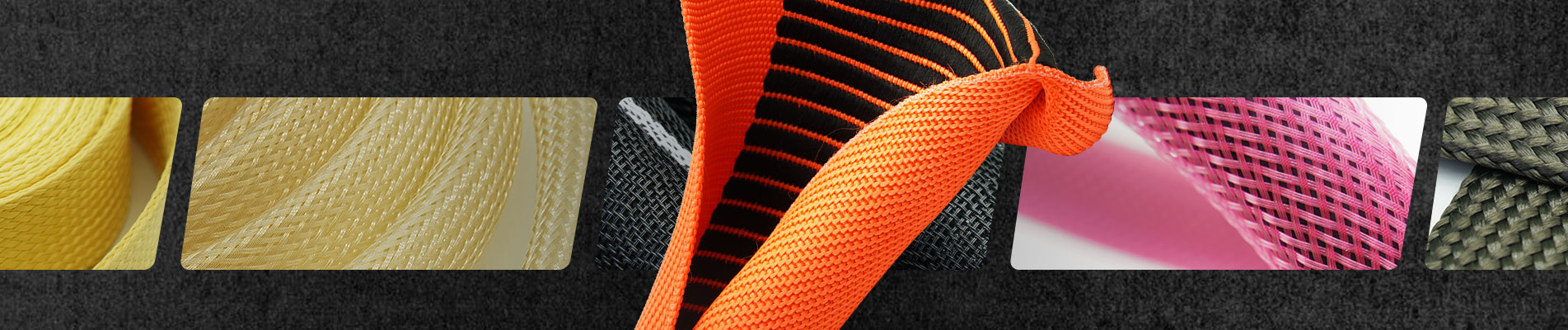
Fiber optic cables are widely used in telecommunications, data centers, industrial networks and various communication systems. Although optical cables are designed for data transmission, their outer jackets may still be exposed to friction, abrasion, bending and contact with surrounding mechanical components during installation and operation.
Yes. PET expandable braided sleeving can be used as an additional external protective layer for fiber optic cables. Its flexible, open-weave construction accommodates different cable diameters while providing external abrasion protection and helping organize multiple fiber optic cables.
What Protection Does Expandable Braided Sleeving Provide for Fiber Optic Cables?
PET expandable braided sleeving mainly provides the following types of external protection:
· Abrasion Protection: Helps reduce surface wear caused by contact with equipment, cable trays and surrounding components.
· Mechanical Contact Protection: Provides an additional external protective layer, reducing the effects of everyday friction and incidental contact.
· Cable Organization: Groups multiple fiber optic cables together for a cleaner and more organized installation.
· Flexible Coverage: Accommodates different cable bundle diameters and routing configurations to meet various installation requirements.
Braided sleeving is particularly suitable for fiber optic cable assemblies that require additional external protection without the use of a rigid protective structure.
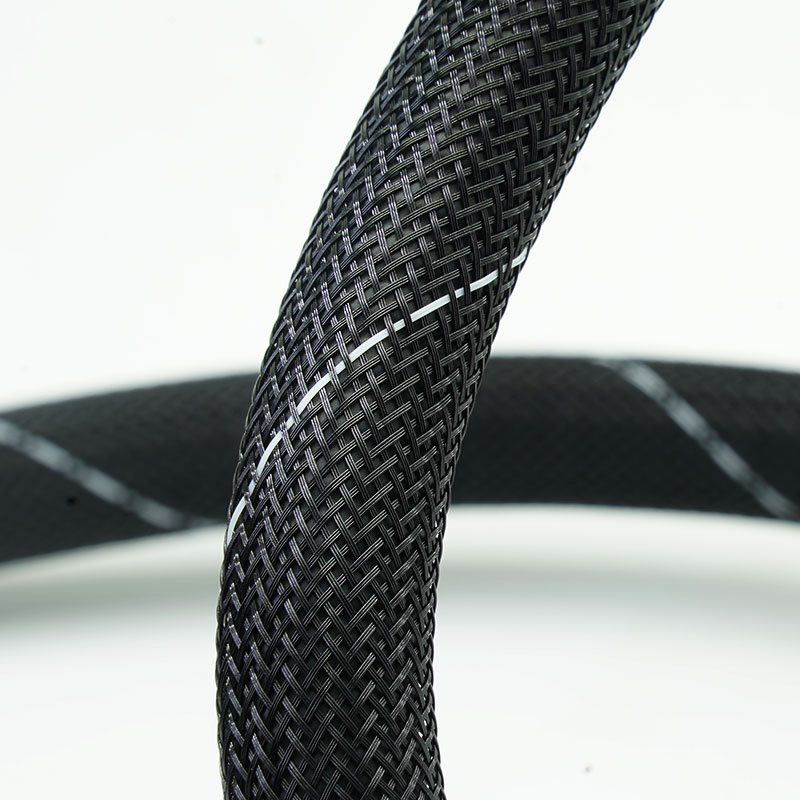
Will PET Braided Sleeving Affect Fiber Optic Signal Transmission?
No. PET braided sleeving is a non-conductive external cable protection material and does not interfere with optical signal transmission when properly installed.
However, installation should not create excessive compression, sharp bends or localized pressure on the fiber optic cable.
Always follow the minimum bend radius specified by the fiber optic cable manufacturer to avoid excessive bending, which may reduce optical performance or cause signal loss.
Can Expandable Braided Sleeving Prevent Bending and Tensile Damage to Fiber Optic Cables?
Expandable braided sleeving is flexible and can follow curved cable routing paths. However, it cannot replace proper bend-radius control or the tensile-strength structure of the cable itself.
For fiber optic cable applications, consider the following:
· Follow the minimum bend radius specified by the cable manufacturer.
· Avoid applying excessive pulling force during installation.
· Avoid overly tight cable ties or localized compression points.
· Ensure the braided sleeving does not restrict the cable's natural routing.
For applications involving frequent movement, the complete cable assembly should be evaluated under actual operating conditions.
Is PET Expandable Braided Sleeving Suitable for Indoor and Outdoor Fiber Optic Cables?
Yes. Depending on the product specifications and environmental requirements, PET braided sleeving can be used for external protection of both indoor and outdoor fiber optic cables.
Indoor Applications:
· Data centers and server rooms
· Telecommunications cabinets
· Network equipment
· Industrial communication systems
· Fiber optic distribution panels
Outdoor Applications:
· Outdoor communication cable routing
· Solar and renewable energy communication systems
· Outdoor industrial equipment
· Exposed fiber optic cable assemblies
For outdoor installations, UV resistance, moisture exposure, temperature variations and environmental aging should also be considered. UV-resistant PET braided sleeving is an option for applications requiring improved resistance to sunlight.
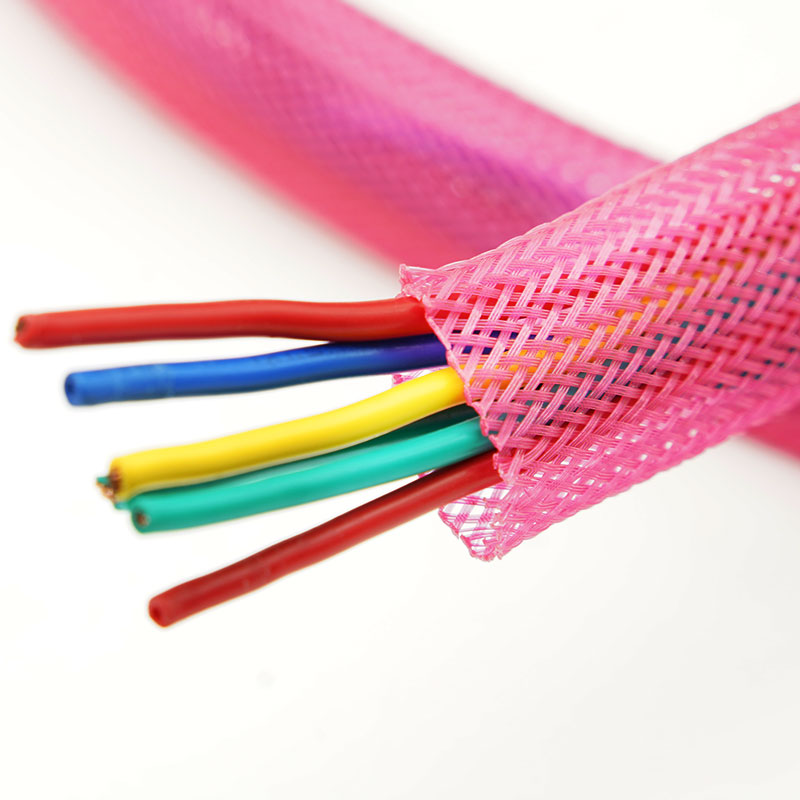
Which Type of Braided Sleeving Is Best for Fiber Optic Cable Protection?
The appropriate structure depends on the installation method and protection requirements.
|
Braided Sleeving Type |
Main Advantage |
Suitable Application |
|
Standard PET Expandable Braided Sleeving |
Flexible coverage and abrasion protection |
General fiber optic cable protection |
|
High-Expansion PET Braided Sleeving |
Accommodates a wider range of cable diameters |
Larger connectors and cable bundles of different diameters |
|
Dense-Braided PET Sleeving |
Tighter braided construction |
Applications requiring enhanced surface protection |
|
Self-Wrapping Braided Sleeving |
Installs without removing cable ends |
Existing cable installations and maintenance |
For fiber optic cables with pre-installed connectors, expandable or self-wrapping structures can simplify installation, depending on connector dimensions and available installation space.
How Do You Choose the Correct Braided Sleeving Size?
Choosing the correct diameter is important for maintaining effective coverage while avoiding restrictions on the fiber optic cable.
The following factors should be considered:
· Cable Outside Diameter: Measure the actual outside diameter of a single fiber optic cable or the complete cable bundle.
· Connector Dimensions: Check whether the sleeving needs to pass over connectors or end sections.
· Expansion Range: Select a size with sufficient expansion capacity that will not compromise coverage through excessive stretching.
· Cable Routing: Consider bends, branches and the available installation space.
· Protection Requirements: Determine the required braid coverage and abrasion resistance.
The selected sleeving should cover the cable assembly without causing excessive compression or unnecessary looseness.
Can PET Braided Sleeving Replace Fiber Optic Protective Ducts or Armored Structures?
No. Expandable braided sleeving is primarily designed for external abrasion protection and cable organization.
It does not provide the same level of crush resistance, impact protection or structural reinforcement as armored fiber optic cables, rigid conduits or dedicated protective ducts.
For installations exposed to significant mechanical loads, additional protective structures should be selected according to the application requirements.
What Information Should Buyers Provide When Sourcing Braided Sleeving for Fiber Optic Cables?
To help identify a suitable braided sleeving specification, buyers should provide:
· Fiber optic cable type and outside diameter
· Connector or end-section dimensions
· Required sleeving length
· Indoor or outdoor installation environment
· Operating temperature and UV exposure conditions
· Required abrasion protection level
· Estimated annual purchasing quantity
This information helps MJ FLEX recommend the appropriate braided construction, diameter and material specifications.
Conclusion: Is Expandable Braided Sleeving Suitable for Fiber Optic Cable Protection?
For fiber optic cable assemblies that require additional external abrasion protection, flexible coverage and cable organization, PET expandable braided sleeving is a practical option.
Its open-weave construction, expansion flexibility and lightweight design make it suitable for various applications in telecommunications, networking equipment and industrial environments.
The key is to select the correct diameter and braid construction while meeting the specified bend radius and mechanical protection requirements of the fiber optic cable.