



 English
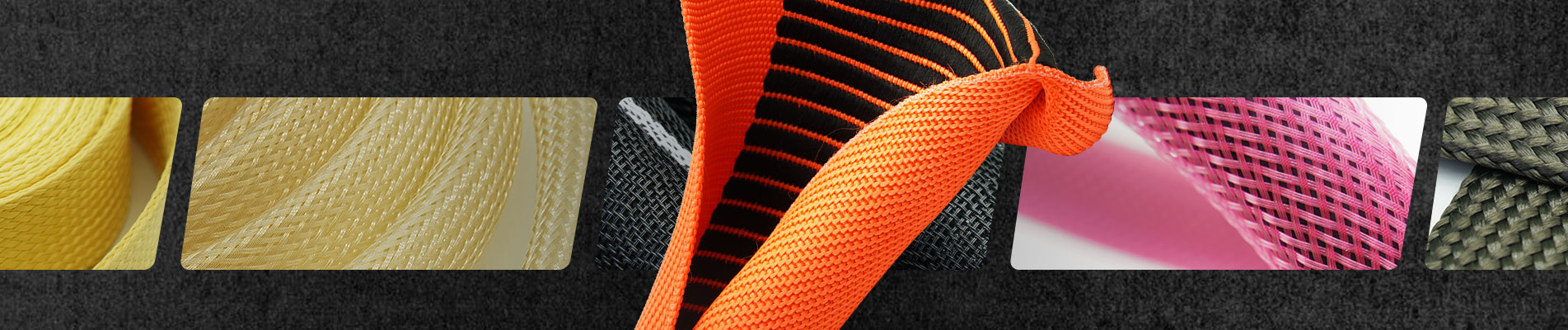
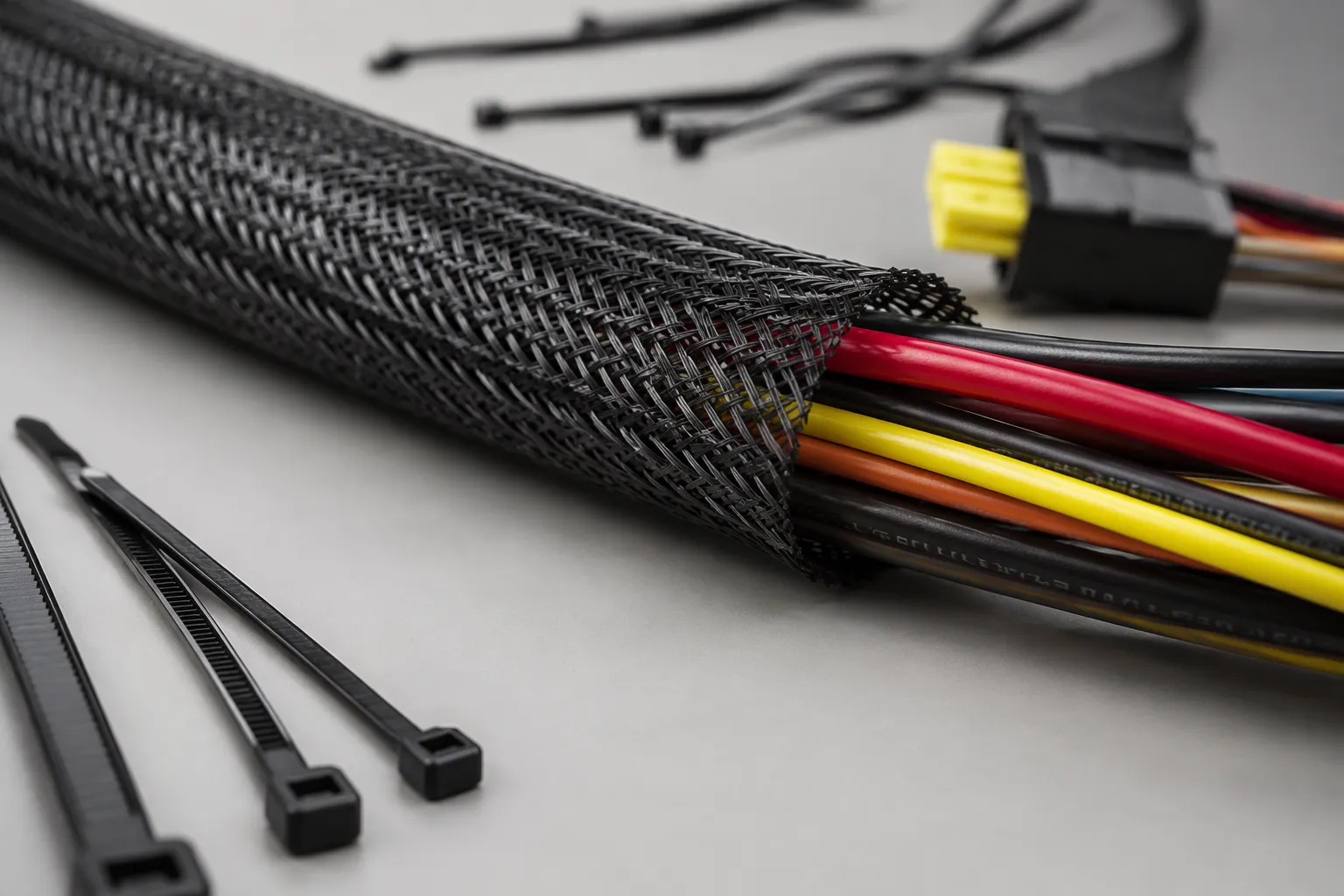
PET braided sleeving is a flexible, expandable tubular mesh made from polyester fibers. It wraps around wires, cables, and hoses to shield them from abrasion, chemicals, and UV light. This article explains what PET stands for, how the braided construction works, and what function the sleeving serves. A PET expandable braided cable sleeve protects and organizes runs of cable while staying flexible enough to route around tight bends and connectors.
Key Takeaways
-
PET braided sleeving is a stretchy polyester tube that wraps around cables and hoses to protect them.
-
The mesh resists abrasion, chemicals, and UV light, and it lets air flow to keep cables cool.
-
Installers slide the sleeve over connectors without cutting cables, which saves time and effort.
-
You can use PET sleeving in electronics, cars, and industrial machines to organize and hide wires.
-
Choose the sleeve size based on the whole bundle and check the manufacturer's data sheet for heat limits.
PET Braided Sleeving Defined
What PET Stands For
PET stands for polyethylene terephthalate. This long chemical name describes a specific type of polyester, a plastic fiber that manufacturers spin into thread and then weave or braid into finished products. The terephthalate portion of the name refers to the acid building block inside the polymer chain. Ethylene glycol supplies the other half of that chain. These terephthalate-based links give the fiber its strength and its resistance to moisture. A polyester strand holds its shape well, sheds water instead of absorbing it, and tolerates heat better than many softer plastics do. Those traits explain why manufacturers choose this material for pet braided sleeving rather than a weaker fiber. The same chemistry appears in woven polyester fabric and in polyester braided cable sleeving, so the raw material is common and easy to source. Polyester also resists moisture that would soften paper or cotton wraps. A buyer who reads a product label therefore sees a familiar plastic, not an exotic compound. Sunlight breaks down many plastics over time. This fiber keeps its structure outdoors, which suits engine bays and outdoor cabinets.
Braided Construction and Function
Manufacturers interlace those PET filaments into a tube. The result is a PET expandable braided sleeving that stretches over large connectors and closes again around the cable. An installer pushes the tube along a long run, and the mesh opens and closes as needed. This open-weave construction lets air circulate, so cables stay cooler under load. The mesh forms a protective outer layer against abrasion, chemicals, and UV light. Abrasion protection matters most where cables rub against frames, panels, or other cables. The sleeve also organizes and conceals multiple cables inside one neat bundle. Buyers choose from a range of colors to code circuits or match equipment. One braided cable sleeve can tidy a whole harness. Matching braided cable sleeves keep a control panel readable. Many teams specify braided cable sleeves for both protection and appearance. A PET expandable braided cable sleeve slips over a plug without cutting or splicing, which saves assembly time. Installers trust braided cable sleeves because the mesh flexes around bends without cracking. Heat and air still reach the cable through the open mesh, so trapped water never becomes a problem. A roll of pet braided sleeving also cuts easily with hot-knife tools, and the cut ends stay clean. The braid spreads a load across many filaments, so a sharp edge dents one strand instead of cutting the cable beneath. Hoses benefit from the same treatment. A sleeve over a hydraulic or pneumatic line guards the rubber against rubbing and sunlight. Long cable runs in a cabinet or a vehicle benefit too, because one sleeve replaces several loose ties. The mesh holds the bundle together while leaving each cable free to move slightly. That slight movement reduces strain at connectors. Color-coded braided cable sleeves help technicians trace a circuit during service. The tube compresses for storage and expands again on site. Installers often finish the ends with shrink tubing or tape. For a clean, durable finish, braided cable sleeves remain a practical default.
Key Properties of Polyester Sleeving
Abrasion and Chemical Resistance
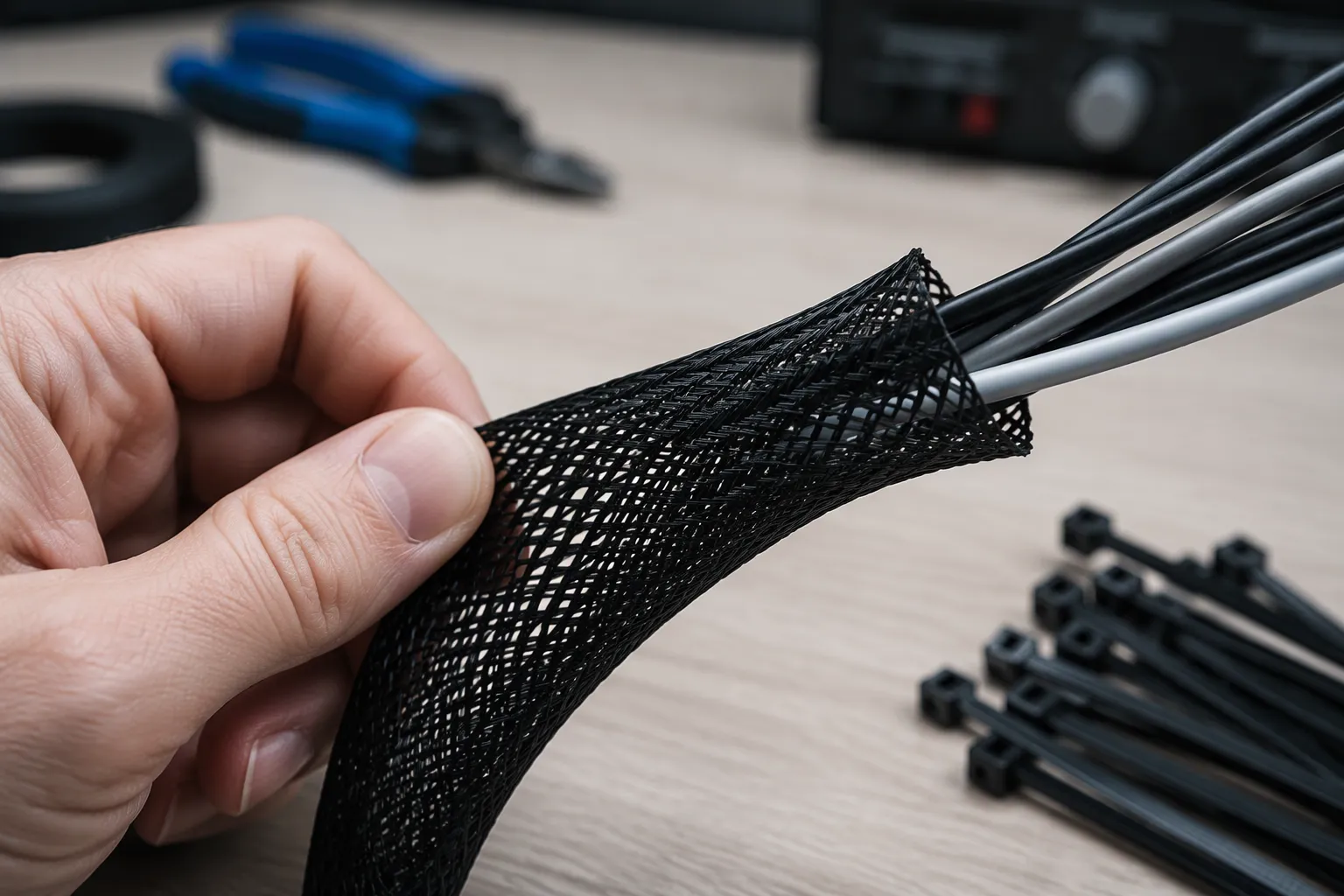
Polyester earns its place in cable protection because the fiber stands up to rough handling. The mesh guards insulation against abrasion, scratching, and crushing. Abrasion resistance matters most where cables rub against frames, panels, or other cables. A sharp metal edge dents one strand instead of cutting the cable beneath. Abrasion protection also extends to hoses that drag across shop floors and loading docks. Repeated contact wears soft rubber quickly, and the mesh absorbs that wear instead. Abrasion resistance improves further when the braid sits tight against the cable. Loose mesh shifts and rubs, so installers pull the sleeve snug before trimming. Chemical resistance keeps the sleeve intact near oils, solvents, and cleaning agents. A spill that would soften tape or cloth wrap leaves the mesh unchanged. Hydraulic fluid, coolant, and battery acid all contact sleeving in service, and the fiber resists each one better than cotton or paper wrap does. The protective outer layer blocks UV light that would otherwise crack lesser plastics. Outdoor cabinets and engine bays expose wiring to sunlight every day, and the mesh holds its structure through those cycles. Sunlight and chemical exposure combine in outdoor equipment, and the mesh handles both at once. Moisture resistance adds another benefit. Polyester sheds moisture instead of absorbing it, so damp cabinets and washdown areas stay safe. That trait keeps the mesh from swelling or softening over time. Trapped moisture causes more cable failures than most crews expect, and an open mesh drains and dries quickly.
Flexibility, Airflow, and Temperature Range
A flexible braid bends around tight corners without kinking. The open-weave construction lets air circulate, so cables stay cooler under load. That airflow also lets moisture escape instead of trapping it against insulation. The mesh cushions cables against impact and vibration, which reduces strain at connectors. Braided cable sleeves handle a broad temperature range. They tolerate heat from engine bays and industrial equipment, and they stay pliable in cold conditions. Exact limits vary by product, so buyers should check the manufacturer's data sheet. Heat does not soften the mesh enough to sag, and cold does not make it brittle. These traits make braided cable sleeves a practical default for demanding routes. A PET expandable braided cable sleeve combines this flexibility with easy installation. Braided cable sleeves also resist fraying at cut ends when technicians use hot-knife tools. Installers choose braided cable sleeves for cabinets, vehicles, and machinery alike. Many crews stock braided cable sleeves in several colors. The sleeving holds a bundle together while each cable moves slightly. That slight movement relieves strain at terminations. A PET expandable braided sleeving product also conceals wiring for a cleaner look. Teams specify the sleeving for both protection and appearance. Polyester keeps its strength after repeated flexing, which suits doors, hinges, and robotic arms. The pet mesh tolerates heat cycling without hardening. A sleeve that fits too loosely bunches at bends, and one that fits too tightly limits expansion over connectors. Crews often test a short length on the actual route before ordering a full roll. Buyers who compare options should weigh airflow and flexibility together, because a tight weave blocks air and a loose weave cushions less.
How Expandable Braided Sleeving Is Made
The Braiding Process
Manufacturers begin with spools of fine polyester filament. A braiding machine carries these spools around a circular track. The spools travel in opposing directions and cross each other at regular intervals. Each pass interlocks the filaments into a tubular mesh. The crossing pattern creates the diamond-shaped openings visible on any braided cable sleeve. That same pattern lets the tube expand and contract. Workers adjust the angle of the crossing to control how much the mesh opens. A steeper angle gives more expansion over connectors. A flatter angle produces a tighter, denser wall. The machine pulls the finished tube away at a steady rate, and the mesh holds its shape without glue or stitching. Operators inspect the mesh for gaps and broken filaments before the roll leaves the line.
Sizing and Finishing Options
Suppliers offer expandable braided sleeving in a wide spread of sizes. Common diameters include 1/4 inch and other fractional sizes, and buyers match the sleeve to the bundle rather than to a single cable. Rolls often come in 100-foot lengths, and shorter cuts suit small jobs. Color variety helps teams code circuits and match equipment. Finishing options extend the service life of the mesh. A hot-knife cut seals the ends and stops fraying. Shrink tubing over the cut end gives a clean termination at a connector. Some buyers request a slit version for wrapping existing runs without disconnecting cables. Others choose a flame-retardant grade for cabinets with strict rules. A polyester braid also resists moisture pickup, so damp storage does not damage a roll before installation. Crews should confirm the expansion range against the largest connector on the route. A sleeve that cannot open far enough forces a splice, and a splice weakens the protection. Buyers who plan the size and finish up front get braided cable sleeves that install quickly and last. Proper sizing also keeps heat moving through the open mesh instead of trapping it against insulation.
Common Uses for Braided Cable Sleeves
Electronics, Automotive, and Industrial Applications
Electronics assemblers, automotive technicians, and plant engineers all reach for braided cable sleeves. A control cabinet full of loose wiring becomes a tidy harness once braided cable sleeves go on. Automotive teams route braided cable sleeves along frames and through firewalls, where heat and vibration test every connection. Industrial crews fit braided cable sleeves on machine tools, conveyors, and robot arms. Marine and outdoor installs use braided cable sleeves for the same reason. MJ FLEX supplies PET braided sleeving for these settings, and the material suits each one. Cable protection starts with the mesh wall, which shields wires from sharp edges and repeated rubbing.
Hoses need the same care. A braided cable sleeve over a hydraulic line adds abrasion protection against dragging and scraping. Braided cable sleeves also guard pneumatic tubing in a busy shop. Braided cable sleeves stay put on a vibrating line. Cable protection matters on hoses too. The protective outer layer blocks sunlight and moisture that crack rubber over time. A snug fit keeps the mesh from shifting.
Cable Bundling and Concealment
Long cable runs respond well to expandable braided sleeving. One length of pet braided cable sleeves gathers a dozen loose cables into a single bundle. The mesh acts as a cable organizer and hides color clashes behind a uniform finish. A wire protection sleeve also keeps a run readable during service, because technicians trace one bundle instead of many strands. General-purpose sleeving covers most of these jobs, and protective sleeving adds a clean look to visible routes. Pet sleeves resist moisture and heat, so damp floors and warm cabinets pose no problem. A braided cable sleeve slips over a connector without cutting, and a second sleeve can code a separate circuit. Braided cable sleeves keep that bundle flexible at every bend. Many crews buy braided cable sleeves by the roll. Buyers match the sleeve diameter to the bundle, not to one cable. Three rolls of sleeving often finish a small panel, and the same roll trims easily on site.
PET vs. Other Braided Cable Sleeve Options
Performance, Fit, and Compliance
Each cable protection material comparison starts with the same question: what does the route demand? Nylon braided sleeving offers strong abrasion resistance and a smooth feel, and it suits rugged handheld tools and outdoor gear. Fiberglass sleeving shines where heat runs high, such as near engines or furnaces, and it holds up where polyester would soften. PET sits between these options. It delivers solid abrasion protection, good moisture resistance, and reliable performance across a broad temperature range. Buyers weighing braided sleeving in nylon or PET often pick polyester for general wiring because it balances toughness with a soft hand and low moisture pickup. Braided sleeving in nylon or PET both resist chemicals well, and either choice covers most cabinet and vehicle routes.
Fit and compliance decide many projects. A PET expandable braided cable sleeve expands over connectors and contracts for a snug hold, and that range matters on routes with bulky plugs. Fiberglass sleeves often come in fixed sizes, and nylon stretches less than polyester mesh. Teams working under flame-retardant rules should confirm the grade before ordering, because not every braided cable sleeve meets those standards. Braided cable sleeves in a flame-retardant grade exist for strict cabinets. A PET expandable braided sleeving product also passes common electrical insulation expectations when the wall thickness suits the voltage. Buyers should check data sheets for compliance claims rather than assume them.
Cost and Best-Fit Scenarios
Cost tracks material and volume. Polyester is a common, widely produced fiber, so braided cable sleeves in PET usually land in the middle of the market. Nylon often costs more because the fiber is tougher to process. Fiberglass carries its own premium for high-heat capability. None of these options is universally cheaper, and a low unit cost means little if the sleeve fails early. Crews should weigh total service life against the purchase price.
Best-fit scenarios follow directly. General-purpose sleeving in polyester covers electronics, automotive harnesses, and industrial panels. Nylon fits high-wear handheld and outdoor equipment. Fiberglass fits hot zones near exhausts and heaters. Braided cable sleeves in any material protect cables, and the right pick depends on heat, abrasion, and moisture exposure. Braided cable sleeves chosen for the actual route last longest. A roll of sleeving sized to the bundle beats a bargain roll that fits poorly. Braided cable sleeves reward careful planning.
PET braided sleeving is an expandable polyester mesh tube that shields wires, cables, and hoses from abrasion, chemicals, and UV light. This definition covers the material, the braided construction, and the protective role.
The polyester fiber resists moisture and heat, and the open braid stays flexible while letting air flow. Braiding machines form the mesh, and suppliers finish it in many sizes and colors. Electronics, automotive, and industrial crews rely on braided cable sleeves for bundling and concealment. Compared with nylon and fiberglass, braided cable sleeves in PET suit general-purpose routes well. Readers can use this definition to match sleeving to each route, and MJ FLEX offers braided cable sleeves as a resource.
FAQ
What does PET stand for in braided sleeving?
PET stands for polyethylene terephthalate, a polyester plastic fiber. Manufacturers spin this material into filament and braid it into an expandable mesh tube. The fiber resists moisture and holds its shape well, which makes it a common choice for cable protection.
How do I choose the right size?
Match the sleeve to the whole bundle, not to a single cable. The mesh must open wide enough to pass over the largest connector. A loose fit bunches at bends, and a tight fit limits expansion. Crews often test a short length on the actual route first.
Can PET expandable braided sleeving stay outdoors?
Yes. The mesh blocks UV light that cracks lesser plastics, and polyester sheds moisture instead of absorbing it. Outdoor cabinets, marine installs, and engine bays all suit this material. Braided cable sleeves keep their structure through sun and damp conditions alike.
How does PET compare with nylon for general wiring?
Both materials resist chemicals and abrasion well. Nylon offers a tougher feel for handheld tools and outdoor gear. Polyester balances toughness with low moisture pickup and easy expansion. Most cabinet, vehicle, and panel routes work well with either braided cable sleeves option.