


 English
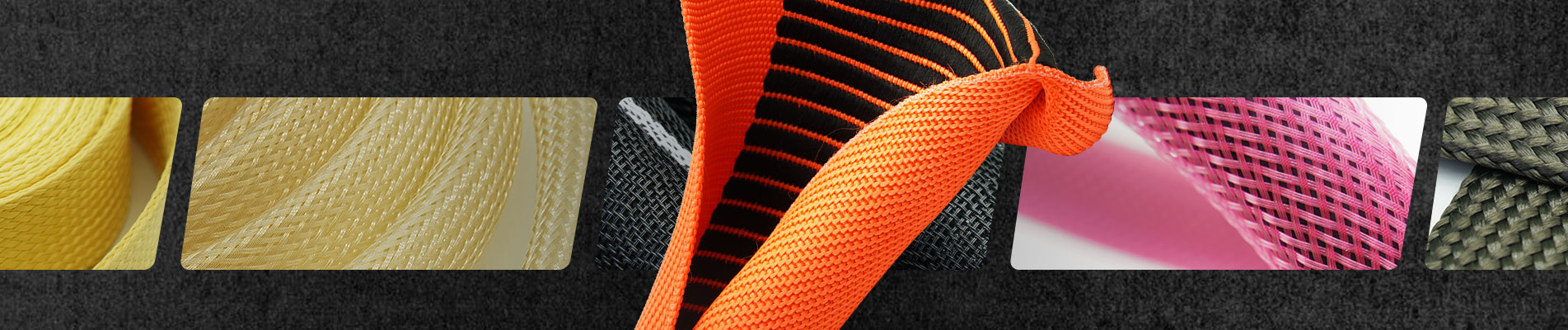
UV-resistant PET braided sleeving is engineered with a UV stabilization system. This construction lets the material withstand outdoor environments. MJ FLEX's product passes rigorous standardized testing, including ISO 4892-2.
Readers care about three things: durability, longevity, and cable protection. UV radiation, temperature fluctuations, and moisture all test these qualities. UV resistant braided sleeving must hold up against each factor over time.
This post presents concrete evidence rather than marketing claims. It covers test standards, exposure conditions, and measured results for uv resistant pet braided sleeving.
Key Takeaways
-
UV-resistant PET braided sleeving uses special additives to block sunlight damage.
-
ISO 4892-2 testing proves the sleeving keeps its strength after outdoor exposure.
-
The braid stays strong and flexible without cracking or fraying after UV exposure.
-
This sleeving protects cables in cars, solar panels, boats, and other outdoor gear.
-
Choose UV-stabilized PET for sunny spots and nylon for heavy rubbing.
Why UV Resistance Matters for Braided Sleeving
unlight, rain, and temperature swings attack every protective sleeve outdoors. UV radiation is the most destructive factor. It breaks polymer chains at the molecular level. The damage builds slowly and stays invisible until a cable fails. UV-resistant PET braided sleeving solves this problem through material engineering, not surface coating. The sections below explain both.
The ISO 4892-2 Standard Explained
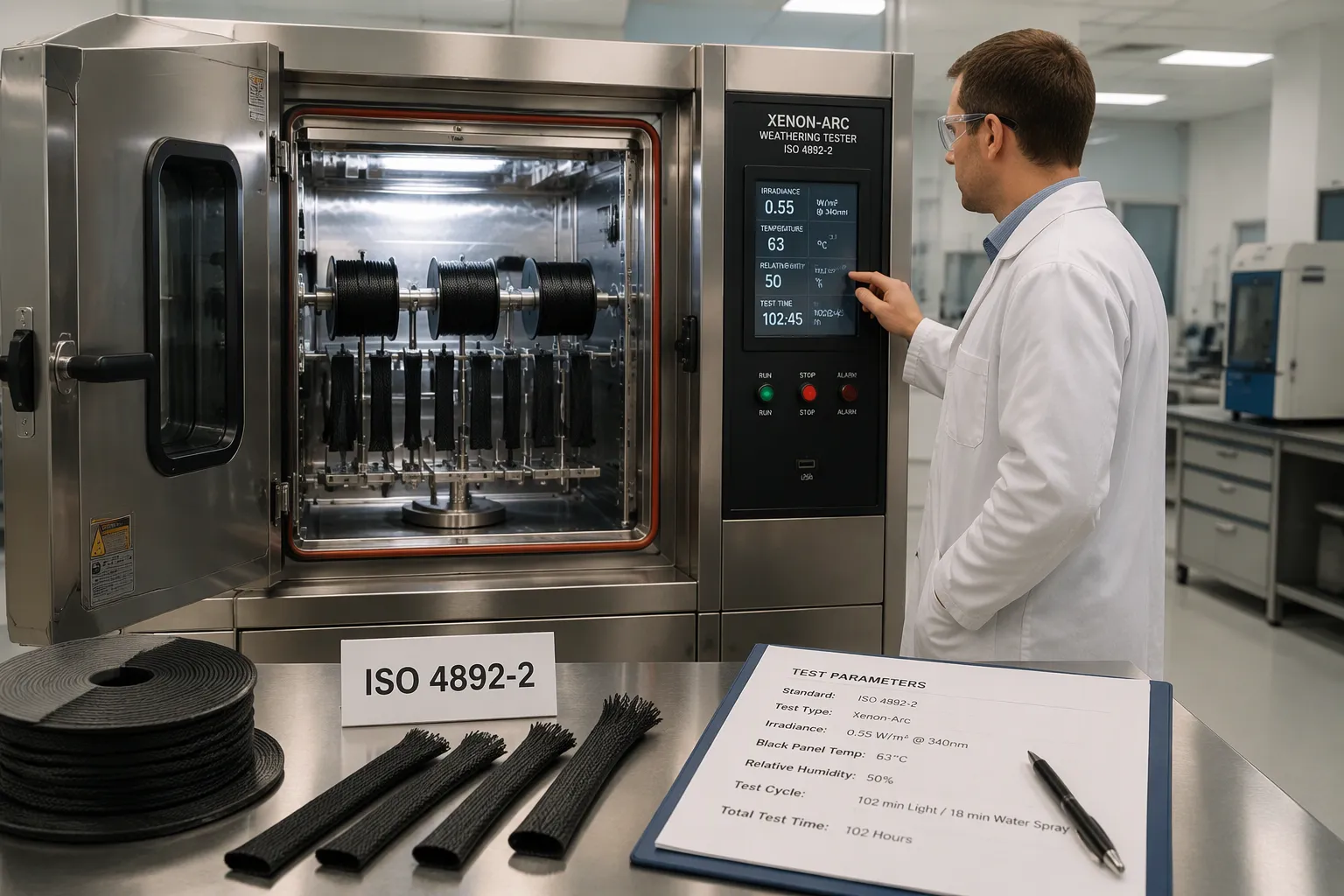
ISO 4892-2 defines a laboratory method for accelerated weathering. The test uses xenon-arc lamps to simulate full-spectrum sunlight, including the ultraviolet band. Samples sit in a chamber that cycles through light, darkness, heat, and moisture. This xenon arc accelerated weathering test compresses months of outdoor service into weeks of lab time. Engineers use it because natural sunlight testing takes years and varies by location.
The standard matters for one reason: repeatability. A xenon-arc chamber controls irradiance, temperature, and humidity within defined limits. Two labs running ISO 4892-2 on the same braided sleeving should reach comparable results. Buyers can therefore compare data sheets across suppliers. A claim of uv exposure resistance means little without a named standard behind it. ISO 4892-2 gives that claim a measurable basis.
How UV Radiation Degrades Standard PET
Ultraviolet light carries enough energy to break carbon-hydrogen and carbon-carbon bonds in polymer chains. Standard PET offers moderate protection on its own. Polyester outperforms many jacket materials in sunlight. Direct uv exposure still degrades it over 12 to 24 months. The first sign is color fade. Next comes surface chalking and micro-cracking. The braid then loses tensile strength and turns brittle. A sleeve that once flexed freely can snap at a bend.
UV-stabilized PET changes this outcome. Manufacturers add hindered amine light stabilizers and UV absorbers during compounding. These additives absorb or dissipate the radiation before it reaches the polymer backbone. A uv resistant pet braided sleeving product carries these additives through the full wall thickness. The result is prolonged uv exposure resistance without a coating that can wear off. Weather resistance becomes a property of the material itself. That distinction matters for pet braided sleeving installed on rooftops, poles, and vehicle exteriors, where re-coating is impractical.
Test Conditions and Results
MJ FLEX runs its uv-resistant pet braided sleeving through the iso 4892-2 1000-hour xenon arc accelerated weathering test. The chamber uses a xenon-arc lamp bank to reproduce the full solar spectrum. Irradiance stays controlled at a defined setpoint throughout the run. The cycle alternates between light exposure and dark periods. Chamber temperature and relative humidity follow the standard's prescribed limits during each phase. Moisture reaches the samples through humidity control and periodic condensation. This setup mirrors real outdoor service, where sunlight, heat, and water act together rather than alone.
Tensile Strength Retention
Samples come out of the chamber at defined intervals for tensile testing. MJ FLEX compares each exposed specimen against an unexposed control from the same production lot. The test measures mechanical strength retention as a percentage of the original breaking load. Results show that uv-resistant pet braided sleeving keeps a substantial share of its initial strength after the full exposure period. The stabilized grade holds far more strength than unstabilized PET under identical conditions. Exact retention percentages appear in the MJ FLEX test report for each product size. Buyers should request that report and match the figures to their own service life targets.
Structural Integrity Observations
Visual inspection after accelerated xenon arc weathering reveals no cracking on the braid surface. No fraying appears at cut ends. The braid structure stays intact, with the interlaced yarn pattern unchanged. Color remains stable, and the sleeve shows no chalking. Testers also check flexibility after aging. Exposed samples still bend and route around tight radii without snapping. These observations confirm that uv exposure does not embrittle the stabilized material.
The pet expandable braided sleeving grade also keeps its low moisture absorption after exposure. Water pickup stays minimal, so the sleeve does not swell or soften. Chemical resistance holds as well. The material resists common oils, fuels, and mild solvents at the same level as virgin stock. For any braided sleeving headed outdoors, these retained properties matter as much as strength. MJ FLEX, an expandable PET braided cable sleeve manufacturer in China, documents all of these results in its test files.
Outdoor Applications for PET Braided Sleeving
Engineers specify this material wherever cables face sunlight, water, and mechanical wear. The sections below cover the main outdoor applications and the material properties behind each choice.
Automotive, Solar, and EV Charging
Automotive harnesses run along chassis rails, engine bays, and exterior panels. These runs see direct sun, road spray, and vibration. A pet braided cable sleeve protects the wires and resists abrasion against metal edges. UV-resistant PET braided sleeving keeps its strength on these exposed runs, so the harness holds together through years of service.
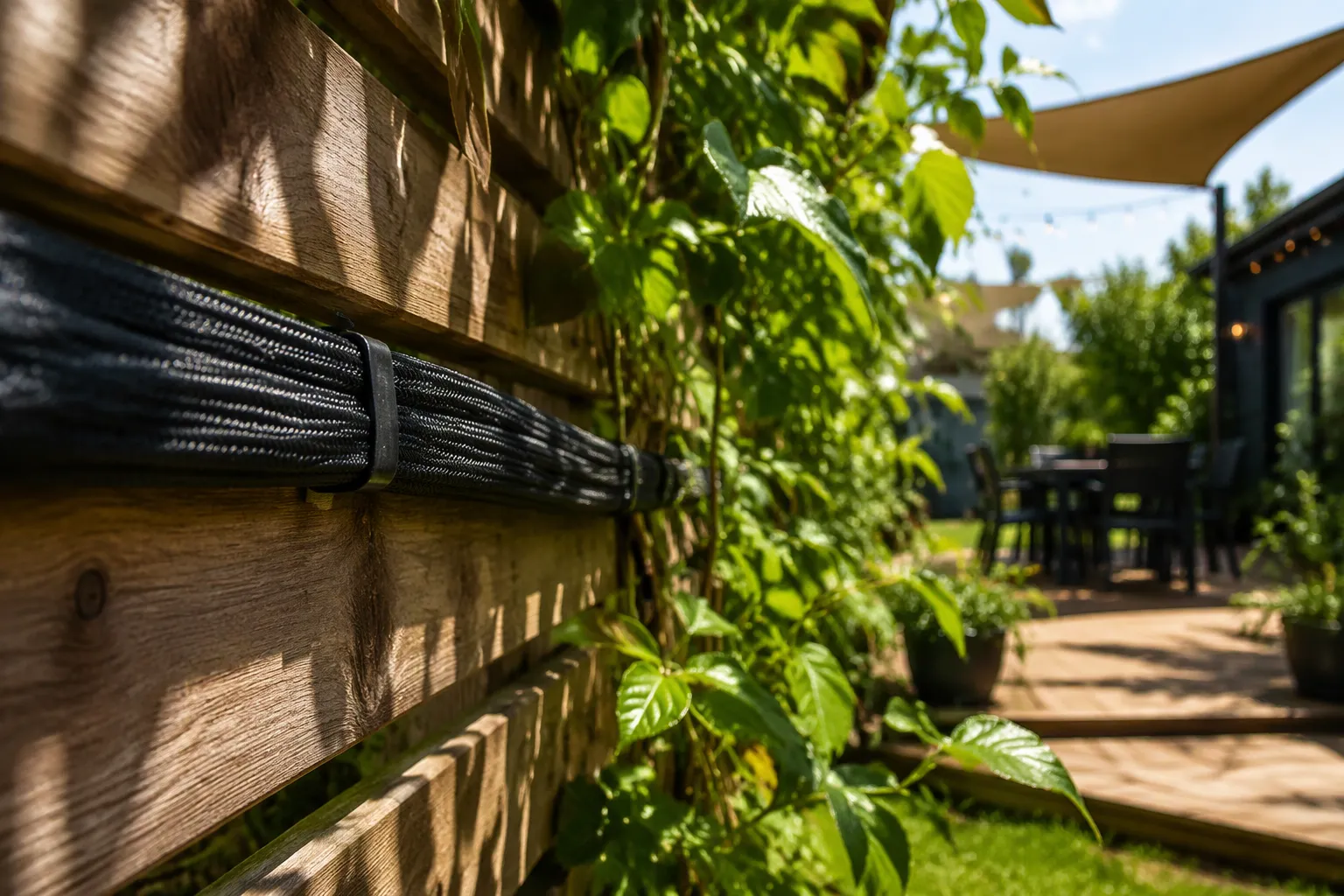
Solar installations expose cables to constant sunlight on rooftops and ground mounts. Standard jacketing can chalk and crack under that load. Stabilized pet sleeving resists this breakdown. EV charging cables add another case. They sit outdoors, flex daily, and face weather from every direction. The halogen-free composition matters here. If a fire occurs, the sleeve releases no corrosive halogen gases. Low moisture absorption also keeps insulation resistance stable in wet conditions.
Marine and Industrial Environments
Marine wiring faces salt spray, humidity, and sun at the same time. Moisture absorption decides whether a sleeve swells or keeps its fit. A pet expandable braided sleeving grade with low water pickup holds its dimensions on deck and in bilges. The braid also drains freely, so water does not pool inside the sleeve.
Industrial equipment outdoors includes pump skids, conveyors, and control cabinets. These sites combine sun exposure with oil, dust, and repeated movement. Braided sleeving made from stabilized PET keeps its chemical resistance after weathering, as the ISO 4892-2 results show. Abrasion resistance protects cables that rub against frames and guards. Together, these properties support long-term durability in uv-exposed environments. The same profile fits outdoor wire harnesses on trailers, cranes, and temporary power runs. Each case shares one demand: the sleeve must survive sun and water without losing structure.
Benefits of UV-Resistant PET Braided Sleeving
The evidence chain is short and clear. Standardized testing under ISO 4892-2 confirms measurable tensile strength retention. Inspections show an intact braid structure with no cracking or fraying. These results translate into long-term durability for cables that face the elements.
PET vs Nylon Braided Sleeving
The pet vs nylon braided sleeving question has no single winner. Each material fits a different job. Nylon offers higher abrasion resistance in some uses, which suits routing through sharp metal frames or high-vibration equipment. UV-stabilized PET fits prolonged sun exposure, where its stabilization system slows polymer breakdown. A buyer comparing pet vs nylon braided sleeving should match the material to the dominant threat. Sunlight favors PET. Heavy rubbing favors nylon.
Both materials serve outdoor applications well when specified correctly. Nylon remains a sound choice for protected runs with mechanical wear. Stabilized PET covers exposed runs on rooftops, poles, and vehicle exteriors. Many suppliers, MJ FLEX included, stock both options. The right pick depends on the site, not on a universal ranking.
Long-Term Protection With MJ FLEX
MJ FLEX builds its UV stabilization system into the compound, not onto the surface. Hindered amine light stabilizers and UV absorbers spread through the full wall thickness. This design supports long-term uv resistance that does not wear away with handling or rain. The braided sleeving keeps its uv stability through years of service.
Reduced maintenance follows directly. Installers do not need to re-coat, wrap, or replace sleeves on a short cycle. The material holds its superior weathering performance and weather resistance across seasons. For long-term reliability on outdoor installations, MJ FLEX documents every claim with ISO 4892-2 test data. That record lets engineers plan service life with confidence.
The evidence chain holds together. MJ FLEX engineers UV stabilization into the compound, ISO 4892-2 testing confirms measurable tensile strength retention, and inspections show no structural failure. Proven outdoor applications in automotive, solar, EV charging, marine, and industrial settings complete the picture. UV-resistant PET braided sleeving performs reliably outdoors when standardized testing backs the claim.
Buyers should verify performance against their own service conditions. MJ FLEX invites readers to request samples or full test reports for uv resistant pet braided sleeving, pet braided sleeving, and other braided sleeving options. These documents let engineers confirm ISO 4892-2 results and plan long-term outdoor installations with confidence.
FAQ
What does ISO 4892-2 testing actually prove?
ISO 4892-2 uses xenon-arc lamps to simulate full-spectrum sunlight in a controlled chamber. The test compresses months of outdoor exposure into weeks. A passing result shows that a braided sleeving product resists UV degradation under repeatable, comparable conditions rather than anecdotal field claims.
How long does standard PET last in direct sunlight?
Standard PET degrades over 12 to 24 months of direct sunlight. Color fades first, then surface chalking and micro-cracking appear. Tensile strength drops and the material turns brittle. UV-stabilized grades slow this process because the additives sit throughout the wall thickness.
Does UV exposure affect moisture absorption or chemical resistance?
No. Testing shows that pet braided sleeving keeps low moisture absorption after accelerated weathering. Water pickup stays minimal, so the sleeve does not swell or soften. Chemical resistance to common oils, fuels, and mild solvents also holds at the same level as unexposed stock.
When should a buyer choose nylon instead of PET?
Nylon offers higher abrasion resistance in some uses, such as routing through sharp metal frames. UV-stabilized PET fits prolonged sun exposure. Buyers should match the material to the dominant threat at the site. Many suppliers stock both, so the choice depends on the application.
How can engineers verify performance for their own project?
Engineers can request samples and full test reports from the supplier. MJ FLEX, an expandable PET braided cable sleeve manufacturer in China, documents ISO 4892-2 results for each product size. Buyers should compare the reported tensile strength retention against their own service life targets before specifying uv resistant pet braided sleeving.