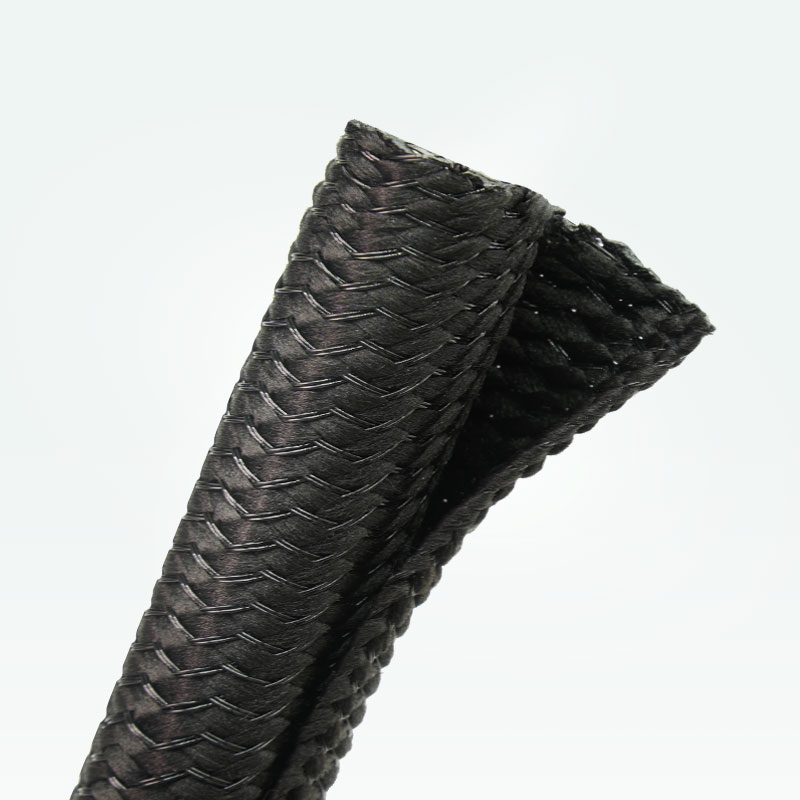
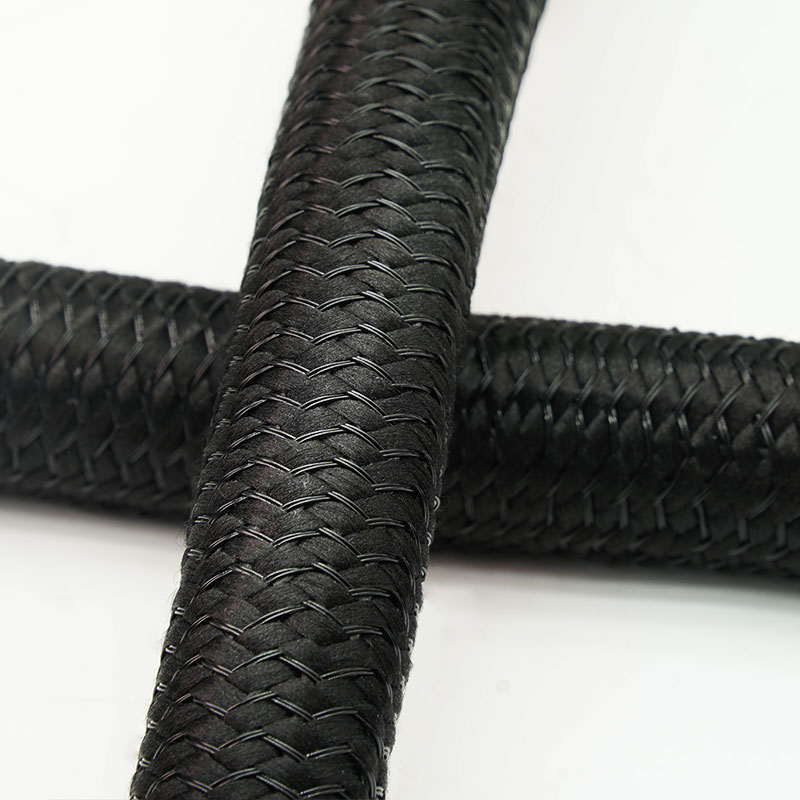
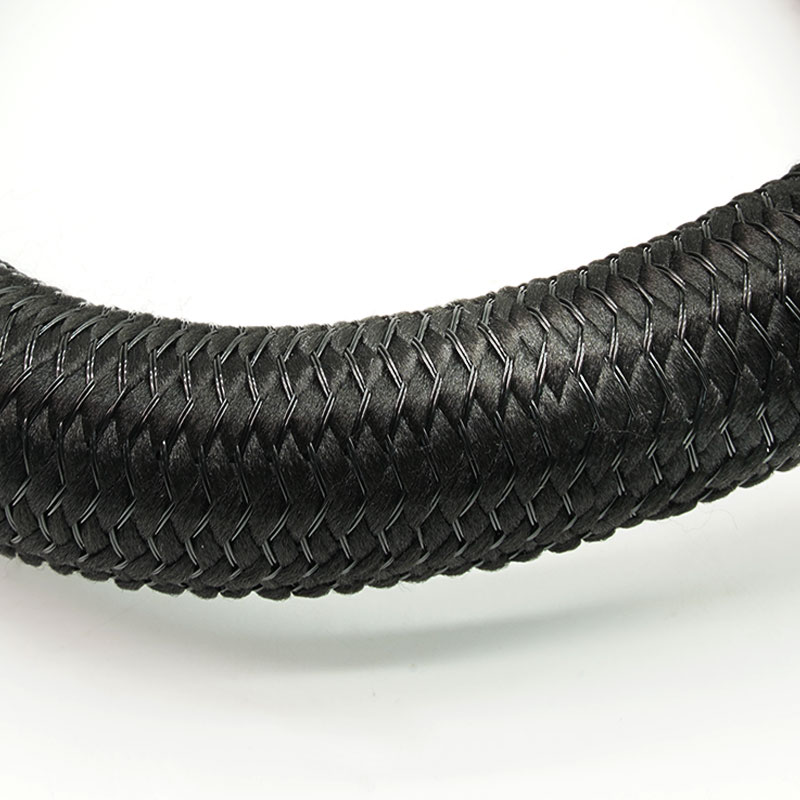
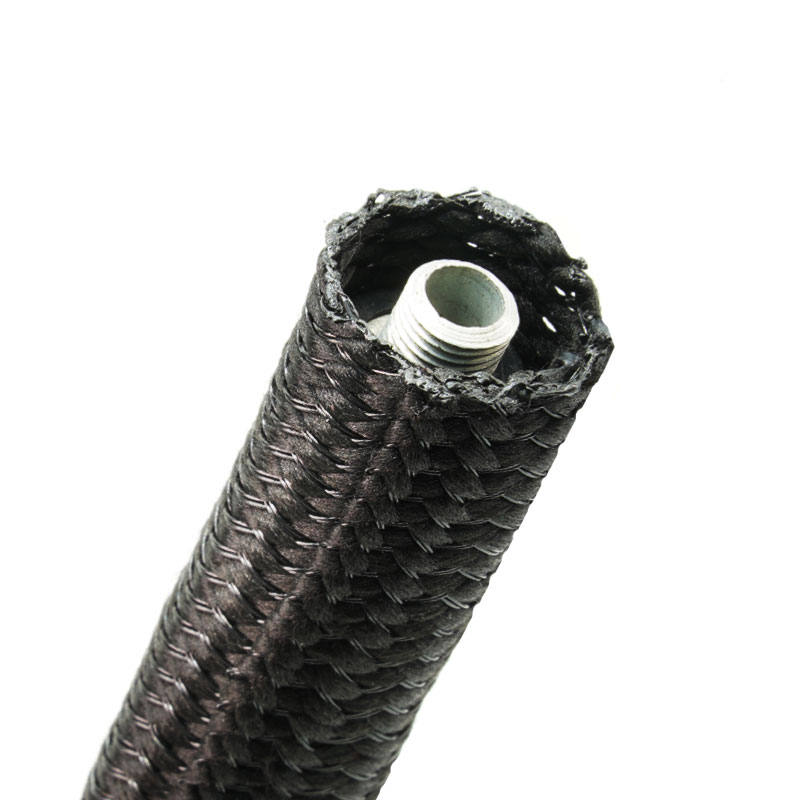
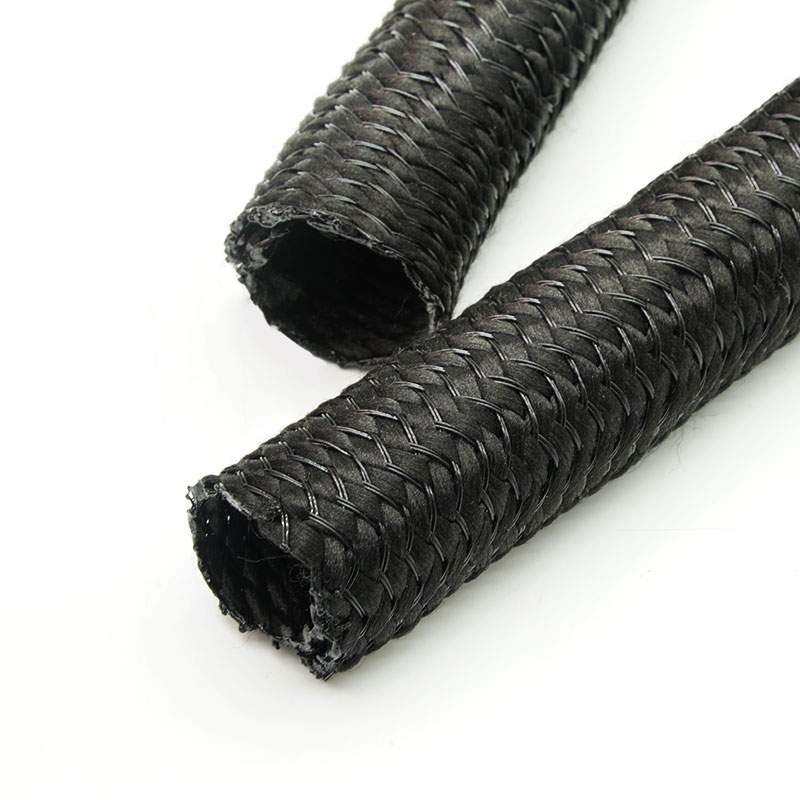
Why Choose SBW-PET-NR Noise Ruduction Sleeving?
1. Reduce harness rattle
The soft contact layer helps isolate cables from trim panels and equipment surfaces.
2. Retrofit finished wiring
Side entry installs around terminated harnesses without removing connectors.
3. Maintain service access
The self-closing overlap reopens for inspection or cable replacement.
4. Control irregular bundles
Flexible braid follows bends, branches and diameter changes.
1. Noise-reduction contact surface
Helps reduce friction and impact noise at harness interfaces.
2. Self-closing split construction
Wraps around cables and returns to a closed profile.
3. Retrofit side-entry installation
Fits completed cable assemblies.
4. Flexible braided structure
Follows curved and irregular routes.
5. Abrasion protection
Helps reduce cable-jacket wear.
6. Accessible branch points
Allows local cable exits and maintenance.
7. Custom OEM options
Sizes, overlap, lengths and packaging can be reviewed.
| Material |
PET monofilament and multifilament |
| Construction |
Self-closing split wrap |
| Overlap |
50% |
| Working Temperature |
-40°C to +150°C |
| Melting Point |
240±10°C |
| Flammability |
FMVSS 302,VW-1 |
| Standard Color |
Black |
| Certification |
RoHS,REACH |
| Noise performance |
Application dependent |
| Cutting Tool |
Hot knife |
| Supply |
Rolls or cut lengths |
Specifications
|
Part No
|
Nominal Size
(mm)
|
Bundle Dia Range(mm)
|
Packing
Length
(m/spool)
|
|
Min
|
Max
|
|
SBW-PET-005-BK-NR
|
Φ5
|
4 |
6 |
100 |
|
SBW-PET-010-BK-NR
|
Φ10
|
8 |
11 |
100 |
|
SBW-PET-013-BK-NR
|
Φ13
|
12 |
15 |
50 |
|
SBW-PET-016-BK-NR
|
Φ16
|
15 |
18 |
25 |
|
SBW-PET-019-BK-NR
|
Φ19
|
18 |
22 |
25 |
|
|
|
23 |
26 |
25 |
|
|
|
28 |
30 |
25 |
|
|
|
29 |
34 |
25 |
|
|
|
35 |
40 |
25 |
Typical Applications
Automotive dashboards and doors
Reduces harness contact noise behind trim and interior panels.
Seat and console wiring
Contains moving accessory cables near frames and mechanisms.
Appliances
Limits cable movement and rubbing inside housings.
Industrial operator stations
Organizes serviceable wiring near covers and panels.
Electronic equipment
Provides soft-contact protection around sensitive assemblies.
Identify the actual noise source, contact surface, vibration level and bundle range. Choose enough overlap to retain the harness without excessive compression. Validate noise reduction on the final assembly; the sleeve should not be assigned a universal dB reduction without a defined test method.
Customization Available
Diameter and overlap - Matched to cable range.
Contact construction - Yarn and density reviewed for the noise source.
Cut lengths - Prepared pieces for harness stations.
Labels and packaging - OEM kits, bags and cartons available.
Material declarations may be available for the confirmed construction. Noise reduction is system dependent and must be verified by the customer assembly test. Flame, automotive and temperature claims require supporting reports for the exact sleeve.
Yarn verification - Noise-reduction material is checked.
Closure inspection - Overlap and self-closing behavior are verified.
Surface check - Coverage, broken yarns and contamination are inspected.
Release check - Length, labels and packaging are confirmed.
Frequently Asked Questions
01. Does the sleeve guarantee a fixed dB reduction?
No. Results depend on the vehicle or equipment installation and test method.
02. Can it be installed over connectors?
Yes. It opens from the side.
03. Is it suitable for branch-outs?
Yes, provided adequate overlap is maintained.
Request a Sample
For an accurate technical recommendation and quotation, please provide:
Share your cable or harness diameter, noise reduction requirements, installation environment, and application details. MJ FLEX can provide technical recommendations and arrange samples for performance evaluation.




 English