


 English
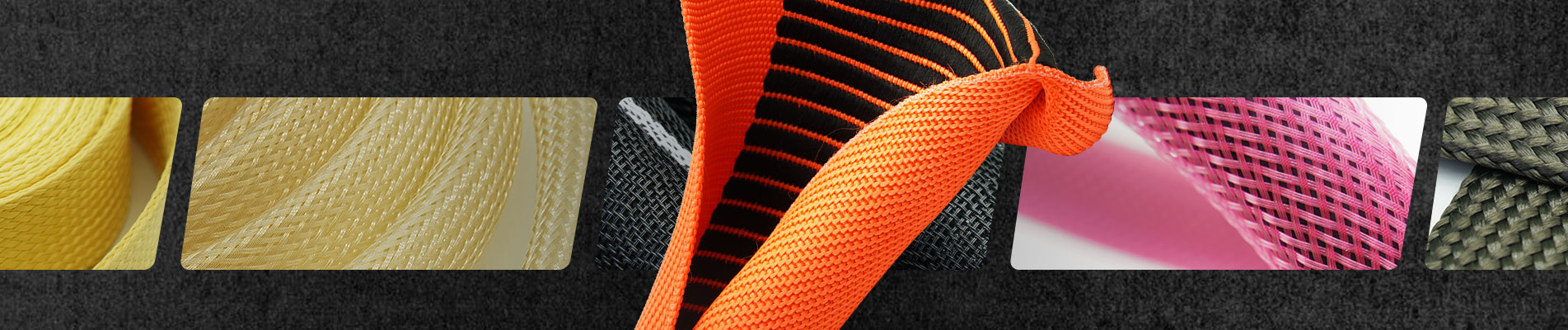
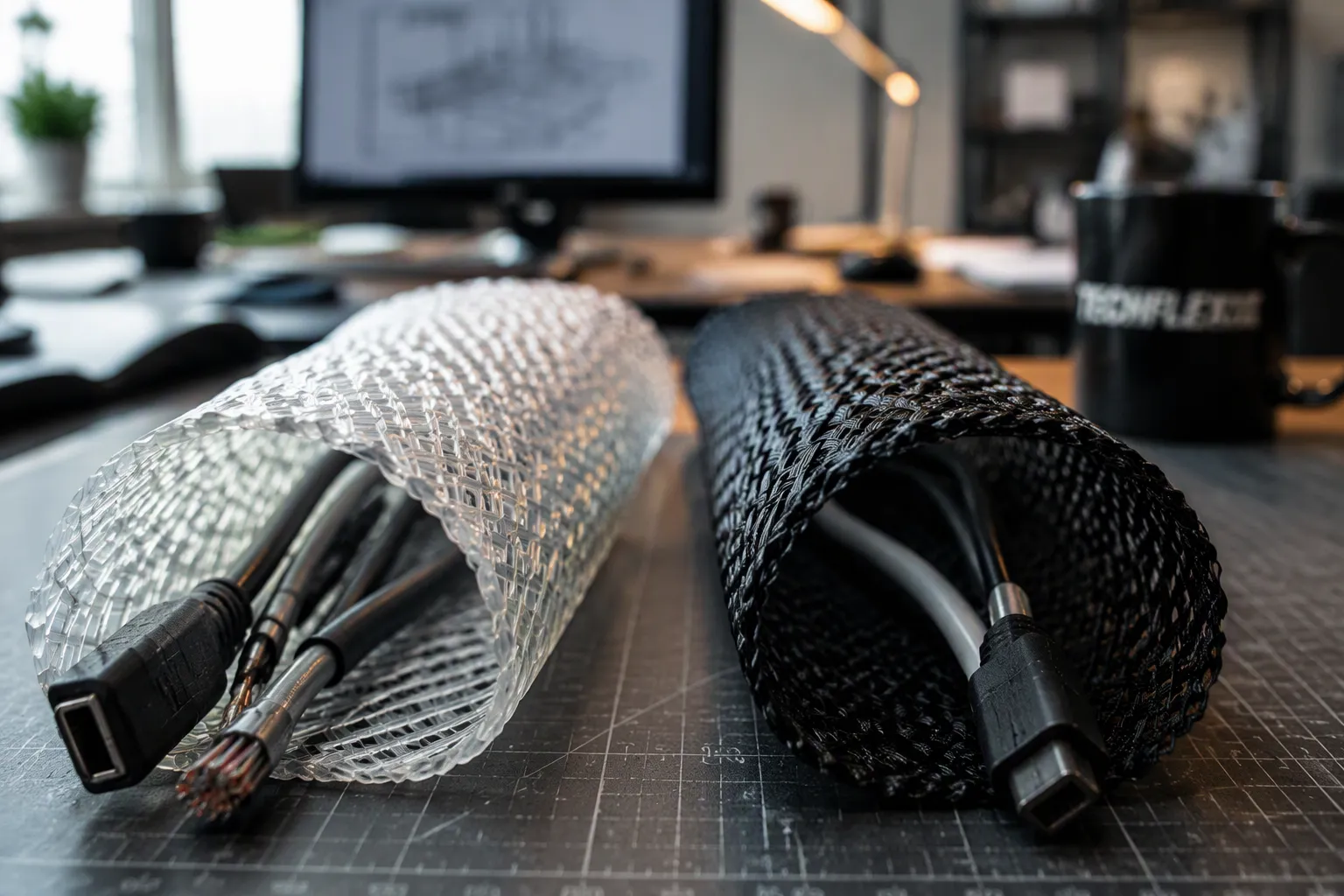
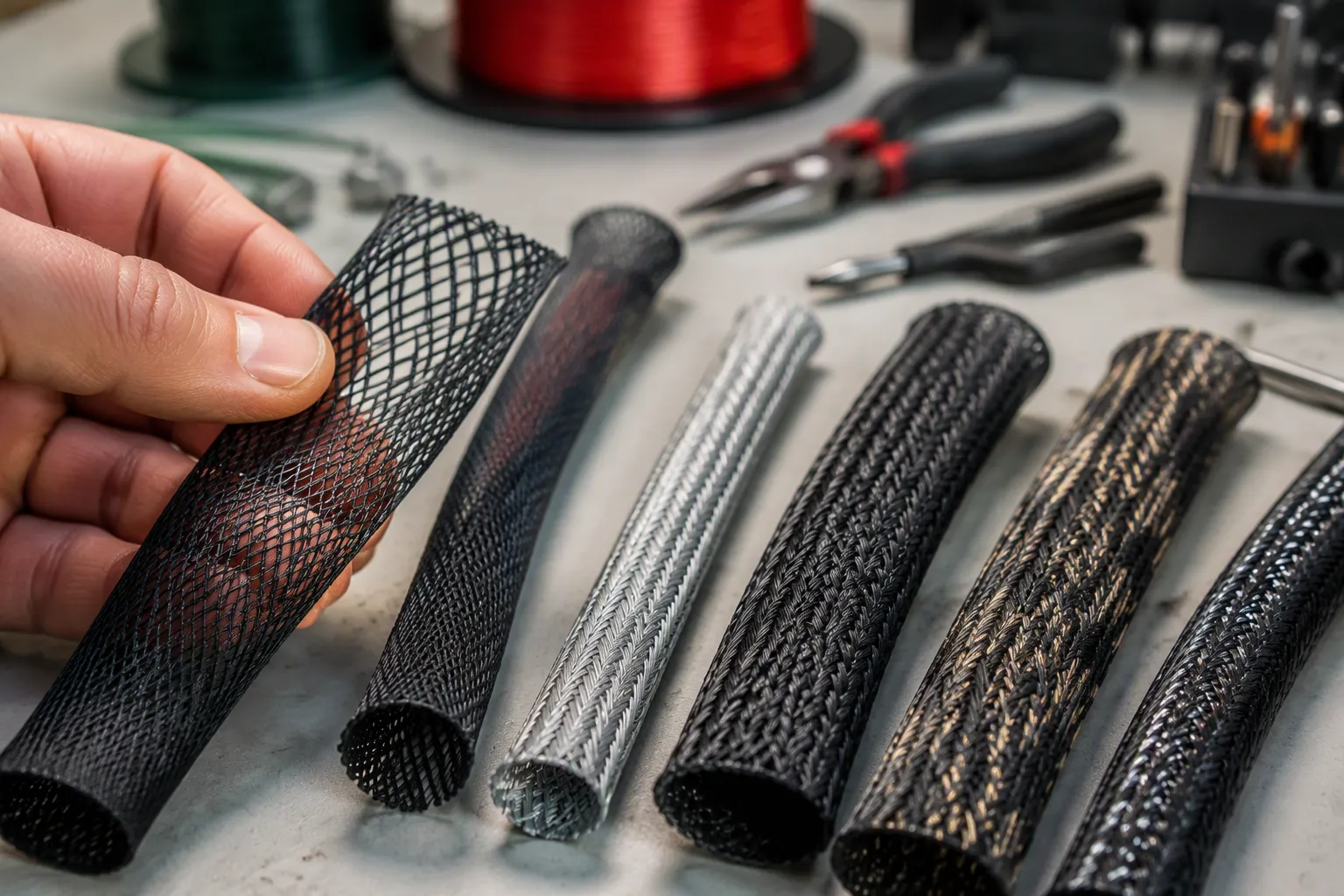
PET and nylon dominate the braided sleeving market. Neither material wins everywhere. The right choice depends on the application. This comparison of PET vs. nylon braided sleeving examines five criteria: abrasion resistance, temperature and chemical resistance, flexibility and expansion, environmental performance, and cost. Each factor shapes how a sleeving material performs in real installations. Abrasion resistance determines survival in high-friction routing. Temperature and chemical resistance define suitable environments. Flexibility, abrasion resistance and cost often trade off against each other. Environmental performance covers moisture, UV, and flammability. Cost affects high-volume decisions. Readers comparing PET vs nylon braided sleeving: key differences will find that PET and nylon each serve distinct roles in protecting cables and wires. By the end, buyers can match a material to their specific cable protection requirement and specify braided sleeving with confidence. Key Takeaways Nylon braided sleeving resists heavy abrasion better than PET. Choose nylon for high-friction routes like robotics or off-road equipment. PET braided sleeving handles chemicals, moisture, and UV light well. It suits outdoor or damp environments and costs less per foot. Nylon tolerates higher heat (up to 150°C) than PET (up to 125°C). Pick nylon near motors or enclosed equipment that traps heat. PET sleeving bends easily around tight corners. Nylon feels stiffer and holds its shape under load, which suits fixed machine routes. Match the sleeving to your route's duty level. Define abrasion, temperature, chemicals, movement, and budget before you buy. PET vs. Nylon Braided Sleeving: Abrasion Resistance Abrasion resistance often decides the pet vs. nylon braided sleeving question. Nylon wins this category for heavy-duty work. PET trails slightly, yet it still protects most cable bundles well. Both products are woven, expandable sleeves. The sleeving slips over cables without heat, unlike heat shrink tubing. That shared design makes either one a practical braided sleeving choice for field repairs and assembly lines. The difference lies in how much wear each material absorbs before the weave shows damage. Friction comes from vibration, cable movement, and contact with frames or edges. A sleeve that wears through exposes insulation, and exposed insulation invites failure. Wear shows up as fuzzing, thinning, or a broken strand, and each sign points to a material limit. The heavier fiber suits high-friction, heavy-duty routing. The lighter material suits general-purpose cable protection where balance matters. Buyers who weigh both options should study the wear pattern of their route first. PET Braided Sleeving Performance PET braided sleeving handles routine wear without complaint. The material resists scuffing from vibration, light rubbing, and occasional contact with panels or frames. Installers often choose PET expandable braided sleeving for control cabinets, wire harness protection, and consumer electronics. The weave stays intact under normal handling. PET sleeving also cuts cleanly and holds its shape around connectors. A buyer who needs a dependable sleeving material at a sensible price will find it covers most indoor and light industrial jobs. The material offers solid mechanical protection for stationary runs and mild movement. It also slides over long cable lengths with little drag. Thin-wall constructions favor tight bundles, and heavier walls add bulk but resist more scuffing. Cable ties and clamps press the weave against hard surfaces, and it tolerates that pressure in light-duty runs. The lighter weave gives way sooner than the heavier fiber under constant scraping against sharp edges or rough surfaces. That limit rarely matters in a cabinet, where cables stay fixed. It matters on a machine arm that rubs the same edge all day. Inspect the weave at clamp points during routine service. Nylon Braided Sleeving Performance Nylon braided sleeving delivers superior abrasion resistance. The fiber withstands repeated rubbing, sharp edge contact, and constant flexing in demanding routes. Shops specify nylon sleeving for robotics, off-road equipment, and moving machine parts. These settings demand maximum abrasion resistance, and the material meets that bar. A braided cable sleeve made from the heavier fiber also resists cutting and fraying during long service. The tighter weave sheds grit that would grind into a softer cover. Maintenance crews inspect these covers less often because the surface holds up under repeated contact. Fasteners that clamp the sleeve against metal test the weave directly, and the weave passes that test in most heavy-duty layouts. Rough terrain and repeated cycling separate this fiber from lighter covers. The trade-off appears in cost and stiffness, not in durability. It feels firmer on the reel, and it asks for a larger bend radius in tight spaces. For high-friction, heavy-duty routing, the heavier option remains the stronger pick. For general-purpose runs, the lighter option balances protection, flexibility, and price. Specify the heavier weave when the route cannot change and the rubbing will not stop. Neither sleeving material fails the task; each fits a different duty level. Temperature and Chemical Resistance Heat and chemical resistance separate these two materials in demanding environments. Both handle moderate temperature ranges. Fiberglass braids reach far higher extremes, so buyers should match the sleeving material to their actual operating temperature rather than assume any braid works everywhere. Heat Tolerance Compared The two materials differ modestly in thermal ceiling. A PET expandable braided sleeving product carries a continuous use range of -70°C to 125°C (-103°F to 257°F). Nylon braided sleeving pushes higher on the top end. The Non-Fray PET Expandable Braided Cable Sleeving has a continuous use temperature of -70°C to 125°C (-103°F to 257°F), confirming a maximum continuous operating temperature of 125°C (257°F) for PET braided sleeving. Material Maximum Continuous Operating Temperature PET (Flexo PET Braided Sleeve) 257°F / 125°C Nylon (Nylon Monofilament braid) 302°F / 150°C Nylon gains roughly 25°C of headroom at the top. That margin matters near engines, motors, and enclosed equipment that traps heat. PET covers most cabinet, appliance, and electronics work without issue. Neither material suits furnace or exhaust-adjacent routing, where fiberglass belongs. Chemical and Fluid Exposure Chemical exposure tells a different story. Braided sleeving made from polyester and nylon resists oils, fuels, and solvents well, which suits automotive and manufacturing floors. PET holds the advantage in wet or humid settings. The material resists chemical solvents, oils, and fuels, and it retains shape and color under UV exposure. Nylon absorbs moisture, and that absorption can weaken chemical resistance in damp environments. For exposure to acids, alkalis, or aggressive cleaning agents, buyers should step up to PPS, PEEK, PTFE, or PVDF rather than either braid. PET therefore fits chemical-exposed routes better, while nylon fits hot, dry, high-abrasion routes better. Flexibility, Expansion, and Installation Braided sleeving is an expandable woven tube. It slips over cables and holds them without heat or shrinking, unlike heat shrink tubing. Flexibility and expansion decide how easily a sleeve follows a route and covers a bundle. Both materials share the woven design, yet they behave differently on the reel and in the run. Flexibility and Bend Radius PET expandable braided sleeving bends easily around corners and tight radii. The lighter monofilament weave drapes over connectors and follows curved panel edges with little spring-back. Installers who route cable through crowded cabinets value this better conformability and flexibility. Nylon braided sleeving feels firmer and stiffer. It resists kinking under load, which suits fixed machine routes. Tight bends ask more of nylon, and the sleeve may lift away from the cable on a sharp corner. A braided cable sleeve that hugs the bend keeps the cable bundle diameter compact and protects insulation at the curve. Match the weave to the route: soft curves favor PET, and rigid, load-bearing runs favor nylon. Expandability and Coverage Both sleeves expand to accept connectors and then contract around the bundle. PET offers a wide expansion range, so one size covers many cable bundle diameter values. Nylon expands less and holds a tighter grip once installed. That grip adds abrasion protection but limits how much a single size can cover. Cutability and fray resistance also differ. PET cuts cleanly with hot-knife or sharp scissors, and the ends stay tidy. Nylon resists fraying well under repeated flexing. Either expandable braided sleeving installs without special tools, which shortens assembly time and simplifies field repairs. Environmental and Moisture Performance Outdoor racks, washdown areas, and humid plant floors test a sleeve beyond abrasion. Moisture, sunlight, and flame rules decide whether a cover lasts or fails inspection. Moisture Absorption and UV PET expandable braided sleeving sheds water rather than soaking it up. The polyester fiber absorbs little moisture, so humid rooms and damp enclosures leave the weave stable. Sunlight also treats this material gently. The sleeve keeps its shape and color under UV exposure, which suits outdoor cable trays and rooftop runs. Nylon braided sleeving behaves differently in wet settings. The fiber absorbs moisture from humid air, and a damp weave can lose strength over time. Buyers who route cable through washdown zones or coastal sites should weigh that trait carefully. UV exposure also ages nylon faster than polyester. A UV-stabilized grade helps outdoors, yet shade or conduit remains the safer choice for long service. Flammability and Ratings Flame ratings give buyers a clear compliance path. PET sleeving carries a UL94 V-0 rating per product documentation, and it meets FMVSS 302 for vehicle interiors and FAR 25 for aerospace use. The material is also halogen free, with a melt point of 250°C (ASTM D-2117). Attribute PET Sleeving Flammability rating UL94 V-0 Automotive standard FMVSS 302 approved Aerospace standard FAR 25 approved Halogen Halogen free Melt point (ASTM D-2117) 250°C UL 94 rates plastic material flammability (V-0, V-1, V-2) and does not directly represent complete wire harness fire performance. VW-1 is a separate flame test for sleeving and is not equivalent to UL 94. FMVSS 302 addresses flammability of certain materials in vehicle passenger compartments, with applicability depending on component and installation location. The appropriate rating should be chosen per OEM specifications and verified with product test documentation. Nylon grades vary by formulation, so buyers should request test documentation for the exact product. Match the rating to the OEM specification, and confirm it against the supplier's test report before approval. Cost and Total Value Price tags rarely tell the full story. Unit cost favors one material, and long-term value often favors the other. Buyers should weigh both numbers before they approve a purchase order. Unit Cost and Availability PET expandable braided sleeving generally costs less per foot in high-volume, general-purpose orders. Current listings show the gap is modest at the low end. Product Starting Price (per foot) PET Expandable Braided Sleeving (Colors by the Foot) $2.50 Nylon Expandable Monofilament Braided Sleeving $2.30 Typical unit cost difference ~$0.20 (PET higher) Both materials ship from stock in common sizes, so availability rarely decides the choice. Buyers who need thousands of feet for cabinets or appliances often find the polyester option easier on the budget. Nylon braided sleeving costs more, and its heavier abrasion performance justifies that premium in demanding routes. A robot cell or an off-road harness replaces a worn sleeve far more often than a control panel does. Total Cost of Ownership Smart procurement teams look past unit price. A cheaper sleeve can save cents per unit and still cause thousands in field failures. Total cost of ownership should account for replacement cost, downtime, warranty claims, and reputational damage. Buyers increasingly decide on that full picture rather than unit price alone. While upfront cost remains a consideration, total cost of ownership—including longevity, reliability, and reduced service interruptions—often makes premium sleeves the financially sound choice; tiered product lines let buyers match specifications to actual needs without overspending. Field data supports that view. One bus manufacturer paid roughly 25% more upfront for high-temperature resistant sleeves and cut maintenance costs by 60% over three years, with zero failure incidents. A rail supplier recovered a higher initial investment within two years through reduced downtime and warranty claims. Installation time belongs in the same ledger. PET expandable braided sleeving lets crews add, remove, or reposition cables without dismantling the whole harness, and technicians can trace a faulty wire quickly. That flexibility trims downtime in long-term or high-intensity applications, where the purchase price matters less than the hours saved. How to Choose Braided Sleeving: A B2B Buyer's Guide Matching Material to Application A sound specification starts with the route, not the catalog. Buyers should define five operating conditions before they name a sleeving material: abrasion, temperature, chemicals, movement, and budget. Each condition narrows the field. First, count and measure the cables. Group them by run and measure the combined cable bundle diameter with calipers. Add 1–1.5 mm of clearance for installation ease. Second, assess the environment. High-friction routes with vibration and sharp-edge contact call for nylon braided sleeving. Stationary runs in cabinets or appliances suit PET braided sleeving. Third, check the thermal ceiling. Both materials cover moderate heat, and nylon sleeving adds headroom at the top end. Fourth, review chemical exposure. Oils, fuels, and solvents favor PET, while damp settings favor a dry, high-abrasion route. Fifth, set the expansion ratio. Fixed-length static runs need roughly 1.5× expansion. Runs that will be repositioned or gain wires later need 2× expandable sleeves. The table below summarizes how each material scores against the core criteria. Decision Criterion PET Braided Sleeving Nylon Braided Sleeving Preferred Choice Abrasion Resistance Durable but slightly less abrasion-resistant; good for standard environments Superior abrasion resistance; ideal for heavy movement, vibration, sharp-edge contact Nylon (heavy-duty protection) Heat & Chemical Resistance Highly resistant to solvents, oils, fuels; holds shape and color under UV Similar temperature range but absorbs moisture, reducing chemical resistance in humid settings PET (chemical-exposed applications) Flexibility & Expansion Expands well but slightly more rigid Excellent flex recovery; easier to install over bulky cables Nylon (conformability) Environmental Performance UV resistant, halogen free Better indoors or in dry, high-friction environments PET (UV exposure) Cost & Availability More cost-effective, widely available More expensive due to enhanced mechanical properties PET (budget-conscious) Buyers should also confirm size range and flame requirements. Common cable sleeving sizes run from 4 mm to 50 mm, and the working temperature window spans roughly -70°C to +150°C across the two materials. Match the protection level to the actual exposure, and evaluate abrasion and flexibility together for the complete assembly. MJ FLEX Sleeving Options MJ FLEX supplies both sides of the pet vs. nylon braided sleeving decision, so buyers can specify without compromise. The PET expandable braided sleeving line suits general cable protection applications that need balance: clean cuts, wide expansion, UV stability, and a lower unit cost. The nylon braided sleeving line delivers the mechanical protection that robotics, off-road equipment, and moving machine parts demand. Neither product is a fallback. Each one fits a defined duty level, and the right pick follows from the operating conditions above. MJ FLEX can help buyers match a braided cable sleeve to their route, confirm ratings against test documentation, and select the size that covers the measured cable bundle diameter. That support shortens the specification cycle and reduces the risk of a field failure traced back to the wrong sleeving material. The pet vs. nylon braided sleeving decision comes down to duty level. PET serves cost-sensitive, general-purpose routes that need a balance of flexibility and protection. Nylon braided sleeving suits high-abrasion, heavy-duty work where the weave must survive constant contact. Neither material is universally better. The application sets the answer. Buyers should define five operating conditions before they specify a material: abrasion, temperature, chemicals, movement, and budget. That short list narrows the field quickly and prevents costly field failures. MJ FLEX supplies both PET and nylon sleeving options and can help buyers match the right product to their route. FAQ Which material handles heavy abrasion better? Nylon braided sleeving wins this category. The fiber survives repeated rubbing, sharp-edge contact, and constant flexing. PET expandable braided sleeving still protects most cable bundles well. Buyers should reserve the heavier weave for high-friction routes and specify the lighter option for stationary runs. Does PET or nylon tolerate higher heat? Nylon carries the higher ceiling. PET sleeving holds a continuous range of -70°C to 125°C (257°F). Nylon reaches roughly 150°C (302°F). That extra headroom matters near motors and enclosed equipment. Neither material suits furnace-adjacent routing, where fiberglass belongs. Which sleeve performs better outdoors? PET sheds water and resists UV aging. The weave keeps its shape and color on rooftop runs and outdoor trays. Nylon absorbs moisture from humid air, and sunlight ages it faster. A UV-stabilized nylon grade helps outdoors, yet shade or conduit remains the safer long-term choice. How do buyers settle the pet vs. nylon braided sleeving question? Define five operating conditions first: abrasion, temperature, chemicals, movement, and budget. High-friction routes favor nylon. Chemical-exposed and cost-sensitive runs favor PET. Measure the bundle, confirm flame ratings against test documentation, and match the weave to the actual duty level. Does the cheaper sleeve always cost less overall? No. Unit price favors PET, yet total cost of ownership includes replacement, downtime, and warranty claims. A worn sleeve in a robot cell costs far more than the price gap between materials. Buyers should weigh longevity and installation time alongside the per-foot figure.
Read More