



 English
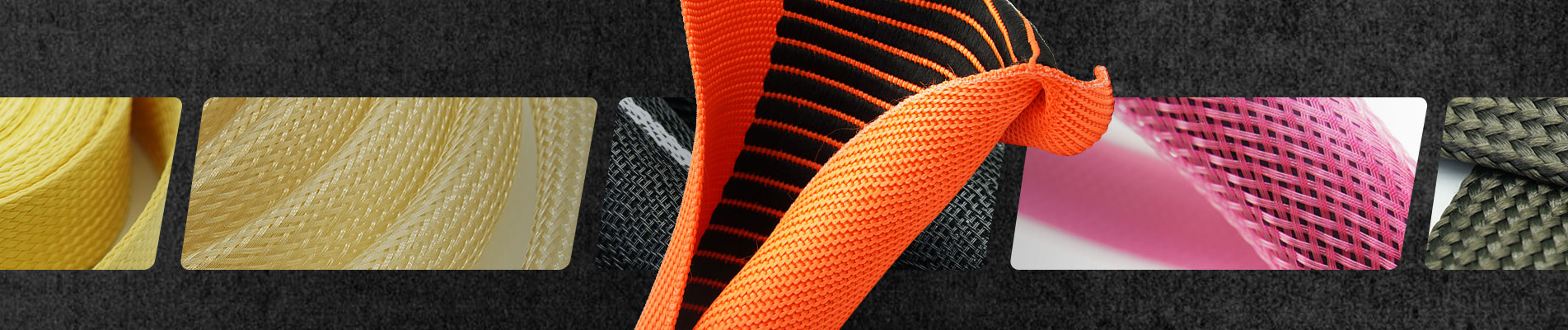
Quick answer: An aramid and PPS self-closing sleeve combines two useful design elements: aramid yarn for a protective textile surface and PPS filaments that can help the sleeve retain its formed, wrap-around shape. The lengthwise opening lets technicians install or reopen the sleeve around an assembled wire harness. For aerospace use, the finished sleeve must still be evaluated against the project’s actual temperature, flame, mechanical and documentation requirements.
Aerospace wire harnesses may pass through crowded equipment areas and near components that become hot in service. Protection must fit the routing as well as the operating conditions. This is why material choice and sleeve construction need to be considered together.
What does the aramid contribute?
Aramid is a family of high-performance fibers used in protective textiles. In a cable sleeve, aramid yarn can provide a flexible covering for wires and a surface suited to demanding environments.
However, "aramid"does not identify one fixed set of properties. Meta-aramid and para-aramid fibers differ, and a finished sleeve’s performance also depends on its yarn, weave or braid construction, thickness and any additional materials. Buyers should evaluate the specified sleeve rather than assume that all aramid products have the same temperature or abrasion rating.
Why add PPS?
PPS, or polyphenylene sulfide, is used in high-temperature polymer applications. In a self-closing sleeve, selected PPS filaments can serve a structural purpose: they help form the curved profile that brings the sleeve’s edges back around the cable bundle.
This matters because a wrap-around sleeve must do more than resist heat. It must also maintain useful edge overlap on the installed harness. The resulting closure depends on the product design, sleeve size, bundle diameter, forming process and service conditions. PPS content alone does not guarantee that a sleeve will remain closed at every temperature or bend radius.
Why choose a self-closing structure?
A tubular sleeve normally needs to be pulled onto a harness from an open end. A self-closing aramid and PPS sleeve has a lengthwise opening, so it can be wrapped around an assembled harness. This can help when connectors are already fitted or when technicians need access to wiring later.
The opening also creates a critical inspection point. The edges must retain sufficient overlap at the harness's largest diameter and through its final routing. A sleeve that appears closed on a straight sample may behave differently at a tight bend, branch or fixing point.
Where can this construction help?
An aramid and PPS wrap-around sleeve may be considered where a project calls for a combination of:
Installation around an assembled wire harness
A textile protective surface
A formed, self-closing profile
Performance at elevated temperatures
Access to the harness after initial installation
The specific sleeve should be selected against the conditions at its actual installation location.
Four checks before specifying an aerospace sleeve
01 / Define the real temperature exposure
Record the normal operating temperature at the sleeve, maximum expected exposure and duration of any short-term peaks. Distinguish ambient air temperature from the temperature of a nearby component that the sleeve might touch.
02 / Test overlap on the complete harness
Measure the minimum and maximum bundle diameters after tape, branches and other components are added. Install a sample on the actual routing and check the opening at bends, clips and the widest sections.
03 / Evaluate mechanical contact
Identify where the sleeve may rub against brackets, panels or other harnesses. Abrasion performance depends on the finished construction and the contact conditions. Test representative samples if abrasion is a critical requirement.
04 / Confirm the applicable fire requirements
Aerospace projects can specify different flame, smoke and material requirements. Ask which standards and test methods apply to the particular installation, then request reports for the same product construction being quoted. A test result for a raw material or another sleeve model should not be treated as approval for the finished product.
Is aramid and PPS always the right choice?
No single sleeving construction fits every aerospace harness. A tubular sleeve may be suitable when end installation is possible. A different wrap-around material may suit a lower-temperature area.
Frequently asked questions
Is an aramid and PPS sleeve the same as a Nomex sleeve?
Not necessarily. Nomex is a brand associated with meta-aramid fiber. An aramid and PPS sleeve contains more than one material, and its properties depend on the specific fiber grades and finished construction. Confirm the material specification for the product being supplied.
Does PPS make the sleeve close by itself?
PPS filaments can help provide the formed shape used in a self-closing design. Closure also depends on the sleeve’s construction, forming process, selected size and installed bundle diameter.
Can the sleeve be installed after connectors are attached?
Its lengthwise opening allows side installation around many assembled harnesses. Verify access along the installation route and check the fit around connectors, branches and fixing points.
Does "aerospace sleeving"mean the product is approved for every aircraft installation?
No. Suitability depends on the aircraft program, installation location and applicable specification.
Discuss your harness requirements with MJ FLEX
MJ FLEX develops high-performance sleeving for demanding wire harness applications. To evaluate an aramid and PPS self-closing sleeve, share your bundle diameter range, routing photos, temperature profile and required test methods. We can review the construction and provide samples for installation testing.