
leave a message
If you are interested in our products and want to know more details,please leave a message here,we will reply you as soon as we can.


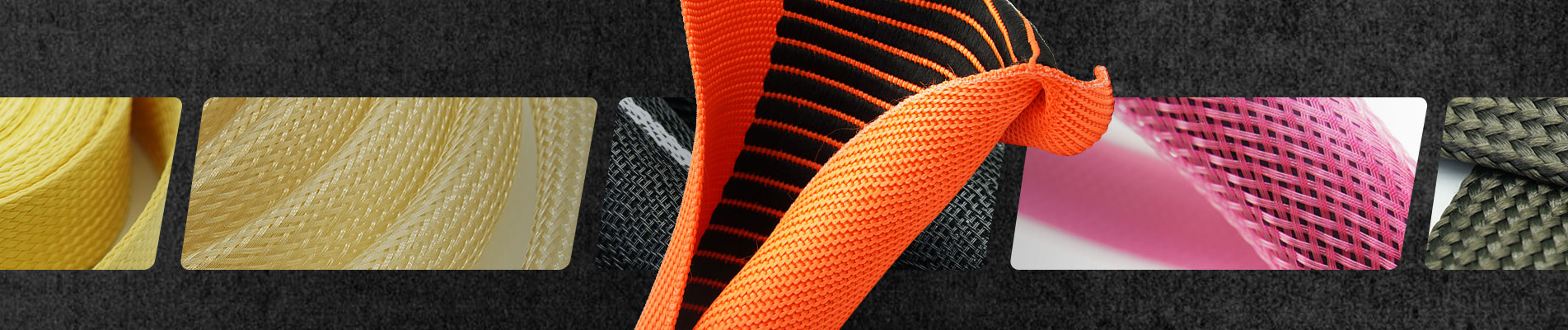
Application-specific cable protection developed for performance, manufacturability and scale
Customization should solve a defined technical or commercial problem. It should not add complexity without measurable value. MJ FLEX begins by identifying the critical requirements, separating mandatory functions from preferences and evaluating whether a standard, modified or fully customized product is the most appropriate route.
Our engineering, production and quality teams consider product performance together with material availability, manufacturing stability, inspection methods, MOQ, lead time and future production volume. This helps ensure that an approved prototype can become a reliable production product.
| INPUT | WHAT TO PROVIDE |
|---|---|
| Application data | Industry, equipment, installation position and service conditions |
| Dimensional data | Bundle range, connectors, branches, bend radius and available space |
| Performance targets | Abrasion, temperature, flame, electrical, UV, chemical, burst or shielding requirements |
| Reference information | Samples, drawings, datasheets, competitor part numbers and test reports |
| Commercial requirements | Forecast, MOQ, target cost, packaging, lead time and annual volume |
| 01 |
Custom Materials |
Material customization is used when standard PET, nylon or fiberglass products cannot deliver the required combination of temperature resistance, mechanical protection, chemical compatibility, insulation, shielding, weight or cost.
| MATERIAL GROUP | POSSIBLE OPTIONS |
|---|---|
| Engineering polymers | PET, PA6, PA66, PPS, PEEK, PE, PP and ABS |
| Fluoropolymers | PFA, PTFE, PVDF and related high-performance materials |
| High-strength fibers | UHMWPE, aramid fibers, Nomex® and Kevlar® |
| Inorganic fibers | Fiberglass and basalt fiber |
| Conductive materials | Stainless steel, copper, tinned copper and plated copper wire |
| Functional combinations | Silicone-coated systems, laminates and hybrid textile-metal structures |
Raw-material ratings do not automatically define the performance of the finished sleeve. Braiding density, wall thickness, coating, color, conditioning and processing can influence test results. Compliance and performance must therefore be confirmed for the final product specification.
| 02 |
Custom Sizes |
The correct size must protect the assembly without creating excessive material consumption, insufficient coverage, difficult installation or unstable overlap. MJ FLEX can develop sizes around the actual cable, wiring harness or hose geometry.
| PRODUCT TYPE | KEY SIZE CONSIDERATIONS |
|---|---|
| Expandable braided sleeving | Expansion range, installed coverage, connector clearance and product consumption |
| Self-closing sleeving | Nominal size, bundle range, overlap retention and bend behavior |
| Woven wrap / hook-and-loop sleeve | Flat width, finished circumference, closure allowance and cut length |
| Fiberglass sleeving | Inside diameter, coating thickness, wall thickness and electrical requirements |
| Heat shrink tubing | Supplied diameter, recovered diameter, shrink ratio and recovered wall thickness |
| Hydraulic hose sleeve | Hose outside diameter, sleeve fit, wall thickness, length and burst-containment target |
For the best recommendation, provide the minimum and maximum bundle diameters, connector dimensions, branch points, bend radius and available installation space. A physical cable or hose sample is valuable when the geometry is irregular or the fit is critical.
| 03 |
Custom Structures |
Product structure can be as important as material choice. By adjusting the way fibers, filaments, coatings and closures are arranged, we can target specific installation and performance requirements.
| STRUCTURE AREA | CUSTOMIZATION FOCUS |
|---|---|
| Braided construction | Carrier count, braid angle, density, filament diameter and expansion |
| Woven construction | Yarn combination, thickness, edge treatment and surface coverage |
| Self-closing construction | Overlap ratio, opening force, closure retention and bend performance |
| Layered construction | Single or multiple layers for added coverage, insulation or mechanical protection |
| Closure system | Open, split, hook-and-loop, zipper, adhesive or other project-specific closure |
| Functional integration | Metal wire, foil, coating, laminate, tracer yarn or reinforcement elements |
Every proposed structure is reviewed for production feasibility, process control and future scalability. A design that performs well as a hand-made sample must also be capable of stable repeat production with measurable inspection criteria.
| 04 |
Custom Performance |
Custom performance development begins with a clearly defined target and test method. Terms such as "high temperature," "heavy duty" or "flame retardant" are not sufficient by themselves; the required conditions and acceptance criteria must be agreed.
| PERFORMANCE AREA | POSSIBLE TARGETS |
|---|---|
| Mechanical | Abrasion, tensile strength, cut resistance, tear resistance, flexibility and burst containment |
| Thermal | Continuous temperature, peak exposure, radiant heat, heat aging and dimensional stability |
| Flammability | Specified flame test, smoke or transportation-industry requirement |
| Electrical | Dielectric strength, insulation resistance, conductivity, grounding or shielding |
| Environmental | UV, moisture, oils, fuels, coolants and chemical exposure |
| Installation | Expansion, overlap, bend behavior, removal, access, cutting and assembly time |
| Identification | Color coding, tracer yarn, labels, part numbers and traceability |
1. Define the application conditions and critical failure risks.
2. Confirm the test method, sample conditioning and acceptance criteria.
3. Select candidate materials and product structures.
4. Prepare prototypes or comparison samples.
5. Conduct relevant internal or third-party testing.
6. Review results and optimize the design.
7. Approve the final specification and reference sample before mass production.
Certifications and test reports apply only to the relevant product, material, color, size and construction stated in the document. When accredited or specialized testing is required, MJ FLEX can coordinate with qualified third-party laboratories.
| STAGE | OUTPUT |
|---|---|
| Requirement Review | Identify the application, critical performance and commercial constraints. |
| Feasibility Evaluation | Assess material, structure, equipment, MOQ, cost and potential risks. |
| Technical Proposal | Define the preliminary material, dimensions, structure and test plan. |
| Prototype Development | Prepare samples for internal evaluation and customer installation trials. |
| Testing & Optimization | Compare results and refine the design where necessary. |
| Sample Approval | Finalize the specification, tolerances and reference sample. |
| Production Transfer | Establish process controls, inspection items and packaging requirements. |
| Mass Production | Manufacture under the approved specification and quality plan. |
MJ FLEX supports customers that need an alternative to a branded, expensive, discontinued or difficult-to-source cable protection product. Development may begin from a physical sample, drawing, datasheet, competitor part number or functional requirement.
The objective is to reproduce the functions required by the application, not simply copy visual appearance. Any equivalence claim should be supported by agreed comparison criteria and appropriate validation.
Material and Process Knowledge
Experience across polymers, high-performance fibers, fiberglass, metals and hybrid constructions.
Application-Based Engineering
Development begins with the actual installation and service environment.
Flexible Manufacturing
Support for modified standard products and fully customized constructions.
Prototype and Testing Support
Samples and relevant validation before mass production.
Quality Integration
Specifications, reference samples, traceability and inspection criteria support repeatability.
Commercial Awareness
MOQ, target cost, lead time and scalability are considered during development.
Send us your application details, dimensions, target performance, samples or drawings.



 English