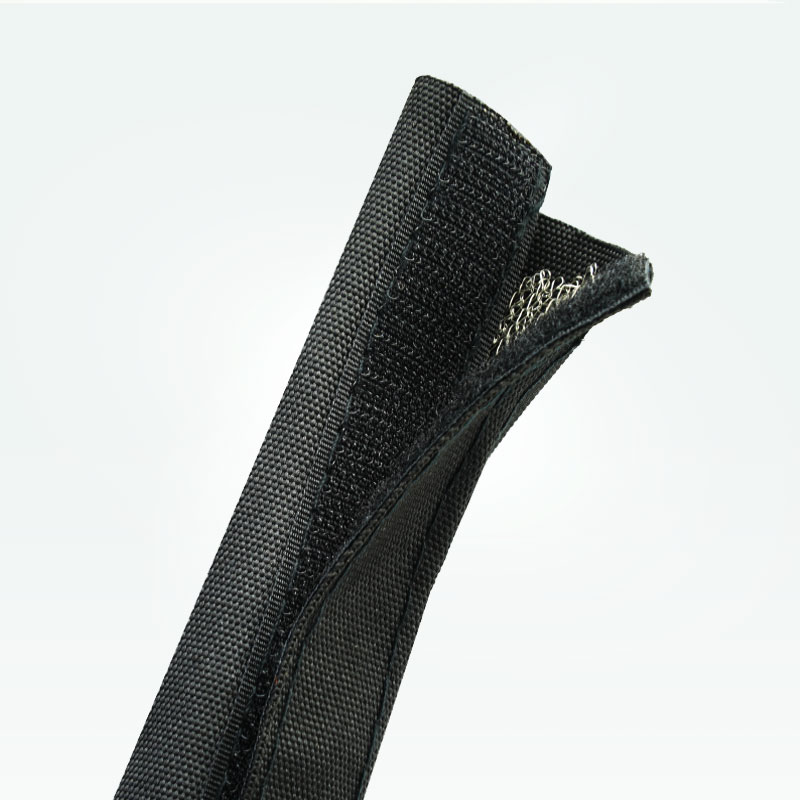
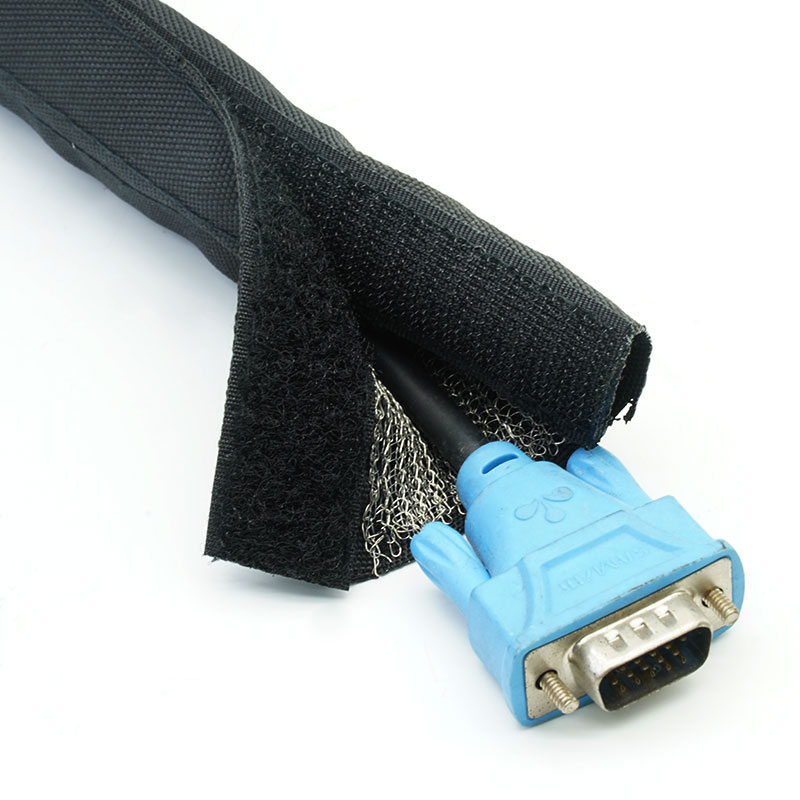
Why Choose VEM-PVT Hook and Loop Shielding Sleeve?
• Open cable bundles quickly
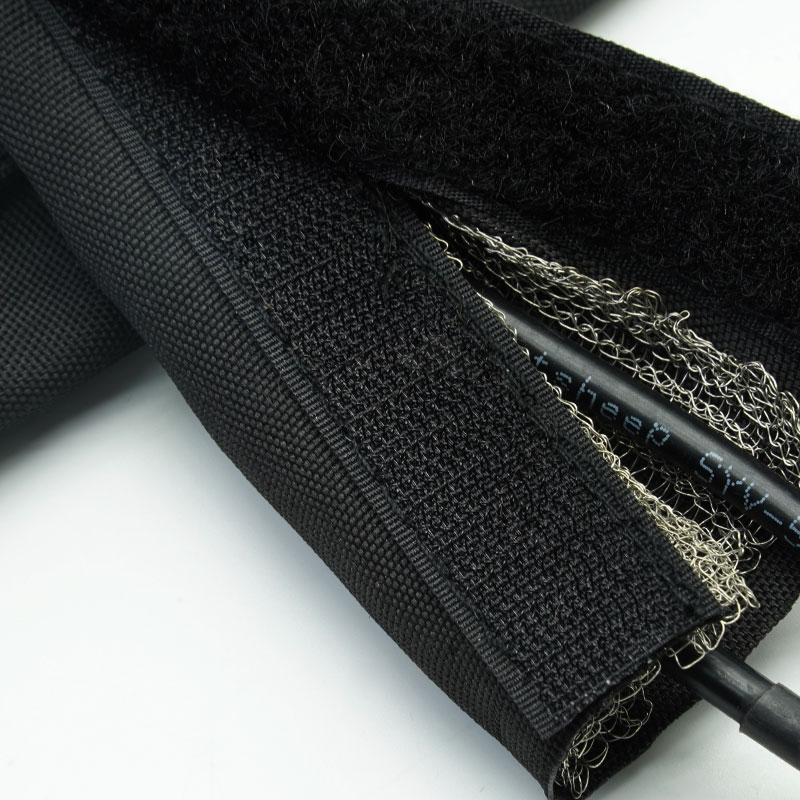
The hook-and-loop closure gives direct access along the full sleeve without tools.
• Support frequent cable changes
The wrap can be reopened and resealed during troubleshooting, upgrades and prototype work.
• Retrofit completed assemblies
Side-entry installation avoids connector removal and harness disassembly.
• Adjust to changing bundle sizes
The closure engagement can accommodate moderate variation when the correct wrap width is selected.
1. Full-length hook-and-loop closure
Provides fast, repeatable opening and resealing.
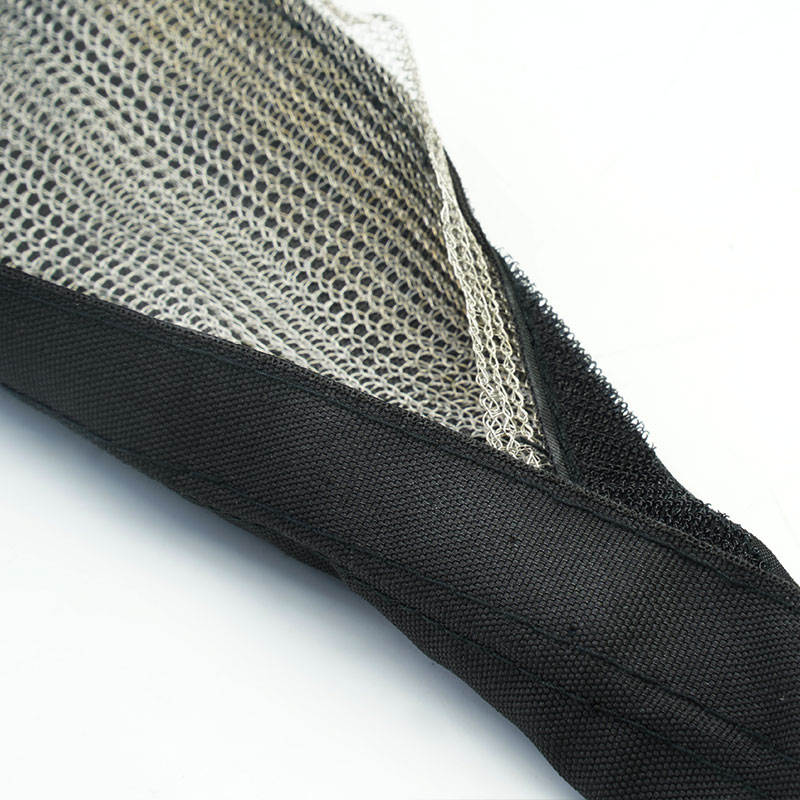
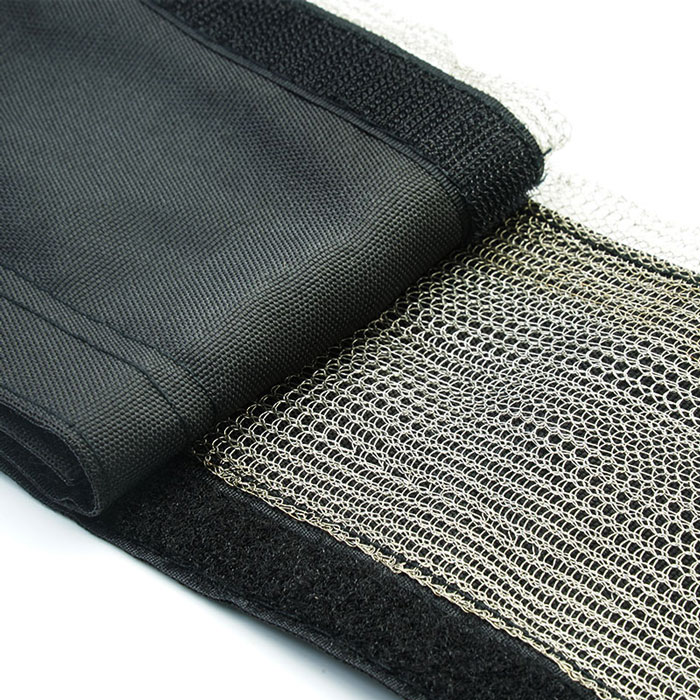
2. Integrated conductive shielding layer
Supports EMI and RFI control with suitable grounding.
3. Flat wrap-around installation
Fits cables, branches and connectors from the side.
4. Adjustable closure overlap
Accommodates a defined range of bundle diameters.
5. Flexible cable management
Organizes signal and data wires along curved routes.
6. Maintenance-friendly access
Ideal for test, retrofit and frequently serviced equipment.
7. Custom wrap configurations
Width, shielding material, closure, length and packaging can be reviewed.
| Sleever Material |
Polyester |
| Hook and Loop Material |
Nylon |
| Shielding Net Material |
Tinned Copper |
| Working Temperature |
-50℃~+150℃ |
| Flammability |
Self-extinguishing |
| Shielding Effectiveness |
≥75 dB (30 MHz-3GHz) per GB/T 30142-2013. |
| Standard Color |
Black |
| Compliance documentatio |
RoHS, REACH |
| Cutting Tool |
Scissor |
| Supply format |
Rolls or cut lengths |
Specifications
|
Part No
|
ID
(mm)
|
Bundle Dia
(mm)
|
Packing
Length
(m/spool)
|
|
|
VEW-PVT-010-BK
|
10 |
1~10 |
25 |
|
VEW-PVT-016-BK
|
16 |
10~16 |
25 |
|
VEW-PVT-020-BK
|
20 |
17~20 |
25 |
|
|
30 |
21~30 |
25 |
|
|
40 |
31~40 |
25 |
|
|
50 |
41~50 |
25 |
| VEW-PVT-060-BK |
60 |
51~60 |
25 |
Typical Applications
EMC development and troubleshooting
Adds removable shielding around suspect cable routes during testing and design changes.
Laboratory and test equipment
Allows repeated access to signal wiring while maintaining organized conductive coverage.
Industrial control cabinets
Wraps serviceable sensor and communication cables near electrical noise sources.
Audio, video and communication systems
Controls cable groups that are frequently rearranged or replaced.
Temporary and prototype installations
Provides reusable cable shielding without permanent conduit or harness reconstruction.
Measure bundle circumference at the smallest and largest points, including branches and connector transitions. Select enough wrap width for secure closure engagement and conductive overlap without cable compression. Provide the frequency range, target performance, grounding method, opening cycles, bend conditions and environmental exposure.
Customization Available
Width and closure overlap - Configured for the installed bundle range and adjustment requirement.
Conductive layer - Material and coverage options can be evaluated for the application.
Cut lengths and access features - Prepared pieces, branch locations and assembly kits available by agreement.
Branding and packaging - Labels, barcodes, bags, rolls and private-label cartons available.
Material declarations may be available for the confirmed conductive layer, closure and textile components. Shielding effectiveness depends on conductive overlap, seams, grounding and frequency. Do not claim waterproofing, electrical insulation or a specific dB value unless supported by the exact tested construction and installation method.
Material verification - Conductive layer and closure materials are checked against the approved specification.
Closure engagement test - Alignment and holding performance are inspected.
Coverage and continuity check - Wrap overlap, surface condition and agreed electrical properties are verified.
Final order inspection - Dimensions, cut length, labels, quantity and packaging are confirmed.
Frequently Asked Questions
01. Can the wrap be reopened and reused?
Yes. It is designed for cable systems that need frequent inspection or configuration changes.
02. How is it grounded?
Connect the conductive layer to the designated ground using a compatible low-impedance termination.
Request a Sample or Quote
Send the cable diameter range, target frequency range, grounding method, installation environment, finished length and quantity. MJ FLEX will review the construction and recommend a suitable sample or quotation configuration.




 English