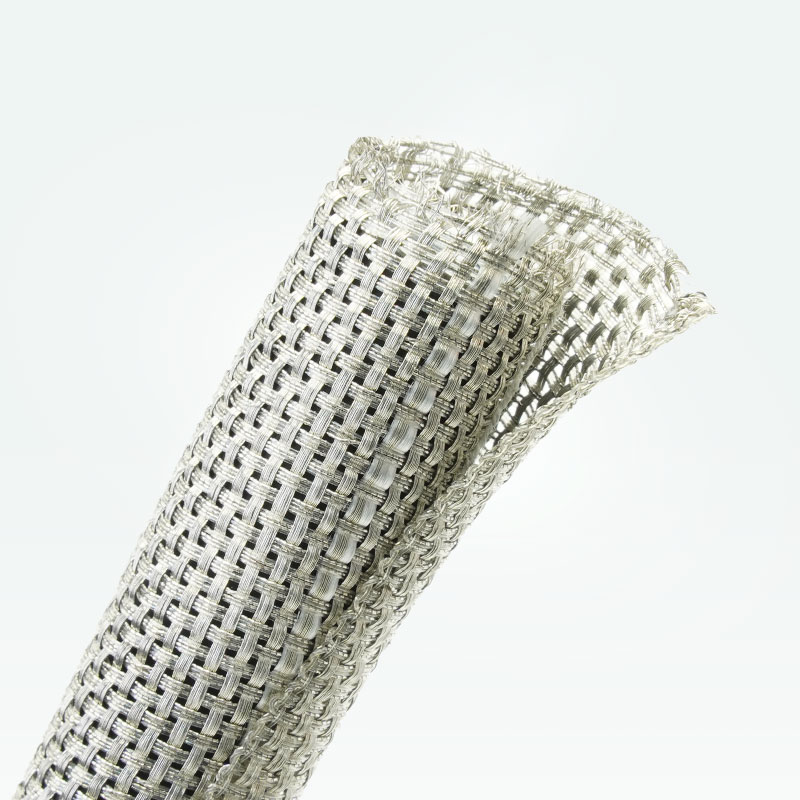
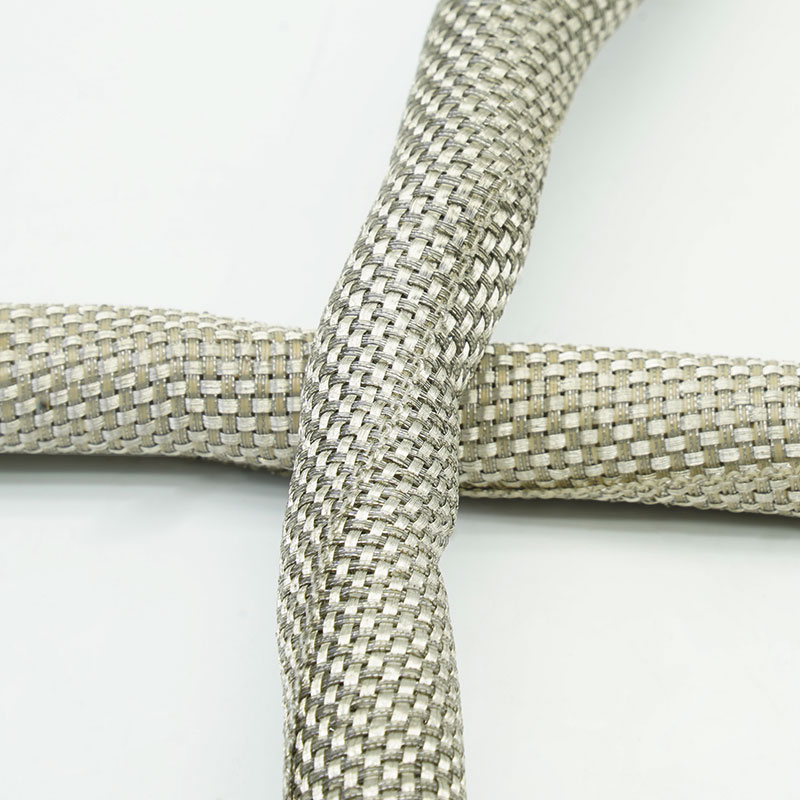
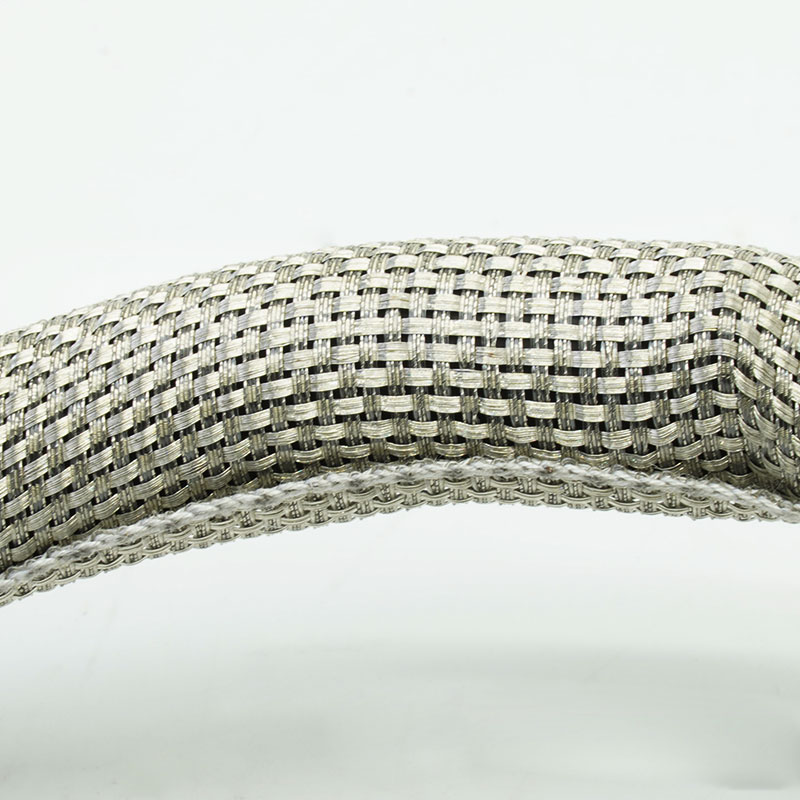
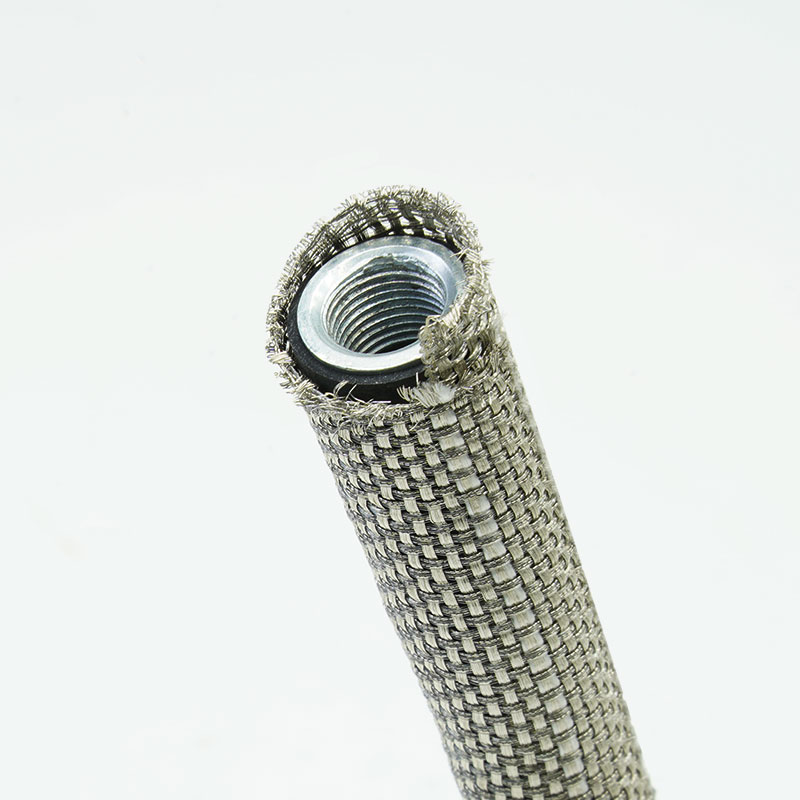
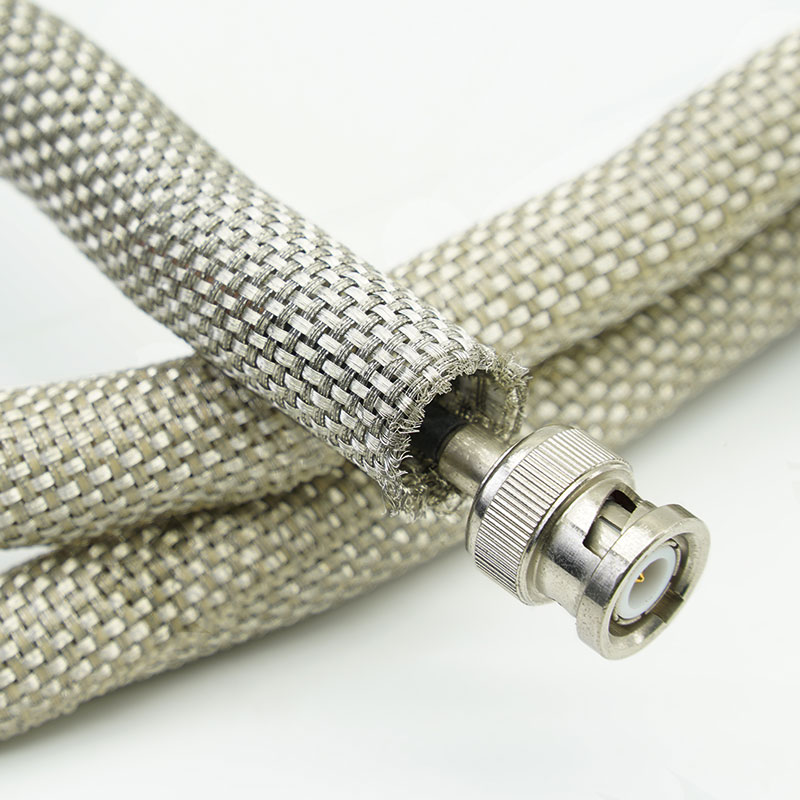
Why Choose MBS-TC-S Self Closing Emi Shielding Sleeve?
• Build a dependable conductive shield
Tinned copper braid provides a robust conductive layer around sensitive cable assemblies.
• Retrofit without rewiring
The self-closing split profile installs after connectors and branches are already in place.
• Support reliable grounding
The metal braid can be bonded to backshells, clamps or grounded enclosures using an appropriate termination.
• Improve termination durability
Tin plating offers better surface oxidation resistance and solderability than bare copper.
1. Tinned copper braid
Combines copper conductivity with a protective tin-plated surface.
2. Self-closing wrap-around structure
Maintains conductive coverage around a defined bundle range.
3. Side-entry installation
Fits completed harnesses without removing terminals.
4. Grounding and bonding capability
Supports low-impedance connection to conductive equipment structures.
5. Flexible metal construction
Follows cable bends and changing harness profiles.
6. EMI and RFI shielding support
Helps reduce radiated interference in correctly designed assemblies.
7. Custom conductive configurations
Wire diameter, coverage, overlap, size and finished length can be reviewed.
| Material |
Tinned Copper & PPS |
| Construction |
Self-closing split metal braid |
| Shield coverage |
Project-specific braid coverage |
| Standard appearance |
Metallic copper tone |
| Overlap |
≧35% |
| Working Temperature |
-40℃~+125℃ |
| Flammability |
Self-extinguishing |
| Shielding Effectiveness |
≥75 dB (30 MHz-3GHz) per GB/T 30142-2013. |
| Standard Color |
Natural silver color |
| Compliance documentatio |
RoHS, REACH |
| Cutting Tool |
Scissor |
| Supply format |
Rolls or cut lengths |
Specifications
|
Part No
|
ID
(mm)
|
OD
(mm)
|
Spread Width
(mm)
|
Packing
Length
(m/spool)
|
|
|
MBS-TC-006-TC-S
|
6±2 |
8±2 |
29±3 |
100 |
|
MBS-TC-008-TC-S
|
8±2 |
10±2 |
40±5 |
100 |
|
MBS-TC-010-TC-S
|
10±2 |
12±2 |
50±5 |
100 |
|
|
13±2 |
13±2 |
63±5 |
100 |
|
|
16±2 |
16±2 |
77±5 |
50 |
|
|
19±2 |
19±2 |
93±5 |
25 |
|
|
25±2 |
25±2 |
122±5 |
25 |
|
|
32±2 |
32±2 |
156±5 |
25 |
|
|
38±2 |
38±2 |
185±5 |
25 |
Typical Applications
Industrial control systems
Shields sensor, encoder and communication cables routed near drives, contactors and motors.
Automotive and EV electronics
Adds serviceable shielding to low-voltage signal and communication harnesses near switching equipment.
Robotics and servo equipment
Maintains conductive coverage around feedback and control wiring that requires repair access.
Power electronics and test systems
Supports cable-to-enclosure bonding around converters, inverters and laboratory equipment.
Grounded equipment interconnects
Provides a flexible conductive sleeve where shield continuity and mechanical access are both important.
Define the bundle range, required installed coverage, frequency range, resistance or bonding target and termination method. Specify connector geometry, bend radius, movement, current expectation and environment. Shield performance depends strongly on continuous circumferential contact, overlap and grounding; the sleeve should be evaluated as part of the complete EMC assembly.
Customization Available
Nominal size and overlap - Matched to the actual bundle range and coverage target.
Braid density and filament construction - Adjusted for flexibility, weight and shielding priorities.
Cut lengths and branch preparation - Project-specific pieces available after drawing review.
Identification and packaging - Labels, reels, kits and OEM packaging available by agreement.
Material declarations such as RoHS and REACH may be available for the confirmed construction. Shielding effectiveness, DC resistance, current capacity, corrosion and temperature performance require product-specific data. Final EMC and electrical compliance must be verified on the customer assembly and its termination system.
Material control - Tinned copper wire identity and surface condition are verified.
Braid construction inspection - Coverage, strand condition and overlap consistency are monitored.
Closure and fit check - Self-closing performance is checked on representative bundle diameters.
Electrical release check - Continuity or resistance testing can be specified before final packing.
Frequently Asked Questions
01. How should the sleeve be terminated?
Use a low-impedance method suited to the frequency range, preferably with circumferential contact to the connector or enclosure.
02. Is self-closing braid suitable for branches?
Yes. It can open locally around cable exits, but overlap and grounding continuity must be maintained.
03.Does it have a universal shielding effectiveness value?
No. Results vary with frequency, coverage, installed diameter, seams and termination quality.
Request a Sample or Quote
Send the cable diameter range, target frequency range, grounding method, installation environment, finished length and quantity. MJ FLEX will review the construction and recommend a suitable sample or quotation configuration.




 English