
• How Expandable Braided Sleeving Protects Cables
    Oct 21, 2026
    How Expandable Braided Sleeving Protects Cables

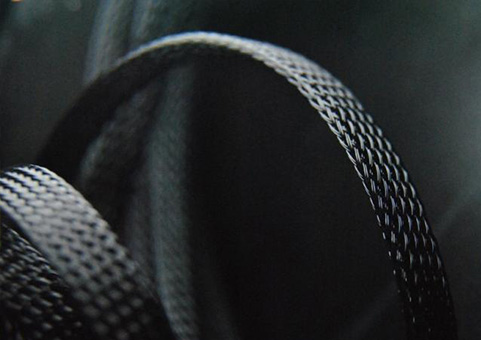
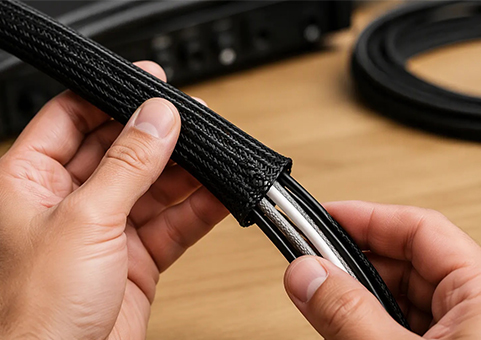
    Expandable Braided Sleeving protects cables through five mechanisms: abrasion resistance, flexibility, heat dissipation, environmental defense, and electrical insulation. Each one addresses a distinct threat, and together they extend the service life of wire, cable, and hose assemblies.   Mechanical wear drives most failures. Field studies indicate that approximately 70-80% of robot cable failures result from mechanical wear, with abrasion accounting for the majority of these incidents. A protective weave absorbs that punishment before it reaches the conductor or jacket.   The sections below explain each mechanism in turn. They also compare expandable braided sleeves with conduit, tape, and spiral wrap, so readers can judge which option fits a given run.   Key Takeaways Expandable braided sleeving absorbs wear and tear, extending cable life. The braid expands to fit over connectors and then contracts for a snug, tidy fit. An open weave lets heat escape, preventing cable damage from overheating. Choose the right material to block moisture, chemicals, and UV light. A rated dielectric layer adds electrical insulation for safety.   How Expandable Braided Sleeving Protects Cables Five Protection Mechanisms Expandable braided sleeving guards cable assemblies on five fronts. It resists abrasion, flexes with the cable, releases heat through an open weave, defends against moisture, fluids, dust, and UV, and adds a dielectric layer. Each mechanism answers a different failure mode. Abrasion leads the list because it drives most failures. Few alternative methods cover all five as cleanly. A jacket alone handles minor scuffs; a braid handles sustained contact. The five mechanisms work together, and each one earns its own section below.   MJ FLEX builds its product guidance around this five-part model. The brand treats the weave as a system rather than a single feature. A metal braid primarily shields against electrostatic and electromagnetic interference. The interwoven conductive wire acts as a ground-path barrier that attenuates electrical field interference. Non-metallic constructions, typically woven polyester or nylon, focus on wear protection and flexibility instead. Standard PET sleeving handles bundling and abrasion, while rodent-resistant variants add a feature that discourages chewing. That distinction matters during specification. Buyers who match construction to environment get the most from either type. In aircraft, vibration and rough handling can damage individual conductors and cable bundles, so the braid earns its place on critical wiring.   Mechanical Stress and Cable Life Mechanical stress shortens cable life in predictable ways. Sharp bending at joints concentrates stress beyond the minimum bend radius. The result is mechanical fatigue, conductor breakage, and insulation cracking. Twisting at articulated joints adds torsional stress. High-speed movement and heavy payloads create dynamic loading patterns that static routing cannot address. Crushing and impact deliver sudden loads that crack insulation and deform conductors. Continuous rubbing against machine frames or bore walls wears the jacket thin. Fatigue accumulates quietly. Each stress type attacks a different part of the assembly. Over thousands of cycles, these forces produce intermittent signals and unplanned downtime.   Expandable braided sleeves interrupt that chain at several points. An expandable braided cable sleeve provides a low-friction protective layer between the cable and the bore wall. It also prevents cables from binding as they twist during rotation. Paired with high-flex robotic-grade cabling, the sleeve reduces friction inside hollow bores and keeps bend angles under control. Reinforced outer layers maintain flexibility while adding crush and impact protection. Strain relief at critical stress points and guided routing complete the picture. The braid absorbs wear before it reaches the conductor or the jacket. Testing of PET braided sleeving in high-dust industrial settings showed the material retained structural integrity after more than 5,000 flex cycles. Suppliers describe the same effect in railway and power plant installations, where the sleeving prolongs wire life under vibration and repeated bending. The sleeve extends the life of industrial cables and harnesses, not just the conductors inside them. Consistent performance over time follows from that protection.   The payoff reaches beyond the cable itself. One industry finding puts the effect in perspective: Proper cable management techniques — including appropriate protective sleeving — reduce electrical fault incidents by up to 40% in industrial environments. (IEC TC64 working group documentation) Few upgrades deliver that much return for so little installation effort.   Abrasion Resistance for Long Cable Life How the Braided Weave Absorbs Wear A tight braid construction covers the entire assembly and delivers excellent surface abrasion resistance. The weave works on two fronts. Smooth fibers and a tight structure reduce internal abrasion when hoses and harnesses rub against the inner wall. A thick flat-filament braid acts as an abrasion guard on the outside. A dense tubular weave tested per ISO 6945 withstands over 200,000 abrasion cycles without wearing through. That performance separates Expandable Braided Sleeving from a simple jacket.   Material choice sets the wear ceiling. Nylon 6-6 polyamide monofilament offers strong chafing resistance. Flat filaments, such as those in Gorilla Sleeve, add bulk without stiffness. A 15 mil HW construction runs 50% thicker for extreme abrasion. PPS, Teflon PFA, carbonized nylon, ECTFE (Halar), and fiberglass with high-temp resin coating cover harsh chemical and thermal conditions. PET, aramid (Kevlar), ballistic nylon, and stainless steel braid round out the options. Tightly woven nylon also resists contact damage to painted or fragile surfaces.   Best Fits for High-Friction Runs Several environments reward abrasion-resistant sleeving most: Automotive electronics: cables face vibration, friction, and extreme temperatures. PET sleeves cut wear and lower electrical failure risk. Industrial equipment: high temperature, moisture, and chemical corrosion demand abrasion, heat, and chemical resistance together. Automated machines: robots and robotic arms move repeatedly, so sensitive motion designs need consistent protection. Computer rooms and data centers: shielding, wear resistance, heat resistance, and flame resistance all matter. Ships: engine and control panel areas vibrate constantly, and sleeving secures cabin wires there.   PET's braided structure also avoids static buildup from friction on automated equipment. Nylon 66 monofilament adds toughness at low temperature, which suits automotive runs and irregular shapes. Matching material to motion profile keeps an expandable braided cable sleeve effective over the full service life.   Flexibility, Expandability, and Organization Fitting Connectors and Tight Bundles Installers often face a common problem. A connector is already attached, and the sleeve must slide over it. Expandable Braided Sleeving solves this with a woven structure that opens wide and then contracts. The braid accommodates bulky connectors without removing them or disassembling components. Source Expansion capability How it accommodates connectors and tight bundles Gendian Materials Up to 150% of original diameter Woven design makes installation simple even with large connectors Primus Cable At least 1.5 times initial dimension Provides slack to fit over bulky connectors and bundled cables IBOCO Expands to 100% of original diameter Flexible sleeves suit applications requiring diameter growth "Sleeve can expand at least 1.5 times the initial dimension" This slack matters during field repairs. A technician can push the sleeve over a splice or a large plug and then let it settle around the bundle. The expandable braided cable sleeve also stretches along its length. One supplier notes that these flexible sleeves can stretch to 42% of their initial length. That movement gives installers room to work in tight cabinets and behind panels.   Tidy Runs and Professional Finish A finished run should look clean and stay accessible. Expandable braided sleeves deliver both. The open weave expands for easy installation and then contracts to fit snugly around the bundle. That snug fit reduces clutter and creates a streamlined appearance. Visible runs in windowed PC builds or automotive interiors benefit from this uniform look.   Organization improves as well. The braid holds cables together in a single traceable path. Technicians can follow one run without sorting through loose wires. Color options support functional coding, so crews can mark power, signal, and ground lines by sight. The braid also conforms to bends, tapers, and irregular shapes that rigid tubing cannot handle without extra fittings. A protective outer layer reduces wear where cables rub against chassis edges or moving parts. That functional gain matters under vibration. The result is a run that looks professional and performs reliably.   Heat Dissipation and Environmental Defense Open Weave and Heat Release Cables generate heat during operation. Trapped heat degrades insulation and shortens service life. An open weave gives that heat a path out. Flex-Tuff® uses an open weave construction that permits complete drainage, prevents condensation, and provides dissipation of both heat and moisture. The braid lets air move through the sleeve instead of sealing warmth against the cable.   Polyester and PET constructions share this trait. Braided polyester offers good wear resistance, fire resistance, and heat dissipation. A tight woven mesh still lets liquid flow in and out without accumulation, which supports airflow. Double-layer and self-wrapping variants carry the same heat-release property. Installers working near engines or inside dense electronics cabinets gain a real thermal advantage from this design.   Moisture, Fluids, Radiation, and UV Environmental threats reach cables from every direction. Moisture, dust, chemicals, fuels, and sunlight all attack the jacket. Material choice determines which threats a sleeve handles best. Material Key environmental strength PET Superior moisture resistance; resists gasoline and automotive fluids; highly UV resistant Nylon Effective at rebuffing moisture in wet applications PPS High chemical resistance; inert to fuels, acids, strong bases, and steam Nomex Superior moisture and chemical protection; resists X-ray, beta, and gamma radiation Electronics and automotive harnesses are common application areas. Automotive runs face fuels, salts, solvents, and de-icing fluids. Hybrid and electric vehicles add salt-spray exposure and EMI concerns. UV-resistant constructions suit outdoor exposure, sunlight, and temperature cycling. Expandable Braided Sleeving lets specifiers match the material to the environment rather than defaulting to one option. A Nomex braid suits radiation-prone settings, while a PET sleeve fits wet, sunlit automotive runs. That flexibility keeps the protection aligned with the actual threat.   Insulation and Comparison With Other Methods The Dielectric Layer Explained A braided sleeve can act as an electrical barrier, not just a physical one. Dielectric performance depends on the construction and the impregnant applied to the base yarn. NEMA grades set the benchmark. Grade A-1 sleeving averages 7000 V breakdown with a 5000 V minimum individual value. Grade B-1 drops to 4000 V average and 2500 V minimum. Grade C-1 averages 2500 V with a 1500 V floor, and C-2 averages 1500 V with an 800 V minimum. Grade C-3 carries no dielectric guarantee, so specifiers should treat it as mechanical protection only. Temperature index matters alongside voltage. Type 4A and 5A sleeving, built on inorganic-base yarns with silicone resin, PTFE, or silicone elastomer coatings, rate for 200°C continuous use. Type 6A reaches 155°C, Type 2A reaches 130°C, and Type 3A reaches 105°C. For sleeving Types 3, 4, and 5, breakdown values rise to 8000 V average and 6000 V minimum individual. Matching grade to circuit voltage keeps the margin safe.   Sleeving vs. Conduit, Tape, and Spiral Wrap Each method fits a different job. Rigid conduit wins on crush protection but offers low flexibility, difficult installation, and hard maintenance access. Spiral wrap delivers flexibility, reusability, and quick installation without specialized tools, and it supports cable breakouts. Expandable Braided Sleeving brings high flexibility, easy installation, expansion to fit varying cable sizes, and a clean appearance. High-temperature woven variants beat both options in hot environments. Cost and compliance shift the picture. PVC spiral wrap runs roughly $0.15–$0.40 per meter, and UL/CSA-certified variants cost about 2.5 times more. Braided sleeving sits at the higher tier per meter. Metal-reinforced spiral conduit certified to UL 62 and CSA C22.2 No. 62 adds limited EMI shielding of about 20–30 dB at 100 MHz. Verify UL VW-1, CSA C22.2, or RoHS compliance only when local code or heat exposure demands it. Expandable braided sleeves remain economical and easy to install once the material matches the environment.   Expandable Braided Sleeving protects cables on five fronts. The braid absorbs abrasion before wear reaches the jacket. Its weave expands over connectors and contracts into tidy, flexible runs. An open construction releases heat instead of trapping it. Material choice blocks moisture, fluids, and UV. A rated dielectric layer adds electrical insulation.   Readers should match construction and material to the actual environment. MJ FLEX offers product guidance for that selection. One solution covers wear, motion, heat, environment, and voltage together. Expandable Braided Sleeving protects cables by combining all five mechanisms in a single woven layer.   FAQ Which material suits an outdoor automotive run? PET handles that job well. It resists gasoline, automotive fluids, and UV exposure, and it dissipates heat through the weave. Nylon offers good moisture resistance for wet applications. Specifiers should match the expandable braided cable sleeve material to the specific threats along the route. How much does the sleeve expand during installation? Expansion varies by construction. Suppliers cite figures from 100% to 150% of the original diameter, and some sleeves stretch along their length as well. That slack lets installers slide expandable braided sleeves over attached connectors without disassembling the harness. Does the weave trap heat in enclosed cabinets? No. An open weave lets air move through the braid and releases heat instead of sealing it against the cable. The same construction permits drainage and prevents condensation. Dense electronics cabinets and engine bays both benefit from this airflow. Which NEMA grade fits a high-voltage circuit? Grade A-1 carries the highest dielectric rating, with a 7000 V average breakdown and a 5000 V minimum. Lower grades suit lower voltages. Grade C-3 offers no dielectric guarantee, so treat it as mechanical protection only. Match the grade to circuit voltage. When does conduit beat sleeving? Rigid conduit wins on crush protection and suits fixed runs with heavy impact risk. Expandable braided sleeving brings flexibility, quick installation, and expansion over connectors. Spiral wrap fits breakouts and reusable access. Each method has a clear best-fit case.

    Read More
  • What Is Rodent-Resistant Braided Sleeving Made Of?
    Oct 16, 2026
    What Is Rodent-Resistant Braided Sleeving Made Of?

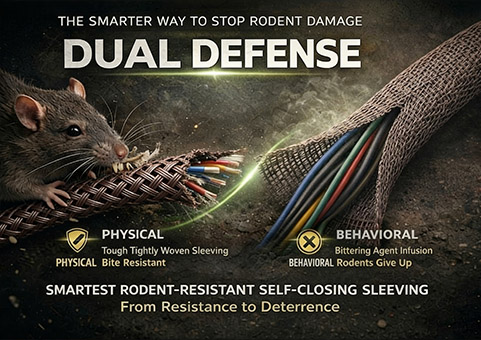
    Rodent-resistant braided sleeving helps protect cables and wire harnesses from damage caused by rodent chewing. Depending on the construction, protection may come from deterrent-modified PET polyester, stainless steel reinforcement, fiberglass, or a combination of materials. Different materials work in different ways. Some are designed to discourage gnawing, while others provide mechanical barriers or physical irritation.Understanding these differences helps buyers select suitable cable protection products based on their specific application requirements.   Four Types of Rodent-Resistant Sleeving from MJ FLEX MJ FLEX offers four cable protection sleeving constructions designed for different installation and protection requirements. 01/ Stainless Steel & Rodent-Deterrent PET Self-Wrapping Braided Sleeving This hybrid sleeve combines stainless steel wire with deterrent-modified PET filaments. The metal reinforcement provides an additional mechanical barrier, while the modified PET is intended to discourage rodent chewing. Its self-wrapping construction allows installation around existing cable assemblies without removing connectors. Best suited for: Industrial machinery, railway wiring, and cable assemblies requiring combined material deterrence and mechanical reinforcement. 02/ Fiberglass Self-Wrapping Textile Sleeving This sleeve uses fiberglass filaments in a self-wrapping textile construction. When rodents attempt to chew the material, contact with the fibers may cause physical irritation or discomfort, potentially discouraging further gnawing. Unlike chemically modified PET, this approach relies on the physical characteristics of fiberglass. The self-wrapping design also supports convenient installation and maintenance. Best suited for: Industrial electrical equipment, machinery wiring, and cable assemblies where a non-chemical deterrence approach is preferred. 03/ Rodent-Deterrent PET Expandable Braided Sleeving Made from PET polyester containing a rodent-deterrent formulation, this sleeve combines lightweight construction, flexibility, and everyday abrasion protection with an additional deterrent function. Its expandable tubular braid accommodates different cable bundle diameters and is installed from an accessible cable end. Best suited for: Automotive wiring, industrial control cables, communication cables, and wire harness assemblies. 04/ Rodent-Deterrent PET Self-Wrapping Braided Sleeving This product uses deterrent-modified PET filaments in a self-wrapping braided construction. It provides flexible cable covering while allowing installation around existing wire harnesses. The longitudinal opening makes it particularly useful where connectors are already fitted or cables require additional protection during maintenance. Best suited for: Automotive harnesses, industrial automation, equipment retrofits, and existing cable installations.   How Do These Four Sleeving Types Compare? MJ FLEX product Protective approach Installation Stainless Steel & Deterrent PET Self-Wrapping Metal reinforcement + material deterrence Self-wrapping Fiberglass Self-Wrapping Potential physical irritation during chewing Self-wrapping Deterrent PET Expandable Material deterrence + abrasion protection Tubular, expandable Deterrent PET Self-Wrapping Material deterrence + flexible covering Self-wrapping The right choice depends on the required protection approach, cable bundle dimensions, installation access, and operating environment.   How to Choose the Right Rodent-Resistant Cable Sleeving Before selecting a product, consider: Protection requirements: Determine whether material deterrence, metal reinforcement, or a physical deterrent approach is preferred. Cable dimensions: Check the actual bundle diameter and installed braid coverage. Installation method: Choose expandable sleeving for accessible cable ends or self-wrapping sleeving for existing assemblies. Operating conditions: Consider temperature, abrasion, UV exposure, moisture, and other environmental factors. Rodent-resistant does not mean rodent-proof. Performance should be evaluated under the conditions in which the sleeve will be used.   Frequently Asked Questions Is rodent-resistant braided sleeving always made of metal? No. MJ FLEX offers deterrent-modified PET, fiberglass, and stainless steel-reinforced PET constructions. Each uses a different protective approach. What is the difference between expandable and self-wrapping sleeving? Expandable sleeving is typically installed from a cable end. Self-wrapping sleeving opens longitudinally and can be fitted around existing cable assemblies without disconnecting connectors. How does fiberglass sleeving discourage rodent chewing? Fiberglass fibers may cause physical irritation or discomfort when chewed, potentially discouraging continued gnawing. Actual effectiveness depends on the finished product and should be supported by relevant testing.   Find the Right Rodent-Resistant Sleeving with MJ FLEX MJ FLEX provides four rodent-resistant cable sleeving constructions, including deterrent-modified PET, stainless steel-reinforced PET, and fiberglass self-wrapping textile sleeving. Whether your project requires flexible expandable protection, convenient self-wrapping installation, or additional mechanical reinforcement, our team can help evaluate suitable products based on your application. Contact MJ FLEX with your cable bundle diameter, installation requirements, and operating conditions to discuss product options and request samples.

    Read More
  • Self-Closing Braided, Self-Closing Woven or PET Expandable Sleeving: Which Should You Choose?
    Oct 01, 2026
    Self-Closing Braided, Self-Closing Woven or PET Expandable Sleeving: Which Should You Choose?

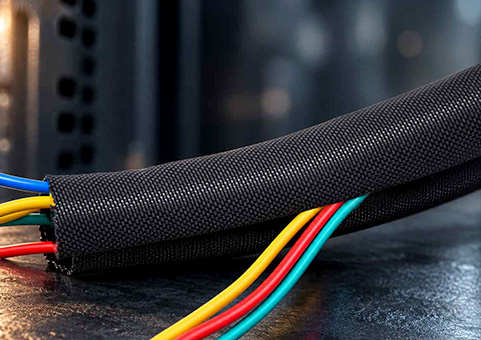
    Quick answer: Choose PET expandable braided sleeving when you can slide a sleeve onto the harness from an open end. Choose self-closing braided sleeving when the harness is already assembled or needs later access. Choose self-closing woven sleeving when you need the same wrap-around access but prefer a fabric-like surface or a different coverage and handling profile. These are starting points, not performance ratings. The best choice depends on the actual sleeve construction, harness diameter, routing and installation process.     The Three Constructions at a Glance Selection factor PET expandable braided sleeving Self-closing braided sleeving Self-closing woven sleeving Basic construction Tubular braid Braided sleeve with a lengthwise self-closing opening Woven sleeve with a lengthwise self-closing opening Typical installation Slide onto the harness from an end Wrap around the harness from the side Wrap around the harness from the side Access after installation Usually requires removing an end fitting or sliding the sleeve back Open the overlapping edges to access the harness Open the overlapping edges to access the harness Main sizing concern Bundle diameter and the largest component the sleeve must pass over Bundle diameter and remaining edge overlap Bundle diameter and remaining edge overlap Coverage check Inspect the braid at the installed diameter Inspect both braid coverage and the lengthwise overlap Inspect fabric coverage and the lengthwise overlap       Choose PET Expandable Braided Sleeving for Open-End Installation A tubular PET braided sleeve expands as it is pushed over a cable bundle. It is often a practical choice when the harness can be sleeved before connectors are fitted, or when its connectors are small enough for the selected sleeve to pass over. Check two dimensions before selecting a size: the finished bundle diameter and the widest connector or component the sleeve must cross. A product may fit the bundle well but be difficult to install over a large plug. Also inspect the braid at its final diameter. Expansion changes the braid geometry, so coverage and the length needed to protect a given section can change during installation. Consider this construction when: you have access to a harness end and want a continuous sleeve without a lengthwise opening.     Choose Self-Closing Braided Sleeving for an Assembled Harness Self-closing braided sleeving, sometimes called split braided sleeving or wrap-around braided sleeving, has an opening along its length. The edges wrap around the cables and overlap after installation. This makes it useful for an assembled harness, a retrofit or a section that technicians may need to reopen. The key fit check is the overlap after the sleeve is installed, especially at the widest bundle sections, bends, branches and cable ties. Braided self-closing sleeves can vary substantially in braid density and surface feel. If the application requires a particular level of visual coverage or abrasion protection, compare samples fitted to the real harness rather than relying on the construction name alone. Consider this construction when: side installation and later harness access are priorities, and the selected braid meets your coverage and protection requirements.     Choose Self-Closing Woven Sleeving for a Fabric-Like Wrap Self-closing woven sleeving also installs from the side, but its woven construction gives it a different surface and handling feel from a braided wrap. Depending on the specific product, it may be preferred where the visible finish, contact surface or coverage is important. “Woven” does not automatically mean quieter, more abrasion resistant or more flame resistant. Those properties depend on the yarns, construction and tested product. Compare the actual materials under the conditions that matter to your application. As with any self-closing sleeve, inspect the edge overlap on straight runs and bends. A neat fit on a sample cable is not enough if the production harness changes diameter along its route. Consider this construction when: you need side installation and want to evaluate a woven surface against a braided alternative.     A Simple Selection Process 01 / Start with the Assembly Sequence Can the sleeve be installed from an end before the harness is completed? If yes, PET expandable braided sleeving is an option. If connectors are already fitted and cannot be passed through the sleeve, start with a self-closing construction. 02 / Measure the Entire Harness Section Record the minimum and maximum finished bundle diameters. Include taped areas, branches and other features that will sit beneath the sleeve. For tubular sleeving, also measure the largest component it must pass over. 03 / Check Routing and Maintenance Access Identify tight bends, clips and cable ties. Decide whether the sleeve must be reopened after installation. Test self-closing sleeves in the harness’s final routed position, where overlap can differ from a straight bench sample. 04 / Compare the Requirements That Matter Ask for product-specific information on working diameter, coverage, abrasion performance, temperature rating and any required flame or material compliance. A certificate for one sleeve construction should not be assumed to apply to another. 05 / Run a Short Installation Trial Fit each candidate over the actual harness. Check installation time, finished appearance, sleeve movement, coverage, overlap and accessibility. This trial often resolves choices that a datasheet alone cannot.     Which Sleeve Fits These Common Situations? Harness Situation Good Starting Point Verify Before Ordering Connectors will be fitted after sleeving PET expandable braided sleeving Installed diameter, coverage and cut length Large connectors are already fitted Self-closing braided or woven sleeving Fit and overlap across the full diameter range Harness needs later inspection or cable additions Self-closing braided or woven sleeving Ease of reopening and fit after reclosure Finished appearance is a major requirement Compare all suitable constructions on the actual harness Coverage, surface appearance and exposed wires at bends Harness includes tight bends and branches Test both self-closing constructions Overlap in the final routing     Frequently Asked Questions Is self-closing braided sleeving the same as PET expandable braided sleeving? No. Both may use PET yarn, but standard expandable braided sleeving is tubular and slides onto the harness from an end. Self-closing braided sleeving has a lengthwise opening for side installation. Is woven sleeving always better at hiding wires? No. Coverage depends on the specific woven construction, color and fitted diameter. Compare it with the braided option on the same harness under the same lighting conditions. Which type should I choose for a harness with large connectors? If a tubular sleeve cannot pass over the connectors, consider a self-closing braided or woven sleeve. If end installation is possible before the connectors are attached, tubular PET expandable sleeving remains an option. Can I select by nominal diameter alone? No. Check the recommended working diameter range. For self-closing products, confirm the overlap at both the smallest and largest harness sections. For expandable sleeving, check connector clearance and coverage after expansion. Get a Recommendation for Your Harness MJ FLEX supplies PET expandable braided sleeving, self-closing braided sleeving and self-closing woven sleeving. To compare suitable options, send us your minimum and maximum bundle diameters, connector dimensions, harness photos and any requirements for coverage, abrasion or flame performance. We can recommend samples for an installation trial.

    Read More
  • Why Does Self-Closing Sleeving Expose Wires After Installation?
    Oct 01, 2026
    Why Does Self-Closing Sleeving Expose Wires After Installation?

      Quick answer: Self-closing sleeving can expose wires when the cable bundle is too large for the selected sleeve, the wrap loses overlap on a bend, or the sleeve is twisted or pulled during installation. First identify where the wires are visible: through the lengthwise opening, or through the material itself. These are different problems with different solutions. Self-closing cable sleeving is designed to wrap around an assembled wire harness. Its edges overlap and curl back into place after installation. The amount of overlap you see on a finished harness depends on the sleeve construction, bundle diameter and routing conditions.     Wires Visible at the Lengthwise Opening If wires are visible along the sleeve’s split, check the installed bundle diameter first. As the bundle gets larger, the sleeve must open farther to wrap around it. This reduces the remaining overlap. A sleeve that closes neatly on a straight section may open at a connector, taped area or branch where the bundle is thicker. Bends can also change the fit. The outer side of a bend must travel a longer path than the inner side, which can pull the sleeve’s edges apart. A tight bend immediately after a clip or cable tie is a common place to inspect. Finally, look for twist or lengthwise tension. If the sleeve is twisted around the harness or stretched between fixing points, its opening may no longer follow a relaxed, straight path.     Wires Visible Through the Sleeving Material If the edges still overlap but you can see the wires through the surface, the issue may be material coverage, rather than closure. Open braided constructions may show more of the harness beneath them, particularly when fitted near the upper end of their working diameter range. Color contrast matters too: light-colored wires are easier to see beneath a black sleeve than dark wires.Consider a denser braid or a woven self-closing sleeve where appropriate.      How to Find the Cause on Your Harness Inspect a short installed section and answer these questions: What You See What to Check First A continuous gap along the split Bundle diameter and remaining edge overlap A gap only at bends Bend radius and sleeve movement around the curve A gap beside a cable tie or clip Tie position, compression and local bundle shape A gap near a connector or branch Maximum diameter at that point Edges overlap, but wires show through Braid or fabric coverage at the installed diameter The opening changes position along the harness Sleeve twist or tension during installation Several factors can occur together. For example, a sleeve may fit the straight portion but open where a tight cable tie creates a sharp change in bundle shape.     How to Improve Coverage 01 / Confirm the Full Bundle Diameter Range Measure both the smallest and largest sections after tape, branches and other components have been added. Compare those dimensions with the specific sleeve’s recommended working range. 02 / Fit a Sample on the Actual Routing Test the sleeve on straight sections, bends, clips and branches. Check whether the opening stays covered when the harness is moved into its final position. 03 / Install Without Twist or Excessive Tension Let the sleeve wrap naturally around the bundle. Check the position of the split before securing the harness. 04 / Review Fixing Points A tight cable tie placed across the split can distort the sleeve locally. Adjust its position or tension where the harness design allows. 05 / Choose the Construction for the Required Appearance If the application needs less visible wiring, specify that requirement when requesting samples. Compare coverage on the installed harness, not by nominal sleeve size alone.     What Information Helps a Supplier Recommend a Solution? Send photos showing the whole harness and close-ups of the exposed area, together with: The sleeve part number and nominal size Minimum and maximum finished bundle diameters The diameter at the exposed section Whether exposure occurs on a straight run, bend, branch or fixing point Bend radius or a photo of the final routing Whether wires are visible through the material or through the lengthwise opening If possible, send both a short sample of the current sleeve and a section of the harness. A physical fit test is the most direct way to evaluate overlap and coverage.     Frequently Asked Questions Does visible wiring mean the self-closing sleeve is defective? Not necessarily. Check whether the wires are visible through the material or through a gap at the split. The first may relate to material coverage; the second may relate to size, routing or installation. If identical harnesses show different results, compare sleeve samples and installation conditions as well. Will choosing a larger sleeve always solve the problem? No. A larger size may provide a better fit at the widest point but sit loosely on narrower sections. Check the full bundle diameter range and test both areas. Why does the sleeve close on a straight section but open on a bend? A bend changes how the sleeve sits around the harness, especially on its outer side. Test the selected sleeve at the actual bend radius and in the harness’s final installed position. Can a cable tie cause the sleeve to expose wires? Yes. A tie can compress the harness or distort the sleeve near its opening. Check the tie’s position and tension, particularly when the gap appears only beside a fixing point. Need help diagnosing exposed wires? Send MJ FLEX photos of the installed harness, the bundle diameter at the affected section and your current sleeve part number. We can review the fit and suggest a sample construction for testing.

    Read More
  • Why Use Aramid and PPS Self-Closing Sleeving for Aerospace Wire Harnesses?
    Oct 01, 2026
    Why Use Aramid and PPS Self-Closing Sleeving for Aerospace Wire Harnesses?

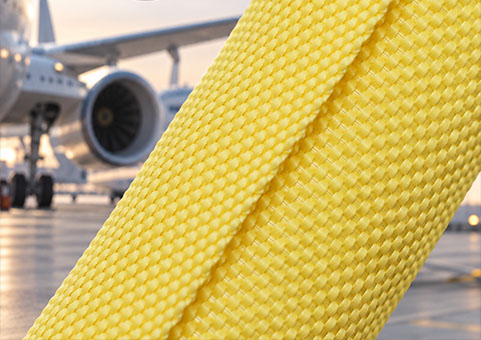
      Quick answer: An aramid and PPS self-closing sleeve combines two useful design elements: aramid yarn for a protective textile surface and PPS filaments that can help the sleeve retain its formed, wrap-around shape. The lengthwise opening lets technicians install or reopen the sleeve around an assembled wire harness. For aerospace use, the finished sleeve must still be evaluated against the project’s actual temperature, flame, mechanical and documentation requirements. Aerospace wire harnesses may pass through crowded equipment areas and near components that become hot in service. Protection must fit the routing as well as the operating conditions. This is why material choice and sleeve construction need to be considered together.     What does the aramid contribute? Aramid is a family of high-performance fibers used in protective textiles. In a cable sleeve, aramid yarn can provide a flexible covering for wires and a surface suited to demanding environments. However, "aramid"does not identify one fixed set of properties. Meta-aramid and para-aramid fibers differ, and a finished sleeve’s performance also depends on its yarn, weave or braid construction, thickness and any additional materials. Buyers should evaluate the specified sleeve rather than assume that all aramid products have the same temperature or abrasion rating.     Why add PPS? PPS, or polyphenylene sulfide, is used in high-temperature polymer applications. In a self-closing sleeve, selected PPS filaments can serve a structural purpose: they help form the curved profile that brings the sleeve’s edges back around the cable bundle. This matters because a wrap-around sleeve must do more than resist heat. It must also maintain useful edge overlap on the installed harness. The resulting closure depends on the product design, sleeve size, bundle diameter, forming process and service conditions. PPS content alone does not guarantee that a sleeve will remain closed at every temperature or bend radius.     Why choose a self-closing structure? A tubular sleeve normally needs to be pulled onto a harness from an open end. A self-closing aramid and PPS sleeve has a lengthwise opening, so it can be wrapped around an assembled harness. This can help when connectors are already fitted or when technicians need access to wiring later. The opening also creates a critical inspection point. The edges must retain sufficient overlap at the harness's largest diameter and through its final routing. A sleeve that appears closed on a straight sample may behave differently at a tight bend, branch or fixing point.     Where can this construction help? An aramid and PPS wrap-around sleeve may be considered where a project calls for a combination of: Installation around an assembled wire harness A textile protective surface A formed, self-closing profile Performance at elevated temperatures Access to the harness after initial installation The specific sleeve should be selected against the conditions at its actual installation location.      Four checks before specifying an aerospace sleeve 01 / Define the real temperature exposure Record the normal operating temperature at the sleeve, maximum expected exposure and duration of any short-term peaks. Distinguish ambient air temperature from the temperature of a nearby component that the sleeve might touch. 02 / Test overlap on the complete harness Measure the minimum and maximum bundle diameters after tape, branches and other components are added. Install a sample on the actual routing and check the opening at bends, clips and the widest sections. 03 / Evaluate mechanical contact Identify where the sleeve may rub against brackets, panels or other harnesses. Abrasion performance depends on the finished construction and the contact conditions. Test representative samples if abrasion is a critical requirement. 04 / Confirm the applicable fire requirements Aerospace projects can specify different flame, smoke and material requirements. Ask which standards and test methods apply to the particular installation, then request reports for the same product construction being quoted. A test result for a raw material or another sleeve model should not be treated as approval for the finished product.     Is aramid and PPS always the right choice? No single sleeving construction fits every aerospace harness. A tubular sleeve may be suitable when end installation is possible. A different wrap-around material may suit a lower-temperature area.      Frequently asked questions Is an aramid and PPS sleeve the same as a Nomex sleeve? Not necessarily. Nomex is a brand associated with meta-aramid fiber. An aramid and PPS sleeve contains more than one material, and its properties depend on the specific fiber grades and finished construction. Confirm the material specification for the product being supplied. Does PPS make the sleeve close by itself? PPS filaments can help provide the formed shape used in a self-closing design. Closure also depends on the sleeve’s construction, forming process, selected size and installed bundle diameter. Can the sleeve be installed after connectors are attached? Its lengthwise opening allows side installation around many assembled harnesses. Verify access along the installation route and check the fit around connectors, branches and fixing points. Does "aerospace sleeving"mean the product is approved for every aircraft installation? No. Suitability depends on the aircraft program, installation location and applicable specification.    Discuss your harness requirements with MJ FLEX MJ FLEX develops high-performance sleeving for demanding wire harness applications. To evaluate an aramid and PPS self-closing sleeve, share your bundle diameter range, routing photos, temperature profile and required test methods. We can review the construction and provide samples for installation testing.

    Read More
leave a message
If you are interested in our products and want to know more details,please leave a message here,we will reply you as soon as we can.